• HOME
  • NEWS
  • EXPLORE
    • CAREER
      • Companies
      • Jobs
    • EVENTS
    • iGEM
      • News
      • Team
    • PHOTOS
    • VIDEO
    • WIKI
  • BLOG
  • COMMUNITY
    • FACEBOOK
    • INSTAGRAM
    • TWITTER
Sunday, November 22, 2026
BIOENGINEER.ORG
No Result
View All Result
  • Login
  • HOME
  • NEWS
  • EXPLORE
    • CAREER
      • Companies
      • Jobs
        • Lecturer
        • PhD Studentship
        • Postdoc
        • Research Assistant
    • EVENTS
    • iGEM
      • News
      • Team
    • PHOTOS
    • VIDEO
    • WIKI
  • BLOG
  • COMMUNITY
    • FACEBOOK
    • INSTAGRAM
    • TWITTER
No Result
View All Result
Bioengineer.org
No Result
View All Result
Home NEWS Science News Health

Microenvironment Differences Explain Regulatory T Cell Therapy Failures in Cancer and Autoimmunity

by
November 21, 2026
in Health
Reading Time: 2 mins read
0
Microenvironment Differences Explain Regulatory T Cell Therapy Failures in Cancer and Autoimmunity

Microenvironment Differences Explain Regulatory T Cell Therapy Failures in Cancer and Autoimmunity

Share on FacebookShare on TwitterShare on LinkedinShare on RedditShare on Telegram

Therapies directed at regulatory T cells have not yet produced consistent clinical benefits in cancer or autoimmune disease because these cells are continuously shaped by dynamic surrounding signals rather than acting as static targets, according to a review published in the Journal of Translational Medicine. The authors state that regulatory T cells, known as Tregs, serve as central regulators of immune tolerance whose clinical performance depends heavily on the specific disease context in which they operate.

To explain these discrepancies, the researchers propose a framework of opposing microenvironments, asserting that the functional divergence of regulatory T cells across malignancy and autoimmunity stems from a fundamental reversal of the underlying tissue conditions. In this conceptual model, the regulatory cells respond to environmental cues rather than maintaining fixed therapeutic behaviors across different pathological settings.

Within the tumor microenvironment, local signals actively support the suppression of immune activity. Cytokine, metabolic, and epigenetic factors in cancer tissue usually promote the recruitment of regulatory T cells, facilitate their metabolic adaptation, and reinforce their functional stability.

Conversely, the microenvironment found in autoimmune disease displays an inverted pattern of regulatory behavior. In autoimmune conditions, cytokine, metabolic, and epigenetic signals are more frequently associated with insufficient regulatory T cell numbers, unstable phenotypes, or impaired suppressive function.

Based on this opposing framework, the authors critically reassessed five established therapeutic strategies across both cancer and autoimmunity. These examined modalities include interleukin-2 signaling, co-signaling checkpoints, metabolic regulation, epigenetic reprogramming, and adoptive regulatory T cell therapy. The assessment tracked how each strategy interacts with the contrasting tissue microenvironments characteristic of neoplastic and autoimmune conditions.

The review also surveyed representative clinical trials that have stalled or failed in patient testing, identifying recurring mechanisms of clinical failure across both disease spaces.

To resolve these translational barriers, the researchers outlined a candidate redesign framework guided by biomarkers to transition regulatory T cell therapeutics toward precision immune interventions. This proposed strategy incorporates systematic patient stratification, therapeutic direction, defined dose windows, treatment sequence optimization, and rigorous monitoring protocols for both efficacy and safety to overcome the challenges identified in prior clinical trials.

Subject of Research: Regulatory T cell therapies across opposing cancer and autoimmune microenvironments

Article Title: Targeting regulatory T cells in cancer and autoimmunity: opposing immune microenvironments, mechanisms of clinical trial failure, and a redesign framework guided by biomarkers

Article References: Wu, Y., Dai, H., Jiang, H., Liu, W., Hu, Y., Zhao, Q., Cui, X., Rui, H., & Liu, B. (2026). Targeting regulatory T cells in cancer and autoimmunity: opposing immune microenvironments, mechanisms of clinical trial failure, and a redesign framework guided by biomarkers. Journal of Translational Medicine. https://doi.org/10.1186/s12967-026-09230-7

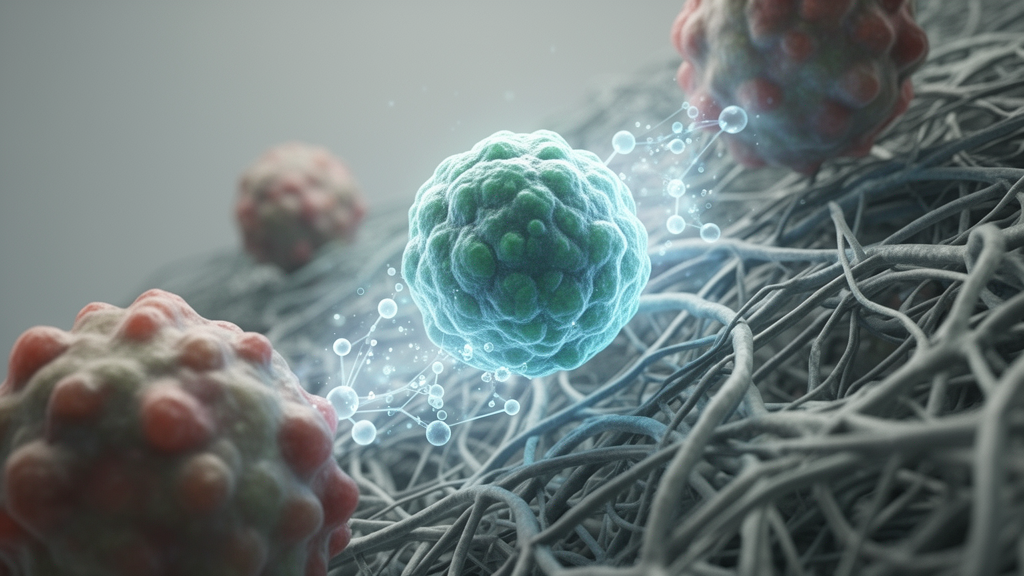
Image Credits: AI Generated

DOI: 10.1186/s12967-026-09230-7

Keywords: Regulatory T cells, Tregs, Immune tolerance, Tumor microenvironment, Autoimmune disease, Interleukin-2 signaling, Co-signaling checkpoints, Metabolic regulation, Epigenetic reprogramming, Treg cell therapy, Biomarkers, Patient stratification, Precision immune intervention, Dose windows, Treatment sequence, Efficacy monitoring, Safety monitoring, Clinical trial redesign

News Source: Nathaniel Bowman. (November 21, 2026). Microenvironment Differences Explain Regulatory T Cell Therapy Failures in Cancer and Autoimmunity. Scienmag.


Tags: autoimmune diseasebiomarkersClinical trial redesignCo-signaling checkpointsDose windowsEfficacy monitoringEpigenetic reprogrammingimmune toleranceInterleukin-2 signalingMetabolic regulationpatient stratificationPrecision immune interventionregulatory T cellssafety monitoringtreatment sequenceTreg cell therapyTregstumor microenvironment
Share12Tweet7Share2ShareShareShare1

Related Posts

Cementless Megaprosthesis Achieves Favorable Long-Term Stability After Bone Tumor Resection

Cementless Megaprosthesis Achieves Favorable Long-Term Stability After Bone Tumor Resection

November 22, 2026
Review Assesses Skin Reactions Across Modern Diabetes and Obesity Therapies

Review Assesses Skin Reactions Across Modern Diabetes and Obesity Therapies

November 22, 2026

Hemodialysis Frailty Profiles Show No Significant Link to Hospitalization After Adjustment

November 22, 2026

Rare Neural Autoantibodies Identified in Cerebrospinal Fluid in Schizophrenia Spectrum Disorders

November 22, 2026

POPULAR NEWS

  • Analysis Links Ganoderma Lucidum Target NR3C2 and Gut Microbiota to Insomnia

    Analysis Links Ganoderma Lucidum Target NR3C2 and Gut Microbiota to Insomnia

    29 shares
    Share 12 Tweet 7
  • THAM Catalyzes Efficient Green Gewald Synthesis of Diverse 2-Aminothiophene Heterocycles

    29 shares
    Share 12 Tweet 7
  • Waste Glass and Sisal Fibers Increase Concrete Strengths in Neural Network Study

    29 shares
    Share 12 Tweet 7
  • Cementless Megaprosthesis Achieves Favorable Long-Term Stability After Bone Tumor Resection

    29 shares
    Share 12 Tweet 7

About

We bring you the latest biotechnology news from best research centers and universities around the world. Check our website.

Follow us

Recent News

Wrinkled leaf-like electrocatalyst accelerates oxygen evolution reaction with high stability

Machine Learning Estimates Transparent Wood Transmittance More Accurately Than Haze

Controlled Forging Deformation Optimizes Aluminum Alloy Strength and Corrosion Resistance

Subscribe to Blog via Email

Enter your email address to subscribe to this blog and receive notifications of new posts by email.

Join 89 other subscribers
  • Contact Us

Bioengineer.org © Copyright 2023 All Rights Reserved.

Welcome Back!

Login to your account below

Forgotten Password?

Retrieve your password

Please enter your username or email address to reset your password.

Log In
No Result
View All Result
  • Homepages
    • Home Page 1
    • Home Page 2
  • News
  • National
  • Business
  • Health
  • Lifestyle
  • Science

Bioengineer.org © Copyright 2023 All Rights Reserved.