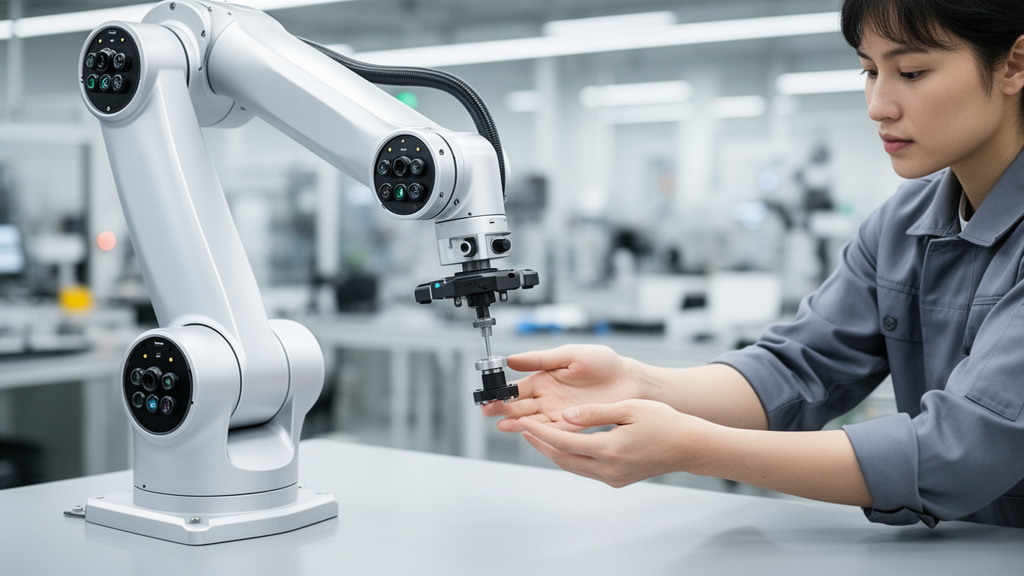
A collaborative robotic system designed for industrial assembly tasks can dynamically adjust its assistance by recognizing human actions in real time, according to research published in the Journal of Intelligent & Robotic Systems.
The framework integrates deep learning models with computer vision techniques to interpret human posture and operational context simultaneously. To monitor worker activity in real time, the researchers extracted upper-body skeletal data encompassing the operator’s limbs and torso using MediaPipe. These continuous skeletal data streams are fed directly into Long Short-Term Memory neural networks, enabling the system to model temporal movement patterns and classify specific human actions as they occur during collaborative assembly procedures.
In parallel with upper-body skeletal tracking, the architecture employs the You Only Look Once object detection method to identify and track relevant tools and materials within the shared working environment. By combining real-time human action recognition with visual object detection, the collaborative system establishes continuous context awareness regarding both the human operator’s physical actions and the surrounding components involved in the industrial assembly task.
This integrated perceptual information allows a UR5e collaborative robot to dynamically modulate its physical assistance rather than adhering to a fixed, pre-set operational schedule. By evaluating task context to anticipate tool requirements instead of relying on predetermined triggers, the collaborative robot determines what equipment the operator needs next. The system autonomously selects and presents the required tool to the worker at the right moment, enhancing coordination and collaboration throughout the assembly process.
Unlike traditional industrial automation approaches that rely strictly on rigid, pre-programmed execution sequences, the proposed collaborative robotic framework is sequence-independent. This architectural flexibility enables the robotic assistant to support variable and shifting assembly workflows without requiring manual reprogramming. Furthermore, by proactively adapting to worker actions and delivering tools on demand, the collaborative system demonstrates the practical potential to mitigate operator cognitive workload during demanding manufacturing tasks.
Subject of Research: Action recognition and dynamic tool assistance in human-robot collaborative assembly
Article Title: Action Recognition in Human-robot Teaming for Assembly Tasks
Article References: Neri, F., Frezza, A., Palmieri, G., Carbonari, L., & Callegari, M. (2026). Action Recognition in Human-robot Teaming for Assembly Tasks. Journal of Intelligent & Robotic Systems. https://doi.org/10.1007/s10846-026-02456-z
Image Credits: AI Generated
DOI: 10.1007/s10846-026-02456-z
Keywords: human-robot teaming, action recognition, collaborative robotics, industrial assembly, UR5e collaborative robot, Long Short-Term Memory, LSTM networks, MediaPipe, YOLO object detection, skeletal data tracking, upper-body tracking, dynamic tool assistance, sequence-independent assembly, operator cognitive workload, computer vision in robotics, flexible automation, real-time human tracking
News Source: Denise Maddox. (November 19, 2026). Collaborative Robot Anticipates Assembly Worker Needs Using Real-Time Action Recognition. Scienmag.