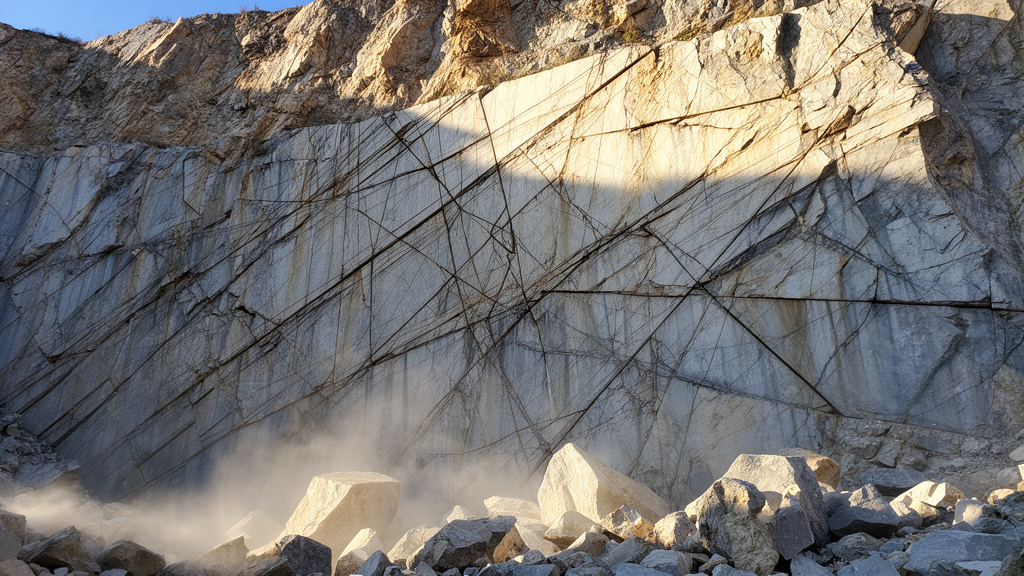
In rock engineering and geomechanics, determining macroscopic mechanical properties of jointed rock masses remains a formidable challenge due to pervasive natural discontinuities such as joints, faults, fractures, and bedding planes. These physical breaks introduce significant heterogeneity and anisotropy, causing the mechanical response of large rock domains to diverge substantially from laboratory-scale intact core specimens. To bridge this divide, researchers rely on the concept of the Representative Elementary Volume, defined as the minimum volume beyond which mechanical parameters achieve statistical convergence and the rock mass can be treated as an equivalent homogeneous continuum. A new three-dimensional numerical investigation published in the International Journal of Geo-Engineering by Aref Jaberi and Shokrollah Zare has systematically evaluated how joint geometrical and mechanical characteristics control this critical threshold.
The study implemented three-dimensional discrete element modeling using the distinct element program 3DEC to simulate jointed rock masses across cubic domain dimensions spanning from 0.5 meters to 16 meters. Rather than focusing on a single site-specific fracture pattern, the investigators adopted a fully parametric approach to decouple and evaluate the relative roles of geometric and mechanical parameters. The Representative Elementary Volume was quantitatively established by tracking the stabilization of peak strength and deformation modulus across increasing model sizes, adopting a convergence criterion where relative variation between successive model dimensions remained strictly within a 5% threshold. This convergence standard ensured that localized structural heterogeneities and boundary effects were systematically eliminated from the identified representative scales.
To evaluate the geometric influence of discontinuities, the researchers constructed models containing both single and intersecting double joint set configurations. The baseline intact rock was calibrated against laboratory data from granitic rock masses, exhibiting an elastic modulus of 37 GPa, a peak strength of 127 MPa, and a Poisson ratio of 0.3 under Mohr-Coulomb elastoplastic behavior. Joint planes were simulated using the Coulomb slip constitutive model, accommodating shear displacement and post-peak strength degradation. In the baseline geometry, joint dip angles were fixed at 25 degrees with perpendicular dip directions of 90 degrees and 270 degrees, forming a symmetric X-configuration that minimized geometric bias while enabling direct directional loading along Cartesian axes.
The numerical campaign comprised 260 distinct numerical models evaluated under three orthogonal boundary loading configurations along the X, Y, and Z axes, resulting in a total of 780 numerical simulations. Prior to directional compression, an initial isotropic stress of 1 MPa was uniformly applied in all directions as a numerical pre-conditioning step to stabilize block assemblies and eliminate artificial data fluctuations without recording plastic displacements. Stresses and displacements were tracked at model boundaries using custom FISH scripts, while strains were derived from normal displacement tracking points placed at uniform 25-centimeter intervals along each boundary face regardless of overall domain dimensions.
Analysis of directional loading demonstrated that the representative volume is profoundly scale-dependent and anisotropic, governed primarily by the orientation of the applied stress field relative to joint planes. When axial loading was aligned with the Y-direction, which was approximately parallel to the strike of the joint planes, joint mobilization was almost entirely absent. Consequently, both peak strength and deformation modulus converged at the smallest evaluated model dimension of 0.5 meters, matching intact rock behavior. In contrast, loading along the X-direction favorably activated shear sliding along the 25-degree dipping planes, producing the largest required volumes for parameter stabilization across all tested scenarios.
For a single joint set under X-direction loading, the strength-based Representative Elementary Volume converged at a domain size of 4 meters, whereas the modulus-based volume required a much larger domain size of 8 meters. Under vertical Z-direction loading, where stress acts closer to the normal of the dipping planes and limits shear slip, the strength-based threshold stabilized at 2 meters and the modulus-based threshold reached 4 meters. When an intersecting second joint set was introduced, the strength-based representative dimensions remained unchanged at 4 meters in X and 2 meters in Z, whereas the modulus-based volume in the X-direction expanded from 8 meters to 12 meters, marking a 50% increase in the domain required for stiffness stabilization.
This discrepancy between strength and modulus convergence highlights fundamental physical differences in how joint networks deform. Peak compressive strength is governed by localized, dominant failure planes that activate along the most favorably oriented discontinuities under the prevailing stress regime. Because the critical slip plane is already present in a single joint set, adding a complementary set does not alter the fundamental scale required for strength mobilization. In contrast, the deformation modulus reflects distributed, cumulative compliance across the entire fracture network, incorporating partial interface sliding, joint opening and closing, block rotation, and tortuous internal stress redistributions that demand significantly larger domain sizes to reach statistical continuum behavior.
The research team also systematically examined the impact of discontinuity density by varying joint numbers and spacing. In single joint configurations containing 5, 10, and 20 joints, increasing joint frequency systematically expanded the representative volume along the sliding-favorable X-direction. At the identified representative scale, this increase in joint density induced severe mechanical degradation: single-set X-direction compressive strength dropped from 58.3 MPa to 41.9 MPa, representing reductions of 54.6% to 67.4% compared to intact rock, while deformation modulus decreased from 23.4 GPa to 17.8 GPa. In double joint systems with up to 40 joints, strength fell from 55.8 MPa to 36.3 MPa and modulus declined from 23.3 GPa to 16.5 GPa.
When joint spacing was adjusted to 5, 10, and 20 centimeters, numerical specimens extracted via a spatial windowing strategy demonstrated that wider spacing enlarged the required model dimensions in the X-direction. For single joint sets, the strength-based representative scale shifted from 4 meters at 5 and 10 centimeters up to 8 meters at 20 centimeters spacing, while the modulus-based volume expanded from 8 meters to 12 meters. In the double joint set, strength-based sizes expanded progressively from 2 meters to 4 meters and 8 meters, while modulus sizes reached 12 meters. In contrast, Z-direction responses remained relatively stable, with peak strength experiencing less than 5% reduction regardless of spacing variations.
A critical outcome of the parametric evaluation was the response to joint mechanical properties, including normal stiffness (1,500 to 6,000 GPa/m), shear stiffness (150 to 600 GPa/m), cohesion (5 to 20 MPa), and friction angle (15 to 60 degrees). When these parameters were systematically varied while holding joint geometry constant, the estimated Representative Elementary Volume dimensions remained entirely invariant. For the single joint set, the strength-based volume consistently converged at 4 meters in the X-direction and 2 meters in the Z-direction, while the modulus-based volume converged at 8 meters in X and 4 meters in Z across all evaluated stiffness and strength ranges.
The authors explained this insensitivity by noting that the Representative Elementary Volume is fundamentally a geometric descriptor representing the spatial scale at which kinematic degrees of freedom and stress-transfer networks stabilize. Variations in joint interface stiffness influence only local contact force-displacement relationships without altering block geometry, connectivity, or kinematic constraints. Similarly, joint cohesion and friction angle dictate threshold shear resistance against sliding, but do not modify the spatial pattern of joint mobilization that governs domain-wide scale convergence. Consequently, the boundary where a jointed rock mass transitions toward an equivalent continuum is dictated overwhelmingly by fracture network architecture.
Although joint mechanical parameters did not change the representative scale itself, they exerted measurable secondary influences on mechanical magnitudes once that representative scale was attained. Increasing joint cohesion from 5 to 20 MPa produced modest stiffness gains in the X-direction, elevating deformation modulus from 21.0 to 25.0 GPa in single joint sets and from 22.0 to 28.0 GPa in double joint sets, while compressive strength experienced minor increases. Joint friction angle exerted the strongest mechanical influence: increasing friction from 15 to 60 degrees raised X-direction strength from 44.0 to 58.0 MPa and deformation modulus from 21.0 to 33.8 GPa in single joint configurations.
Under Z-direction compression, joint friction angle proved crucial at low values. When friction dropped to 15 degrees, a shift toward kinematic instability caused compressive strength to plummet to approximately 16 MPa in single joint sets and 15.5 MPa in double joint sets, representing an 88% reduction relative to intact rock. However, once friction angles reached 30 degrees or higher, joint contact was effectively maintained, limiting Z-direction strength loss to within 3%. The authors concluded that engineering practitioners designing tunnels, slopes, and dam foundations must prioritize precise geometric mapping of joint orientations, spacing, and network topology, as strength-based criteria alone risk substantially underestimating model domain requirements for deformation analyses.
Subject of Research: Numerical investigation of geometric and mechanical influences on representative elementary volumes in jointed rock masses
Article Title: Systematic numerical evaluation of the influence joint geometrical and mechanical parameters on the REV of rock masses
Article References: Jaberi, A., & Zare, S. (2026). Systematic numerical evaluation of the influence joint geometrical and mechanical parameters on the REV of rock masses. International Journal of Geo-Engineering, 17(1), Article 29. https://doi.org/10.1186/s40703-026-00293-5
Image Credits: AI Generated
DOI: 10.1186/s40703-026-00293-5
Keywords: representative elementary volume, jointed rock masses, discrete element method, 3DEC, rock mechanics, deformation modulus, peak strength, joint spacing, joint geometry, rock anisotropy, scale dependency, rock engineering, Mohr-Coulomb criterion, Coulomb slip model, geotechnical engineering, numerical modeling
News Source: Denise Maddox. (November 19, 2026). Rock mass representative volume depends strongly on joint geometry rather than mechanical properties. Scienmag.