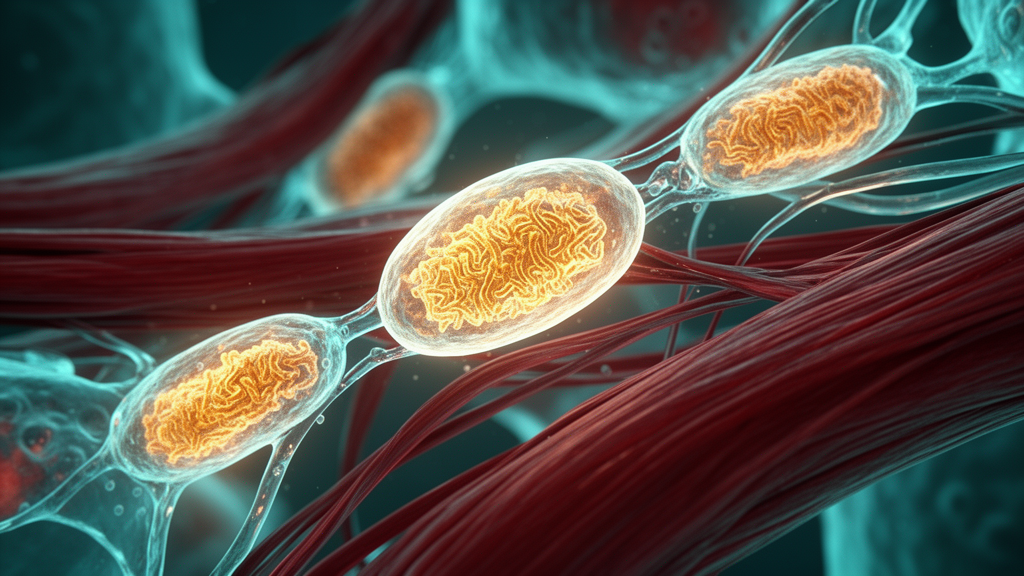
Intercellular mitochondrial transfer produces divergent, context-dependent outcomes in cardiovascular disease, operating either to restore bioenergetics or propagate tissue injury depending on physiological conditions, according to a scientific review published in Molecular Medicine by researchers Yuhong Tang and Feng Huang. The analysis evaluates how mitochondrial homeostasis reaches beyond cell-autonomous quality control systems, emphasizing that mitochondrial movement between cells cannot be characterized as uniformly beneficial or uniformly harmful.
In certain cellular contexts, transferred mitochondria can rescue cellular bioenergetics and support active cardiovascular tissue repair. However, when damaged mitochondrial material is transferred instead, the process can propagate oxidative stress, trigger sustained inflammatory signaling, and regulate pathways of programmed cell death. This fundamental duality has historically limited therapeutic interpretation across cardiac research.
To resolve these conflicting outcomes, the review examines how the exact identity and functional state of transferred mitochondrial material interact with the donor cell state, the physical transfer route, recipient cell metabolism, local inflammatory context, and intracellular processing pathways. The authors explicitly differentiate endogenous intercellular mitochondrial transfer, which occurs naturally between cells, from mitochondrial transplantation, which involves the deliberate therapeutic administration of isolated mitochondrial preparations into diseased tissues.
The researchers assess these dynamics across multiple major cardiovascular settings, comparing the physical source and form of transferred material, administration routes, recipient responses, and the overall strength of evidence for clinical benefit versus harm. These evaluated conditions include acute ischemia and reperfusion injury, cardiomyopathy, heart failure, vascular dysfunction, pulmonary hypertension, critical illness related myocardial injury, and donor heart preservation during transplantation procedures.
According to the review, therapeutic benefit is most plausible when transferred mitochondria possess preserved respiratory function, encounter salvageable recipient cells within a permissive metabolic window, and operate where recipient intracellular quality control systems remain functional.
Conversely, the delivery of oxidatively damaged mitochondria, the presence of metabolic mismatch, or defective recipient clearance machinery can rapidly convert mitochondrial transfer into an inflammatory and cytotoxic burden. Because conventional approaches have frequently treated mitochondrial movement as a uniform organelle-replacement strategy, the authors advocate reframing mitochondrial transfer as a multi-node, pharmacologically tractable biological network where distinct stages of transfer can be individually modulated or therapeutically targeted.
Several translational opportunities emerge from this network perspective, including quality-controlled mitochondrial transplantation protocols, the application of mitochondria-enriched extracellular vesicles, and targeted or biomaterial-assisted delivery systems.
Moving forward, the authors conclude that future translational development must systematically couple rigorous product identity, purity, potency, and safety evaluations with mechanism-based patient stratification, recipient-cell tracing techniques, and clinically relevant long-term cardiovascular endpoints. Establishing this context-guided framework is essential for designing precise mitochondria-based therapeutics and clearly defining when mitochondrial supplementation should be actively promoted, redirected, or avoided.
Subject of Research: Context-dependent mitochondrial transfer and therapeutic translation in cardiovascular disease
Article Title: Context-dependent mitochondrial transfer in cardiovascular disease: mechanisms and therapeutic translation
Article References: Tang, Y., & Huang, F. (2026). Context-dependent mitochondrial transfer in cardiovascular disease: mechanisms and therapeutic translation. Molecular Medicine. https://doi.org/10.1186/s10020-026-01669-0
Image Credits: AI Generated
DOI: 10.1186/s10020-026-01669-0
Keywords: mitochondrial transfer, mitochondrial transplantation, cardiovascular disease, mitochondrial dysfunction, ischemia reperfusion injury, cardiomyopathy, heart failure, pulmonary hypertension, vascular dysfunction, donor heart preservation, cellular bioenergetics, extracellular vesicles, macrophage clearance, oxidative stress, organelle quality control, targeted delivery
News Source: Ophelia Keating. (November 19, 2026). Mitochondrial Transfer Can Help or Harm Hearts Depending on Cellular Context. Scienmag.