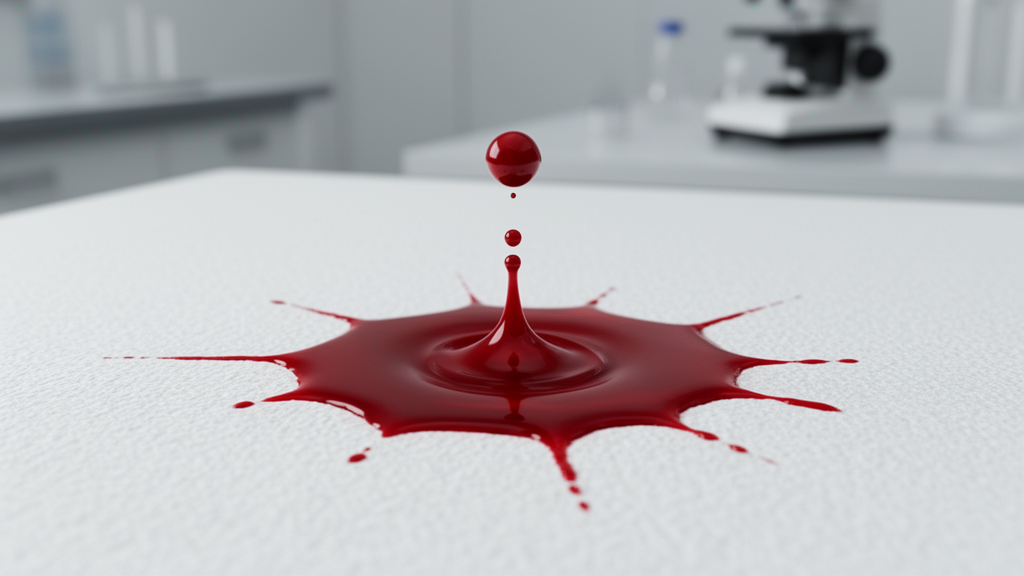
Forensic bloodstain pattern analysis serves as a critical diagnostic discipline for reconstructing the dynamics of violent crime scenes, yet its accuracy is frequently limited by the challenges inherent in working with human blood. Authenticated blood samples introduce significant risks related to biohazard management, alongside complications in transportation, storage, and disposal. Furthermore, the inherent donor-to-donor variability of whole blood complicates standardized training and controlled experimental research. Addressing these constraints, researchers have introduced the Blood-Mimetic Engineered Simulant for Trace-Drop, or BEST, a colloidal-derived forensic material designed to replicate the essential optical, rheological, and deposition characteristics of blood. By moving away from subjective visual matching and toward a composition-property-performance framework, this new platform offers a reproducible and tunable medium for forensic scientists, allowing for controlled investigations into the mechanisms of droplet formation, flight, and impact behavior on diverse substrates.
The formulation of BEST relies on a careful balance of biological and synthetic components to mimic the complex physical properties of blood. The researchers utilized human hemoglobin to provide necessary optical properties and heme-associated absorbance, while sodium alginate was incorporated as a primary rheological modifier to adjust fluid viscosity. To achieve the colorimetric characteristics required for forensic studies, the team integrated betalain, derived from raw beet extract. The molecular architecture of the simulant was stabilized through N-succinimide 3-maleimidopropionate, or SMP, crosslinking chemistry within a phosphate-buffered saline solution maintained at a pH of 7.4. This selection of reagents was deliberate, aiming to maintain a stable colloidal system that prevents premature aggregation or phase separation, thereby ensuring that the resulting fluid behaves as a non-Newtonian biological suspension during experimental use.
A central feature of the development process was the application of Taguchi orthogonal array methodology, which enabled the researchers to optimize the synthesis parameters systematically. This approach was vital for managing the complex interplay between component concentration and processing variables such as temperature, mixing speed, and the rate of double-jet addition. By conducting two sequential Taguchi orthogonal array experiments, the team identified the ideal conditions that resulted in the desired consistency. The optimized protocol consistently produced formulations with viscosities between 4.10 and 4.25 centipoise and densities ranging from 1.08 to 1.12 grams per milliliter, measurements that are critical for achieving blood-like flow characteristics. These parameters were carefully tuned to ensure that the droplets behave predictably, whether undergoing impact on non-porous surfaces or diffusing into porous materials.
The physicochemical evaluation of BEST confirmed the stability of the colloidal system across several key indicators. Zeta potential measurements provided essential data on the electrostatic environment of the suspension, with values ranging from −33 to −40 millivolts. These values suggest that the formulation is governed by strong particle-particle repulsion, which inhibits aggregation and maintains homogeneity over time. This stability is further reinforced by the retention of characteristic heme-associated absorbance bands, as confirmed by ultraviolet-visible spectroscopy. The spectra showed prominent features near 540 and 580 nanometers, confirming that the hemoglobin-associated chromophores remain intact following incorporation into the simulant. These spectroscopic features were monitored over time to determine shelf life, with results indicating that the optical properties are preserved for approximately two weeks under ambient conditions and up to three weeks when stored under refrigeration.
A significant portion of the investigation focused on how the simulant responds when deposited on different surfaces, a factor that is often overlooked in simpler blood-mimetic models. The researchers performed controlled experiments on a variety of substrates, including granite, glass, tissue paper, and preprinted calendar paper. By employing Red-Green-Blue image analysis, the team quantified the colorimetric differences of the stains to assess visual correspondence with deoxyhemoglobin reference stains. The results showed that while the core formulation is consistent, the appearance of the stain is heavily influenced by the specific interaction between the fluid and the surface. For instance, the same formulation produced distinct color signatures when applied to porous versus non-porous surfaces, highlighting the importance of capillary transport, absorption, and surface reflectance in the overall visual appearance of the dried stain.
The researchers also utilized CrystalMaker software to conduct a molecular-level interpretation of the interactions between hemoglobin and the formulation components. While this was not intended to represent the final structural organization, it provided valuable qualitative insights into how surface-accessible residues, such as cysteine and lysine, might participate in oxidation or hydrogen bonding. These interactions are hypothesized to contribute to the observed colloidal stability and the aging behavior of the stains. This mechanistic understanding is fundamental for ensuring that the simulant remains reliable across a wide range of laboratory conditions, effectively bridging the gap between basic chemical formulation and complex forensic application. The consistency of these findings across multiple formulations suggests that the materials-characterized platform can be adapted to specific training or research requirements.
One of the key strengths of this approach is the ability to standardize the parameters of bloodstain pattern analysis without the reliance on donor-specific biological material. The study demonstrated that droplet growth, necking, and detachment during deposition experiments produce patterns that are morphologically consistent with the measured rheological properties. These reproducible behaviors make the simulant particularly suitable for bloodstain pattern analysis workflows, where precise reconstruction of bloodletting events is necessary. Because the physical properties—density, viscosity, and color—are well-defined and can be adjusted, researchers can design experiments that systematically vary one parameter at a time, providing a level of control that is essentially unattainable when using whole human blood.
However, the investigators acknowledged that blood behavior is inherently context-dependent and that no single simulant can be considered a universal substitute. The study explicitly warns against the assumption that a material validated for one specific impact condition or surface type will necessarily demonstrate equivalent performance under all other experimental circumstances. As a result, the development of BEST emphasizes the need for evaluating simulants based on specific performance objectives. The researchers categorized the observed differences in color and spreading behavior as outcomes of fluid-substrate interactions, suggesting that forensic practitioners must account for these variations when interpreting bloodstain patterns generated with any simulant.
Future validation remains an important consideration for the adoption of BEST in standardized forensic protocols. While the current results are promising, the study notes that additional interlaboratory comparisons and further verification against established commercial simulants are necessary. The team proposes that future research should focus on refining the metrics used to characterize stain morphology, particularly for more complex patterns involving droplet overlap and high-velocity impact. By integrating these findings into a broader forensic framework, the researchers aim to establish a more robust foundation for bloodstain reconstruction, ultimately improving the reliability of the tools available to investigators working on violent crime scenes.
In conclusion, the development of the BEST platform marks a meaningful step forward in the creation of reproducible, safe, and experimentally versatile blood simulants. By combining colloidal synthesis with rigorous Taguchi orthogonal array optimization, the researchers have managed to produce a formulation that balances the optical, rheological, and physicochemical requirements of forensic bloodstain analysis. The integration of spectroscopic, image-based, and molecular assessment methods provides a multifaceted approach to validation, ensuring that the simulant performs predictably across varied deposition geometries. As the field of forensic science continues to prioritize evidence-based methodology, the adoption of characterized materials like BEST may help reduce the reliance on biohazardous samples, providing a consistent platform for method development, controlled laboratory research, and forensic practitioner training.
During the optimization process, the researchers synthesized approximately forty distinct formulations across batch volumes ranging from 1 milliliter to 1 liter. Under the optimized protocol, colloidal synthesis was conducted at 25 degrees Celsius, atmospheric pressure, and a controlled pH of 7.4. The standardized chemical recipe specified human hemoglobin at a concentration of 1.05 × 10⁻² grams per milliliter, combined with 1.00 milligram per milliliter of betalain, 1 to 5 mass percent sodium alginate, and 5 to 8 mass percent SMP crosslinker dissolved in phosphate-buffered saline at 1 pack per liter. Mechanical stirring was maintained at 410 revolutions per minute alongside double-jet reagent addition at approximately 60 drops per minute. Optical monitoring during synthesis tracked reaction kinetics at 600 nanometers, revealing an absorbance increase over the initial 240 minutes before settling into an equilibrium plateau between 260 and 300 minutes, confirming colloidal homogeneity rather than premature sedimentation or gelation.
Quantitative colorimetric assessments further clarified the correspondence between the engineered simulants and biological references. On a waxed floor surface, a deoxyhemoglobin reference yielded baseline red, green, and blue coordinates of (207, 158, 170), while freshly prepared BEST10-01 demonstrated close agreement at (206, 163, 170). In comparative similarity trials, fresh BEST10-6 achieved strong visual overlap with a primary blood control, exhibiting a color deviation metric of 5.1 ΔRGB. However, exposure to differing environments produced noticeable spectral shifts. Storing BEST10-06 for five days raised its coordinates to (212, 197, 200), reflecting a measurable lightening. Substrate-driven effects were similarly pronounced across materials such as vinyl flooring, laboratory bench tops, and photocopy paper. Applying the BEST11-06 mixture to calendar paper resulted in coordinates of (177, 127, 129) on horizontal floor placements, which further dropped to (161, 114, 118) when oriented vertically on wall surfaces.
Subject of Research: Development and forensic evaluation of a colloidal blood-mimetic simulant.
Article Title: Forensic evaluation of blood-mimetic engineered simulants derived from colloidal approach
Article References: Rancourt, E., Houf, D., Sandoval, M., Castro, M., Wang, Z., Bashir, S., & Liu, J. L. (2026). Forensic evaluation of blood-mimetic engineered simulants derived from colloidal approach. Frontiers in Materials, 13, Article 1984435. https://doi.org/10.3389/fmats.2026.1984435
Image Credits: AI Generated
DOI: 10.3389/fmats.2026.1984435
Keywords: blood simulant, forensic science, bloodstain pattern analysis, colloidal suspension, physicochemical characterization, hemoglobin, rheology, RGB image analysis, zeta potential, Taguchi method, forensic training, colloidal stability, materials science, biomimetic materials, BPA research
News Source: Denise Maddox. (November 19, 2026). Colloidal Engineered Blood Simulant Enhances Forensic Bloodstain Pattern Analysis Reproducibility. Scienmag.