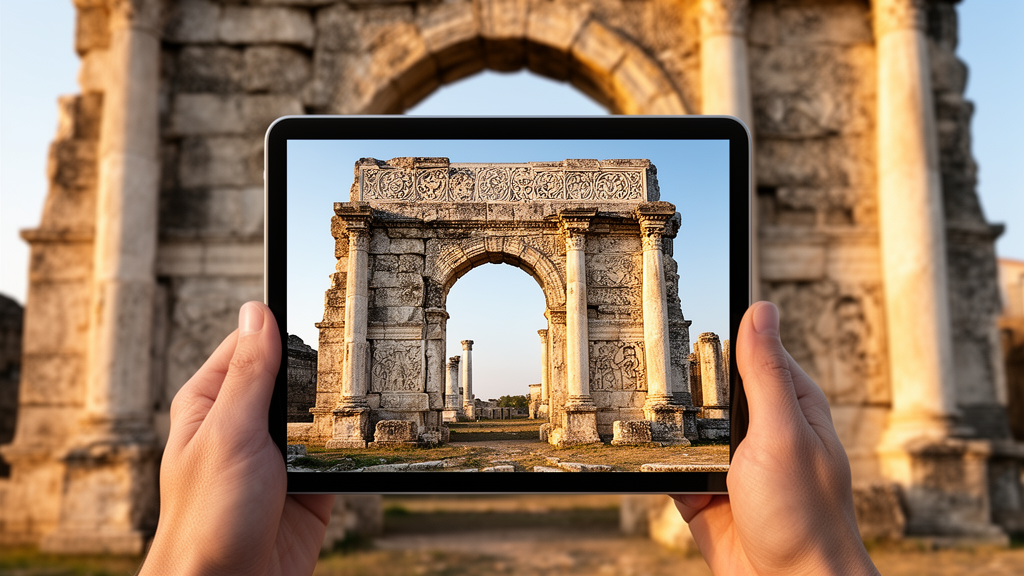
Architectural heritage restoration constitutes a complex, multidisciplinary process dedicated to preserving the physical authenticity of historic architecture. However, physical conservation frequently requires comprehensive documentation, extended execution timelines, high manpower allocations, and substantial financial expenditures. These practical and economic constraints often impede conservation initiatives, leading to the abandonment and physical deterioration of high-value heritage structures along with the irreversible loss of both tangible architectural knowledge and intangible cultural memory. To address these compounding barriers, investigators are assessing how recent advancements in information and communication technology, mobile computing, and immersive visualization can serve as alternative mechanisms to reduce the operational workloads, timelines, and budgets associated with visual architectural restoration through digital workflows.
In a study published in the Journal of Umm Al-Qura University for Engineering and Architecture, researchers examine the application of the Mobile Augmented Reality Platform, designated as MARP, alongside the practice of Mobile Augmented Reality Restoration, or MARR. The investigation highlights how mobile augmented reality enables real-time digital overlays of reconstructed historical buildings directly onto physical archaeological ruins and urban settings using everyday, consumer-grade hardware such as smartphones and tablets. Methodologically, the authors structured their qualitative inquiry around two primary empirical anchors: a retrospective literature review analyzing the pioneering historical framework of the early ARCHEOGUIDE system, and an action research investigation evaluating the contemporary deployment of MARP for preserving Malay Colonial architectural heritage.
The study establishes that architectural heritage functions not merely as static, physical fabric frozen in historical time, but as an open-air memory archive embodying evolving social practices, communal identity, and tacit craft traditions. While physical restoration must safeguard structural integrity, the authors clarify that mobile augmented reality visualization cannot remediate material degradation or restore physical structural stability. Instead, its primary operational contribution centers on safeguarding, documenting, and conveying architectural knowledge across generations, ensuring that historical spatial understanding remains intact so that physical reconstructions may occur whenever future economic and technical conditions permit.
Conceived as a pioneering mobile augmented reality system for cultural heritage tourism, ARCHEOGUIDE demonstrated how digital reconstructions could be superimposed onto archaeological remains to deliver educational and interpretive site experiences. The technical architecture of ARCHEOGUIDE operated on a client-server configuration structured across three core modules: a central Site Information Server running on a personal computer hosting multimedia databases, a mobile unit carried by visitors, and a dedicated dual-network wireless communication infrastructure.
Within the ARCHEOGUIDE paradigm, the mobile unit hardware encompassed laptops, pen-operated personal computers, or palmtop computers connected to head-mounted displays and sensory trackers, including built-in cameras, orientation inclinometers, and Global Positioning System receivers. Networking relied on an IEEE 802.11 wireless local area network established via PCMCIA expansion cards for transmitting audiovisual data, alongside a point-to-point wireless receiver tuned to low-frequency 300 kHz differential GPS correction beacons operating under RTCM SC-104 specifications. Although historically significant for demonstrating personalized, on-site historical exploration, the authors note that ARCHEOGUIDE was constrained by first-generation hardware limits, bulky configurations, and tracking latencies, establishing design precedents that modern mobile platforms must modernize rather than directly duplicate.
Building on these foundational systems, the researchers conducted an action research project evaluating the modern MARP framework applied to the ruined rear house of Rumah Datuk Setia, representing Malay Colonial architectural heritage. The action research methodology allowed the investigators to engage in iterative cycles of planning, execution, direct observation, and personal reflection during cognitive and operational tasks on-site. The modernized MARR platform integrated three functional layers: a mobile application utilizing natural user interfaces and integrated device sensors, standard mobile hardware running iOS or Android operating systems, and a supporting cloud computing backend connected via wireless internet services.
The development workflow of the MARR project progressed through five structured stages. Stage one comprised physical surveying and field documentation, where researchers deployed contact measuring, tracing, scrubbing, and moulding alongside literature reviews and oral interviews, while applying UV-mapping techniques to authentic physical materials and surface textures. Stage two focused on virtual house reconstruction using SketchUp software paired with augmented reality export plugins, systematically organizing architectural assets into five modular information strata: spatial organization, building components, construction systems, ornamentation, and decorative fixtures. This layered categorization reduced three-dimensional digital asset file sizes, optimizing mobile rendering speeds while preserving technical metadata for restoration teams.
In the subsequent deployment phases, stage three established a mobile Web 2.0 communication pipeline linking field devices to cloud storage for real-time asset transfer and on-demand model selection. Stage four utilized the device’s internal computational processors and camera tracking to register geolocation coordinates during site walkthroughs, generating spatially aligned augmented models on mobile screens. Stage five executed the on-site user experience, where field researchers and visitors navigated the virtual reconstructions using natural touch interfaces. By utilizing consumer smartphones rather than specialized industrial hardware, the system demonstrated an accessible method for visualizing lost architectural morphology directly over surviving foundations.
Despite these technological efficiencies, the study identified substantial practical limitations governing field performance, notably centered on hardware heterogeneity, visualization quality, geolocation precision, and cognitive load. Rendering performance remains directly contingent on mobile graphical processing units and display resolutions; large, photorealistic three-dimensional asset files frequently caused extended download latencies, navigation lagging, and visual degradation on low-tier mobile platforms. Furthermore, establishing precise spatial alignment between digital models and physical terrain proved challenging across expansive heritage sites, where inconsistent geolocation tracking degraded coordinate orientation and caused visual drift.
The authors also observed that navigating dense, multilayered architectural datasets through small mobile interfaces can induce cognitive overload, leading users to lose their spatial orientation within the virtualized heritage environment. To mitigate these challenges, the study underscores that mobile augmented reality systems require careful usability engineering grounded in the Technology Acceptance Model, balancing functional system requirements with user experience design. The researchers conclude that while mobile augmented reality cannot replace authentic physical preservation, it provides a resilient, cost-effective digital preservation pathway that democratizes public access and protects vulnerable heritage sites from overuse, serving as a direct operational companion for restoration professionals.
The authors situated their investigation within a wider scholarly trajectory, noting that immersive technologies have transitioned from isolated experimental demonstrations into established methods for cultural heritage documentation and public engagement. To illustrate this maturation, the paper references a bibliometric analysis examining 1,214 scholarly publications released between 2014 and mid-2024, which identified consistent, sustained growth in research output spanning augmented, virtual, and mixed reality systems in heritage contexts. Furthermore, a meta-analysis evaluating augmented reality projects conducted between 2008 and 2024 revealed that deployments are primarily motivated by educational outreach, heritage tourism, gamification, visitor interaction, and digital preservation. That analysis observed that the vast majority of existing initiatives target tangible structures, such as monuments and historic buildings, while intangible cultural heritage remains comparatively under-explored. The researchers trace the foundation of modern virtual heritage back to early landmark digital reconstructions, including the Dudley Castle project known as the Virtual Tour, which initially demonstrated how three-dimensional computer modeling and information technology could convey historic architecture.
To guide platform development, the study examines structured design methodologies alongside the Technology Acceptance Model, which evaluates usability across five core dimensions: usefulness, ease of use, enjoyment, behavioural intention, and individual variables. The authors review requirement frameworks, highlighting the Requirement Pyramid models originally developed by Dean and Don and later adapted by Hoffmann. This structure bifurcates system design into a Problem Domain that identifies fundamental preservation needs and objectives, and a Solution Domain that translates these demands into functional technical specifications, user requirements, and institutional aims. The paper also reviews comparative field implementations, such as the Knossos augmented reality guide deployed at the archaeological site of Knossos in Crete, Greece. That platform incorporated an iterative six-step design cycle encompassing requirements analysis, application design, prototype implementation, functional testing, prototype finalisation, and formal user trials to deliver contextual multimedia information and assist visitors in locating specific Points of Interest across complex excavation grounds.
Beyond tourism, the researchers highlight practical operational utilities that mobile augmented reality platforms offer to field practitioners during physical restoration tasks. Because the platform connects to structured heritage archives stored in cloud computing systems, restoration specialists can cross-examine surviving physical structures alongside digitally reconstructed layers directly on-site. This immediate access allows multidisciplinary teams to analyze contextual relationships between physical remains and virtual models, while also enabling researchers to update cloud-stored documentation based on freshly observed field discoveries. Additionally, virtual overlays make architectural details visually accessible in hazardous or structurally compromised sectors that are otherwise closed to personnel due to safety concerns. By redirecting visitor exploration into augmented spaces, the platform also shields delicate physical sites from excess foot traffic, inadvertent human damage, and ongoing physical deterioration.
The authors conclude that mobile augmented reality platforms possess versatile functional capabilities that can expand into architectural history education, engineering, and construction workflows. The platform architecture readily integrates with diverse auxiliary technologies, including high-resolution digital cameras, Inertial Measurement Units, differential positioning systems, mobile web interfaces, and gamification elements. To resolve persistent field constraints surrounding geolocation alignment and visual stability, the researchers stress the need for continued technical refinement. Future investigations must focus on enhancing tracking precision through simultaneous localization and mapping techniques and incorporating artificial intelligence to enable personalized visitor experiences, ensuring that digital restoration tools maintain long-term institutional, ethical, and pedagogical value across diverse architectural landscapes.
Subject of Research: Mobile augmented reality platforms for architectural heritage restoration and visualization
Article Title: Mobile augmented reality platform: an alternative visualization technique for architectural heritage restoration
Article References: Kassim, M. H., Abdullah, F., & Razak, M. R. A. (2026). Mobile augmented reality platform: an alternative visualization technique for architectural heritage restoration. Journal of Umm Al-Qura University for Engineering and Architecture. https://doi.org/10.1007/s43995-026-00299-1
Image Credits: AI Generated
DOI: 10.1007/s43995-026-00299-1
Keywords: mobile augmented reality, architectural heritage, virtual restoration, ARCHEOGUIDE, MARP, MARR, Rumah Datuk Setia, cultural heritage preservation, mobile computing, photogrammetry, action research, heritage visualization, client-server architecture, natural user interface, geolocation accuracy, cognitive overload, cloud computing
News Source: Denise Maddox. (November 19, 2026). Mobile Augmented Reality Platforms Offer Viable Visualization for Architectural Heritage Restoration. Scienmag.