• HOME
  • NEWS
  • EXPLORE
    • CAREER
      • Companies
      • Jobs
    • EVENTS
    • iGEM
      • News
      • Team
    • PHOTOS
    • VIDEO
    • WIKI
  • BLOG
  • COMMUNITY
    • FACEBOOK
    • INSTAGRAM
    • TWITTER
Saturday, February 7, 2026
BIOENGINEER.ORG
No Result
View All Result
  • Login
  • HOME
  • NEWS
  • EXPLORE
    • CAREER
      • Companies
      • Jobs
        • Lecturer
        • PhD Studentship
        • Postdoc
        • Research Assistant
    • EVENTS
    • iGEM
      • News
      • Team
    • PHOTOS
    • VIDEO
    • WIKI
  • BLOG
  • COMMUNITY
    • FACEBOOK
    • INSTAGRAM
    • TWITTER
  • HOME
  • NEWS
  • EXPLORE
    • CAREER
      • Companies
      • Jobs
        • Lecturer
        • PhD Studentship
        • Postdoc
        • Research Assistant
    • EVENTS
    • iGEM
      • News
      • Team
    • PHOTOS
    • VIDEO
    • WIKI
  • BLOG
  • COMMUNITY
    • FACEBOOK
    • INSTAGRAM
    • TWITTER
No Result
View All Result
Bioengineer.org
No Result
View All Result
Home NEWS Science News Cancer

How a cancer-causing virus blocks human immune response

Bioengineer by Bioengineer
January 27, 2015
in Cancer
Reading Time: 2 mins read
0
Share on FacebookShare on TwitterShare on LinkedinShare on RedditShare on Telegram

Scientists at The University of Texas at Austin and the University of California at San Francisco have revealed how a type of cancer-causing virus called Epstein-Barr virus (EBV) outwits the human body’s immune response. By helping explain why some cancer therapies fail, the discovery might lead to more effective treatments.
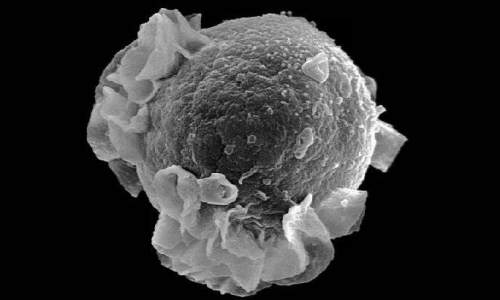
How a cancer-causing virus blocks human immune response

An Epstein-Barr virus erupting from an infected immune cell, called a B lymphocyte. Photo Credit: Analytical Imaging Facility at the Albert Einstein College of Medicine.

EBV, a virus of the herpes family, causes an estimated 200,000 cancers every year, including lymphomas, nasopharyngeal cancers and some stomach cancers. Better anti-viral drugs could help thousands of people suffering from these cancers.

Many viruses, including EBV, carry small molecules called microRNAs that they use to hijack natural processes in a host’s cells during an infection. Viral microRNAs are known to prevent host cell death, promote host cell growth and dampen the host cell’s viral defenses. However, scientists don’t yet know which viral microRNAs perform which functions.

Jennifer Cox, a graduate student working with Associate Professor Chris Sullivan at The University of Texas at Austin, identified microRNAs made by several herpes viruses that block a component of a human’s innate immune system called the interferon response. Immune cells within the body release interferon to prevent viral replication, and this often results in slower growth or death of infected host cells. The researchers found that several herpes viruses have independently evolved similar mechanisms to block the host’s interferon response.

“I was actually surprised that all these different viruses had converged on the same mechanism for blocking the body’s defenses,” said Sullivan. “As a biologist, I see this as evolutionary gold.”

Interferon is sometimes used in combination with chemotherapy to treat lymphomas. Although it is an effective treatment for some cancers, it does not significantly affect others. This latest research has demonstrated that EBV lymphoma cells are less susceptible to interferon therapy.

“This could explain the variability seen in the success of previous interferon-based cancer treatments,” said Cox. “While this work does not immediately identify new drugs, the fact that such different tumor viruses have converged on the same strategy makes this an exciting pursuit for future therapies against viral cancers.”

Story Source:

The above story is based on materials provided by University of Texas at Austin.

Share12Tweet8Share2ShareShareShare2

Related Posts

Deep Learning Uncovers Tetrahydrocarbazoles as Potent Broad-Spectrum Antitumor Agents with Click-Activated Targeted Cancer Therapy Approach

February 7, 2026

Newly Discovered Limonoid DHL-11 from Munronia henryi Targets IMPDH2 to Combat Triple-Negative Breast Cancer

February 7, 2026

New Discovery Reveals Why Ovarian Cancer Spreads Rapidly in the Abdomen

February 6, 2026

New Study Finds Americans Favor In-Clinic Screening Over At-Home Tests for Cervical Cancer

February 6, 2026
Please login to join discussion

POPULAR NEWS

  • Robotic Ureteral Reconstruction: A Novel Approach

    Robotic Ureteral Reconstruction: A Novel Approach

    82 shares
    Share 33 Tweet 21
  • Digital Privacy: Health Data Control in Incarceration

    63 shares
    Share 25 Tweet 16
  • Study Reveals Lipid Accumulation in ME/CFS Cells

    57 shares
    Share 23 Tweet 14
  • Breakthrough in RNA Research Accelerates Medical Innovations Timeline

    53 shares
    Share 21 Tweet 13

About

We bring you the latest biotechnology news from best research centers and universities around the world. Check our website.

Follow us

Recent News

Evaluating Pediatric Emergency Care Quality in Ethiopia

TPMT Expression Predictions Linked to Azathioprine Side Effects

Improving Dementia Care with Enhanced Activity Kits

Subscribe to Blog via Email

Success! An email was just sent to confirm your subscription. Please find the email now and click 'Confirm' to start subscribing.

Join 73 other subscribers
  • Contact Us

Bioengineer.org © Copyright 2023 All Rights Reserved.

Welcome Back!

Login to your account below

Forgotten Password?

Retrieve your password

Please enter your username or email address to reset your password.

Log In
No Result
View All Result
  • Homepages
    • Home Page 1
    • Home Page 2
  • News
  • National
  • Business
  • Health
  • Lifestyle
  • Science

Bioengineer.org © Copyright 2023 All Rights Reserved.