Triple transfection of cultured host cells during recombinant adeno-associated virus packaging drives significant activation of ribosome biogenesis and RNA processing pathways rather than general stress responses alone. Researchers investigating vector generation discovered that manipulating these cellular translation mechanisms can directly alter final viral yields in laboratory preparations.
Plasmid-based triple transfection of human embryonic kidney 293T cells serves as the standard operational platform for producing recombinant adeno-associated virus vectors. Prior transcriptomic investigations into this packaging system largely concentrated on broad cellular reactions, frequently highlighting innate immune pathway activation or metabolic remodeling within the host cells.
To better characterize the immediate molecular events supporting vector packaging, investigators Anju Ganesan and Balaji Balakrishnan performed high-throughput RNA sequencing twelve hours after introducing the viral packaging plasmids. Their transcriptomic analysis identified 1,453 nominally significant differentially expressed genes, comprising 1,198 upregulated transcripts and 255 downregulated transcripts across the host genome.
Ranked gene set enrichment analysis of the sequenced transcriptomes revealed pronounced enrichment in ribosome biogenesis, ribosome-associated functions, and cellular RNA processing pathways. In parallel, gene ontology over-representation analysis demonstrated significant enrichment for ribonucleoprotein complex assembly, non-coding RNA processing, and structural ribosome biogenesis pathways, pointing to coordinated post-transcriptional mobilization.
Constructing a protein-protein interaction network from the differential expression data identified specific ribosome biogenesis components as central hub genes. The analysis highlighted NIFK, RSL24D1, and RPF2 at the core of the network, and the authors subsequently confirmed the altered expression levels of these key genes using quantitative polymerase chain reaction assays.
Regulatory network interrogation using VIPER computational analysis explored the transcription factors responsible for orchestrating these transcriptomic changes following plasmid delivery. The evaluation identified endoplasmic reticulum stress-associated ZNF263 as the leading upstream transcription factor, showing predicted regulatory activation across 298 downstream target genes during packaging.
The sequencing profile also revealed altered expression among 142 long non-coding RNAs, which play crucial regulatory roles during cellular stress. Among the most prominent differentially expressed long non-coding transcripts identified in the transfected cells were ZFAS1, CASC2, CASC9, SNHG8, and THAP9-AS1, indicating complex non-coding transcriptional responses during assembly.
To establish whether modulating ribosome biogenesis influenced physical vector output, the researchers administered the pharmacological agent amodiaquine to small-scale cell cultures. This targeted chemical modulation produced a modest twenty-eight percent increase in recombinant adeno-associated virus vector yield compared to untreated standard packaging conditions.
The investigators concluded that cellular adaptation during viral packaging relies heavily on ribosome biogenesis, RNA processing mechanisms, and long non-coding RNA regulatory circuits. However, they emphasized that extensive validation across varying production scales and environmental parameters remains essential before determining whether these findings can assist clinical manufacturing platforms.
Subject of Research: Host cell transcriptomic adaptation and ribosome biogenesis modulation during recombinant adeno-associated virus production
Article Title: Ribosome biogenesis and stress long non-coding RNAs in recombinant adeno-associated virus production
Article References: Ganesan, A., & Balakrishnan, B. (2026). Ribosome biogenesis and stress long non-coding RNAs in recombinant adeno-associated virus production. Applied Microbiology and Biotechnology. https://doi.org/10.1007/s00253-026-14099-z
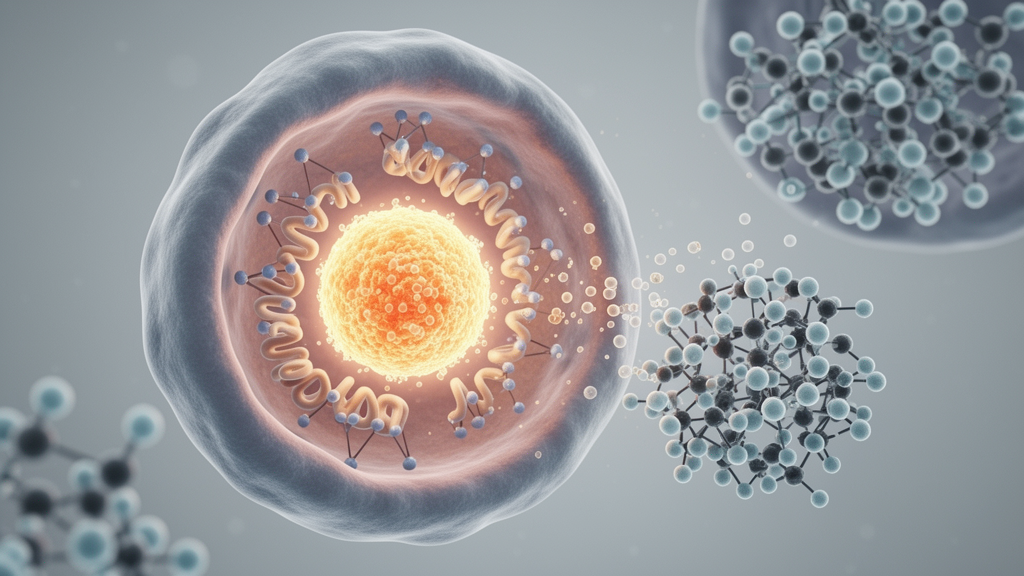
Image Credits: AI Generated
DOI: 10.1007/s00253-026-14099-z
Keywords: recombinant adeno-associated virus, HEK293T cells, triple transfection, ribosome biogenesis, RNA sequencing, long non-coding RNA, amodiaquine, NIFK, RSL24D1, RPF2, ZNF263, endoplasmic reticulum stress, VIPER analysis, ZFAS1, CASC2, CASC9, SNHG8, THAP9-AS1
News Source: Kristina Jarvis. (November 17, 2026). Targeting Ribosome Biogenesis Moderately Increases Recombinant Adeno-Associated Virus Vector Yield. Scienmag.