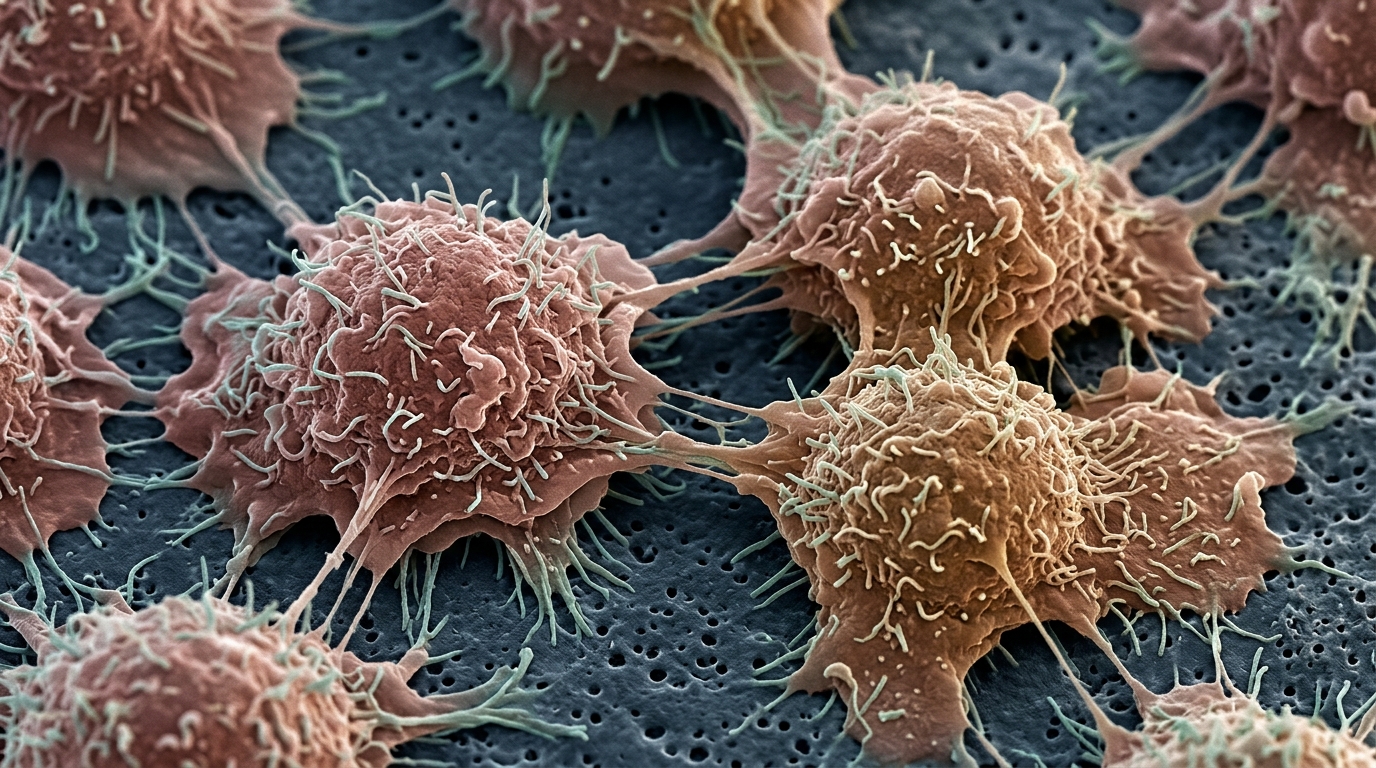
Targeting the metabolic vulnerability of polyamine metabolism in triple-negative breast cancer can suppress tumor growth when guided by baseline enzyme levels, according to a preclinical study published in Biomarker Research. Investigating human cell cultures, ex vivo tumor slices, and mouse xenografts, a research team demonstrated that therapeutic response to the polyamine-depleting agent N1,N11-diethylnorspermine depends directly on the initial expression of spermidine/spermine N1-acetyltransferase 1, the rate-limiting catabolic enzyme known as SAT1. The new findings establish that stratifying tumors into low, moderate, and high baseline SAT1 metabolic phenotypes reveals distinct treatment vulnerabilities. High-expressing models proved sensitive to the analogue alone, whereas the moderate-expressing phenotype, which represents the majority of patient tumors, required a combination of the analogue with the chemotherapy drug doxorubicin to drive sustained polyamine depletion and tumor growth attenuation.
Triple-negative breast cancer accounts for approximately 15 to 20 percent of all breast cancer diagnoses worldwide and represents the most aggressive and biologically heterogeneous subtype. Unlike hormone receptor-positive or HER2-positive breast cancers that benefit from targeted endocrine or antibody therapies, triple-negative tumors lack these defined pharmacological targets. Consequently, clinical management continues to rely heavily on untargeted systemic chemotherapy regimens comprising cyclophosphamide, taxanes, and anthracyclines such as doxorubicin. Although the recent clinical integration of pembrolizumab immunotherapy has substantially improved clinical outcomes, between 35 and 40 percent of patients still fail to achieve a pathological complete response. Furthermore, conventional chemotherapy carries severe risks; doxorubicin administration is strictly constrained by a cumulative lifetime dose ceiling to prevent irreversible cardiotoxicity. These therapeutic barriers underscore an urgent requirement for precision-guided strategies that enhance cytotoxic efficacy while potentially permitting reductions in standard chemotherapeutic dosages to mitigate debilitating toxicities in patients suffering from recalcitrant mammary tumors.
The aggressive growth and rapid proliferation characterizing triple-negative breast cancer cells are driven by extensive metabolic reprogramming that relies heavily on intracellular polyamines. Polyamine homeostasis within human cells is tightly governed by SAT1, the primary catabolic enzyme responsible for acetylating polyamines and directing them toward cellular export. Through this catabolic cascade, SAT1 converts polyamines into downstream products, notably diacetylspermine, which is secreted from cells and can be reliably detected and quantified in urine samples. Previous oncology studies have established that urinary diacetylspermine serves as a sensitive, non-invasive diagnostic and prognostic biomarker across several human malignancies, with levels typically elevated in patients harboring malignant tumors compared to healthy individuals, reflecting altered cellular polyamine turnover during active neoplastic development.
To exploit this metabolic dependency, researchers previously evaluated N1,N11-diethylnorspermine, commonly designated DENSpm, a synthetic polyamine analogue designed to potently stimulate SAT1 catalytic activity and stabilize its messenger RNA transcripts against degradation. Although early Phase I clinical evaluations confirmed that DENSpm was well tolerated and clinically safe in humans, a subsequent unstratified Phase II trial enrolling sixteen patients with metastatic breast cancer failed to demonstrate broad therapeutic efficacy. The present investigators hypothesized that this historical failure stemmed from unguided patient enrollment that ignored critical tumor heterogeneity. Genomic analysis of The Cancer Genome Atlas revealed that while triple-negative tumors exhibit elevated SAT1 expression compared to hormone receptor-positive subtypes, baseline expression varies widely across individual patients, spanning seven standard deviations across a normal distribution. By classifying experimental cell lines and patient-derived xenograft models into low, moderate, and high baseline SAT1 metabolic phenotypes, the researchers sought to establish a biomarker-guided framework capable of identifying responsive tumor subgroups.
In vitro evaluation across a characterized panel of human triple-negative cell lines revealed that baseline SAT1 expression governs sensitivity to polyamine depletion and cytotoxic drug exposure. Cells possessing high baseline SAT1 expression, represented by MDA-MB-468, exhibited substantial reductions in viability, marked polyamine depletion, and pronounced diacetylspermine production following treatment with ten micromolar DENSpm alone. In contrast, cell lines expressing moderate baseline SAT1 levels, including BT549 and MDA-MB-231, showed limited responsiveness to single-agent analogue exposure but achieved dramatic viability loss when DENSpm was paired with doxorubicin. Remarkably, combining the analogue with a subtherapeutic concentration of doxorubicin at 0.1 micromolar was sufficient to induce SAT1 expression, deplete intracellular polyamines, and elevate diacetylspermine production in moderate-expressing lines. Conversely, low-expressing MDA-MB-453 cells showed negligible changes in viability or polyamine depletion under analogue monotherapy, demonstrating that an adequate baseline level of SAT1 is an indispensable prerequisite for analogue-driven metabolic collapse and cytotoxic vulnerability.
To validate these cellular observations in three-dimensional tissue architectures preserving native tumor physiology, the researchers prepared five-hundred-micrometer ex vivo tumor slices from patient-derived xenografts exhibiting low, moderate, and high baseline SAT1 expression. Liquid chromatography-tandem mass spectrometry tracking polyamine concentrations indicated that spermidine served as the most responsive metabolic readout within these intact tumor tissues. In high-expressing TM99 tumor slices, DENSpm treatment effectively depleted intratumoral putrescine and spermidine to near-undetectable concentrations, whereas doxorubicin alone or in combination exerted no additive impact on polyamine reduction. In moderate-expressing TM98 slices, DENSpm monotherapy reduced spermidine levels, and the addition of escalating doxorubicin concentrations produced dose-dependent, progressive polyamine depletion accompanied by a robust elevation of extratumoral diacetylspermine secretion. In stark contrast, low-expressing TM96 slices exhibited no significant depletion of spermidine across treatments, reinforcing the conclusion that combination polyamine depletion therapy is specifically optimized for the predominant moderate SAT1 metabolic phenotype.
Following ex vivo validation, the research team conducted an in vivo therapeutic trial using immunocompromised NSG mice subcutaneously engrafted with moderate-SAT1 TM98 patient-derived xenografts, modeling the most common patient subset. Once tumors reached palpable volumes between one hundred and two hundred cubic millimeters, animals were randomized into three experimental cohorts receiving weekly saline vehicle, weekly intravenous doxorubicin at two milligrams per kilogram, or combination treatment pairing weekly intravenous doxorubicin with intraperitoneal DENSpm administered at one hundred milligrams per kilogram twice weekly for three consecutive weeks. Caliper tumor measurements recorded thrice weekly demonstrated that the combination regimen attenuated tumor growth significantly more effectively than doxorubicin monotherapy. Furthermore, end-of-study tissue analysis performed twenty-eight days following the initial drug dose revealed that tumors from combination-treated mice maintained significantly higher levels of SAT1 messenger RNA expression alongside elevated intratumoral diacetylspermine concentrations compared to control animals and those receiving single-agent chemotherapy.
A notable observation from the animal study was the sustained excretion of diacetylspermine in urine, which remained significantly elevated for ten full days after the final drug administration. Longitudinal urine collection conducted weekly in metabolic cages established that while single-agent doxorubicin produced only transient alterations, combination therapy generated a persistent surge in urinary diacetylspermine that paralleled in vivo tumor growth inhibition. This prolonged tissue retention provides a physiological explanation for the enduring induction of SAT1 activity and continuous metabolite excretion. These findings directly support the clinical feasibility of utilizing urinary diacetylspermine as a non-invasive, longitudinal surrogate biomarker capable of monitoring ongoing polyamine catabolism and therapeutic response without requiring repeated invasive tumor biopsies.
Delineating the underlying molecular mechanisms in BT549 cells uncovered a synergistic cooperation between doxorubicin and DENSpm at the level of transcriptional induction and post-transcriptional RNA processing. Experimental assays revealed that while doxorubicin treatment activates overall transcription of the SAT1 gene, it concurrently increases the proportion of an unproductive, long splice variant containing exon four, which harbors premature stop codons. In contrast, DENSpm acts as a regulatory driver of alternative splicing, directing pre-mRNA maturation toward the productive, short protein-coding transcript that yields functional enzymatic protein. By suppressing the long-to-short isoform ratio, DENSpm ensures that the doxorubicin-induced transcriptional surge translates into abundant, catalytic SAT1 enzyme. Furthermore, combination treatment significantly downregulated the expression of peroxisomal N1-acetyl-spermine/spermidine oxidase, an enzyme that normally oxidizes acetylated polyamines back into active precursors. This dual action sustained elevated intracellular and extracellular diacetylspermine for forty-eight hours post-washout while preventing polyamine recycling.
The study authors conclude that a biomarker-stratified strategy can effectively revitalize polyamine-depletion therapeutics for triple-negative breast cancer, transforming an historically failed drug class into a tailored intervention. By identifying patients whose tumors exhibit moderate or high baseline SAT1 expression, clinicians could potentially deploy DENSpm combinations to achieve superior tumor suppression while lowering required doxorubicin doses to spare patients from irreversible cardiac damage. The authors emphasize, however, that low-expressing tumors derive no benefit from this combination, underscoring the absolute necessity of pre-treatment biomarker screening. Because these findings derive entirely from preclinical cell lines, ex vivo slices, and murine xenograft models, translation to human patients must be confirmed through rigorously controlled prospective clinical trials. Future investigations must establish standardized clinical thresholds for baseline SAT1 stratification and evaluate whether DENSpm-mediated polyamine depletion can ultimately elevate pathological complete response rates in patients battling this aggressive disease.
Subject of Research: Biomarker-guided polyamine depletion therapy and metabolic monitoring in triple-negative breast cancer
Article Title: A biomarker-driven approach to targeting polyamine depletion in triple negative breast cancer
Article References: White, C. A. K., Wu, J. C., & Velenosi, T. J. (2026). A biomarker-driven approach to targeting polyamine depletion in triple negative breast cancer. Biomarker Research, 14(1), Article 126. https://doi.org/10.1186/s40364-026-01007-w
Image Credits: AI Generated
DOI: 10.1186/s40364-026-01007-w
Keywords: triple-negative breast cancer, polyamine metabolism, spermidine/spermine N1-acetyltransferase 1, SAT1, diacetylspermine, N1,N11-diethylnorspermine, DENSpm, doxorubicin, urinary biomarkers, patient-derived xenografts, alternative splicing, peroxisomal N1-acetyl-spermine/spermidine oxidase, PAOX, chemotherapy sensitization, ex vivo tumor slices, cardiotoxicity mitigation, cancer metabolomics
News Source: Nathaniel Bowman. (November 17, 2026). Biomarker Stratification Enables Targeted Polyamine Depletion in Triple-Negative Breast Cancer. Scienmag.