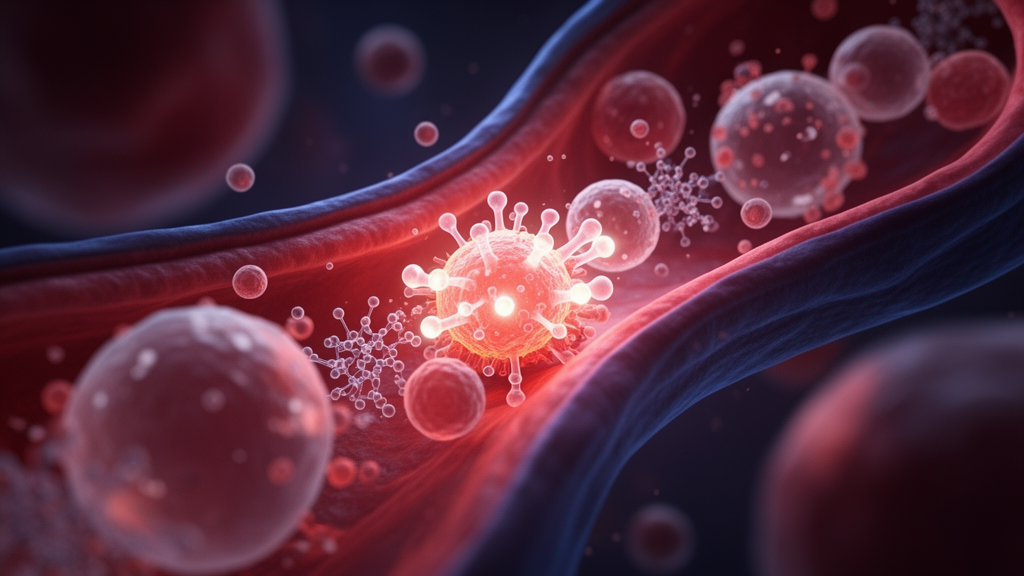
Sepsis, a life-threatening condition defined by organ dysfunction following a dysregulated immune response to infection, is increasingly understood as a multifaceted disease characterized by a complex, dynamic biphasic immune pattern. Traditionally, the pathophysiology of sepsis was viewed primarily through the lens of systemic inflammatory response syndrome (SIRS), which posited that tissue injury was driven predominantly by an overwhelming, early inflammatory storm. However, contemporary research, supported by advancements in high-throughput technologies such as single-cell RNA sequencing, proteomics, and metabolomics, has fundamentally altered this perspective. Evidence now demonstrates that during the early stages of sepsis, excessive hyperinflammation and profound immunosuppression do not merely occur sequentially but coexist. This concurrent “double-peak” immune dysregulation, where the body simultaneously struggles with the collateral damage of a cytokine storm and the premature onset of immune paralysis, underpins the pathogenesis of organ dysfunction, secondary infections, and mortality. By systematically elucidating these pathophysiological mechanisms, researchers are establishing a theoretical framework for a paradigm shift toward precision immunotherapy, aiming to restore immune homeostasis through tailored interventions based on a patient’s specific, evolving immune status.
The early phase of sepsis is characterized by an immediate and vigorous activation of the innate immune system. Upon pathogen invasion, neutrophils, monocytes, and macrophages are rapidly mobilized, resulting in a surge of pro-inflammatory cytokines, including tumor necrosis factor-alpha, interleukin-6, and high-mobility group box 1. While this response is initially protective, intended to eradicate invading microorganisms, it frequently results in significant collateral tissue damage and contributes to multiple organ dysfunction syndrome. Simultaneously, evidence of immunosuppression is apparent from the onset of the infection. Molecular analysis reveals that even during this initial hyperinflammatory peak, immune cells show clear indicators of functional exhaustion. For instance, T cells exhibit increased expression of inhibitory receptors such as programmed cell death protein 1, while regulatory immune subsets like regulatory T cells and myeloid-derived suppressor cells are induced rapidly. This early, complex interplay of hyperactivation and suppression challenges the efficacy of monolithic therapeutic approaches, as interventions must carefully navigate the precarious balance of dampening excessive inflammation without further exacerbating the patient’s underlying state of immune competence.
Metabolic reprogramming serves as a central driver of this biphasic immune landscape, functioning as an essential regulator of cell fate and function during sepsis progression. Early in the disease course, activated immune cells preferentially engage in aerobic glycolysis—often referred to as the Warburg effect—to rapidly generate the ATP and biosynthetic precursors required for immediate proliferation and effector functions, such as cytokine production and phagocytosis. As the condition advances toward the later phases, however, these cells undergo a marked transition toward oxidative phosphorylation. Despite this metabolic shift, many cells encounter significant mitochondrial dysfunction, characterized by the accumulation of reactive oxygen species and metabolic strain. This leads to profound energy deficits that compromise immune effector functions, contributing directly to the phenotype of innate immune paralysis. Concurrently, the depletion of key amino acids like arginine and tryptophan, mediated by the upregulation of specific enzymes in myeloid-derived suppressor cells and regulatory T cells, further reinforces this immunosuppressive milieu. These metabolic alterations are not passive consequences of disease but active signaling mechanisms that modulate immune responses, presenting both a significant hurdle and a promising avenue for potential therapeutic recalibration.
Epigenetic regulation further solidifies the persistent immune alterations observed throughout the progression of sepsis, creating a molecular memory that dictates the long-term functional trajectory of immune cells. Without altering the underlying DNA sequence, epigenetic modifications such as histone acetylation and methylation dynamically remodel chromatin structure to control gene expression. During the transition from hyperinflammation to immune tolerance, increased histone methylation at the loci of pro-inflammatory genes can lead to their silencing, contributing to the state of immunosuppression. Non-coding RNAs, including specific microRNAs and long non-coding RNAs, also play critical roles by targeting key signaling molecules within innate immune pathways such as the Toll-like receptor and nuclear factor kappa B cascades. For example, miR-146a acts as a negative feedback regulator to dampen inflammation, whereas miR-155 may promote inflammatory gene expression. The interplay between histone modifications and non-coding RNA-mediated regulation constructs a complex gene expression landscape that ultimately determines immune cell fate, offering researchers a potential site for pharmacological intervention aimed at reversing these maladaptive epigenetic states.
Beyond cellular mechanisms, the neuroendocrine-immune network provides a profound systemic layer of influence on the immune trajectory in sepsis. The activation of the hypothalamic-pituitary-adrenal axis during the early phases of infection leads to a surge in circulating glucocorticoids. Although these stress hormones may briefly enhance certain aspects of host defense, their sustained elevation predominantly acts to suppress both innate and adaptive immunity, facilitating the progression toward immune paralysis. Concurrently, the cholinergic anti-inflammatory pathway—mediated by the vagus nerve-released acetylcholine acting on α7 nicotinic acetylcholine receptors—functions as a crucial counter-regulatory mechanism to limit excessive systemic inflammation. Dysregulation of this axis, often manifesting as an initial failure to control the inflammatory storm followed by an over-active compensatory response, further drives the biphasic immune imbalance. Clinical researchers are investigating whether targeting this neuroimmune communication via bioelectronic vagus nerve stimulation or selective agonists could provide a means to recalibrate systemic immune responses, though the timing of such interventions remains a critical factor given the heterogeneous and context-dependent nature of these hormonal signals.
Achieving precision immunotherapy in clinical practice requires a robust and multidimensional assessment of a patient’s immune status, surpassing the limitations of static clinical classifications. The integration of high-dimensional omics data, including single-cell transcriptomics and proteomics, alongside traditional circulating protein biomarkers, is essential for identifying distinct immune endotypes. For instance, the ratio of interleukin-6 to interleukin-10 provides a snapshot of the systemic inflammatory balance, while monocyte human leukocyte antigen-DR expression and lymphocyte stimulation assays offer functional readouts of immune competence. These stratified data enable clinicians to classify patients into phenotypes dominated by hyperinflammation, immunosuppression, or mixed immune states, which is foundational for tailored therapeutic decision-making. Predictive models that incorporate these biomarkers are becoming increasingly important for monitoring the patient’s evolving immune trajectory, as the temporal shift between hyperinflammatory and immunosuppressive phases necessitates precise, phase-specific timing of therapeutic delivery to maximize patient outcomes.
For patients identified with a hyperinflammatory immune phenotype, intervention strategies focus on the targeted blockade of pivotal pro-inflammatory mediators to mitigate organ damage while preserving essential host defense mechanisms. Biologic therapies that selectively antagonize cytokines like interleukin-1 and interleukin-6 have shown the potential to curb excessive systemic inflammation. Furthermore, physical methods of mediator clearance, such as extracorporeal blood purification and hemoadsorption, are being employed to reduce the circulating burden of damage-associated molecular patterns and cytokines in critically ill patients. These interventions are often complemented by research into modulating immune cell metabolism, as shifting cellular energy production away from the glycolytic dominance of activation may assist in stabilizing the internal milieu. However, the success of these therapies is highly dependent on early identification and patient selection, as inappropriate application during a patient’s transition toward immune paralysis could inadvertently worsen susceptibility to infection.
Conversely, therapeutic strategies for the immunosuppressive phase aim to reverse immune cell dysfunction and reinvigorate the host’s ability to defend against secondary infections. The use of immune checkpoint inhibitors, which target pathways like PD-1/PD-L1 and CTLA-4, represents a significant area of research aimed at relieving the exhaustion of T cells and macrophages. Clinical investigation into immunostimulatory cytokines, including recombinant human interferon-γ and interleukin-7, also demonstrates efficacy in augmenting antigen presentation and enhancing lymphocyte proliferation and survival. These strategies are frequently combined with pharmacological approaches that target suppressive cell populations, such as regulatory T cells and myeloid-derived suppressor cells, which expand in number during the late phase of sepsis to maintain immune tolerance. By systematically relieving these inhibitory signals and enhancing immune competence, clinicians aim to break the cycle of persistent immune paralysis that defines late-stage sepsis outcomes, though these approaches require rigorous monitoring to manage the risks of immune overactivation.
The current landscape of clinical translation is marked by significant challenges, notably the profound heterogeneity of sepsis as a syndrome, which varies drastically based on infection source, pathogen type, age, and patient comorbidities. This heterogeneity is further exacerbated by the dynamic nature of the immune status, as the fluctuation of immune activation and suppression over hours makes static profiling insufficient. Moreover, the translational gap is widened by the limitations of existing experimental models; standard animal models, such as cecal ligation and puncture, often fail to fully recapitulate the complexity of human sepsis and the chronic immunosuppressive phases observed in clinical cases. This disconnect contributes to the failure of many promising preclinical therapies. Furthermore, a substantial barrier exists in the form of a lack of standardized, bedside-applicable immune monitoring tools that can be easily implemented in intensive care unit settings to guide precise, real-time immunotherapy adjustments.
Looking toward the future, the integration of computational biology, specifically artificial intelligence and machine learning, offers a transformative frontier for managing sepsis. By synthesizing complex, multidimensional data sets encompassing immunological, metabolic, genetic, and clinical parameters, these analytical frameworks can enhance patient stratification, delineate novel immune endotypes, and construct digital models to forecast disease trajectory. Future clinical trial designs, such as adaptive basket or umbrella trials, are poised to leverage these insights by allocating patients to specific treatment arms based on their real-time immune phenotype rather than traditional clinical symptoms. Through this integration of multidisciplinary research—spanning immunology, bioinformatics, and bioengineering—the medical community aims to move beyond one-size-fits-all regimens, ultimately fostering the development of truly personalized immunotherapeutic protocols that can mitigate the biphasic immune dysregulation of sepsis and improve long-term survival and quality of life for patients.
Subject of Research: Sepsis Pathophysiology and Precision Immunotherapy
Article Title: The Biphasic Immune Pattern of Sepsis: From Pathophysiological Mechanisms to Precision Immunotherapy and Future Challenges
Article References: Lan, Y., Liu, W., Zhang, T., He, Y., & Liu, L. (2026). The Biphasic Immune Pattern of Sepsis: From Pathophysiological Mechanisms to Precision Immunotherapy and Future Challenges. Innovations in Acupuncture and Medicine, 19(1), Article 21. https://doi.org/10.1186/s44424-026-00057-z
Image Credits: AI Generated
DOI: 10.1186/s44424-026-00057-z
Keywords: sepsis, biphasic immune response, immunotherapy, precision medicine, cytokine storm, immunosuppression, metabolic reprogramming, epigenetics, neuroendocrine, multi-omics, clinical trials, biomarkers, immune dysregulation, immune paralysis, host response
News Source: Kristina Jarvis. (November 17, 2026). Precision Immunotherapy Targets Sepsis’s Dynamic and Biphasic Immune Response. Scienmag.