• HOME
  • NEWS
  • EXPLORE
    • CAREER
      • Companies
      • Jobs
    • EVENTS
    • iGEM
      • News
      • Team
    • PHOTOS
    • VIDEO
    • WIKI
  • BLOG
  • COMMUNITY
    • FACEBOOK
    • INSTAGRAM
    • TWITTER
Wednesday, November 18, 2026
BIOENGINEER.ORG
No Result
View All Result
  • Login
  • HOME
  • NEWS
  • EXPLORE
    • CAREER
      • Companies
      • Jobs
        • Lecturer
        • PhD Studentship
        • Postdoc
        • Research Assistant
    • EVENTS
    • iGEM
      • News
      • Team
    • PHOTOS
    • VIDEO
    • WIKI
  • BLOG
  • COMMUNITY
    • FACEBOOK
    • INSTAGRAM
    • TWITTER
No Result
View All Result
Bioengineer.org
No Result
View All Result
Home NEWS Science News Biology

Plasma Proteogenomic Study Identifies Potential Drug Targets for Sickle Cell Disease

by
November 16, 2026
in Biology
Reading Time: 2 mins read
0
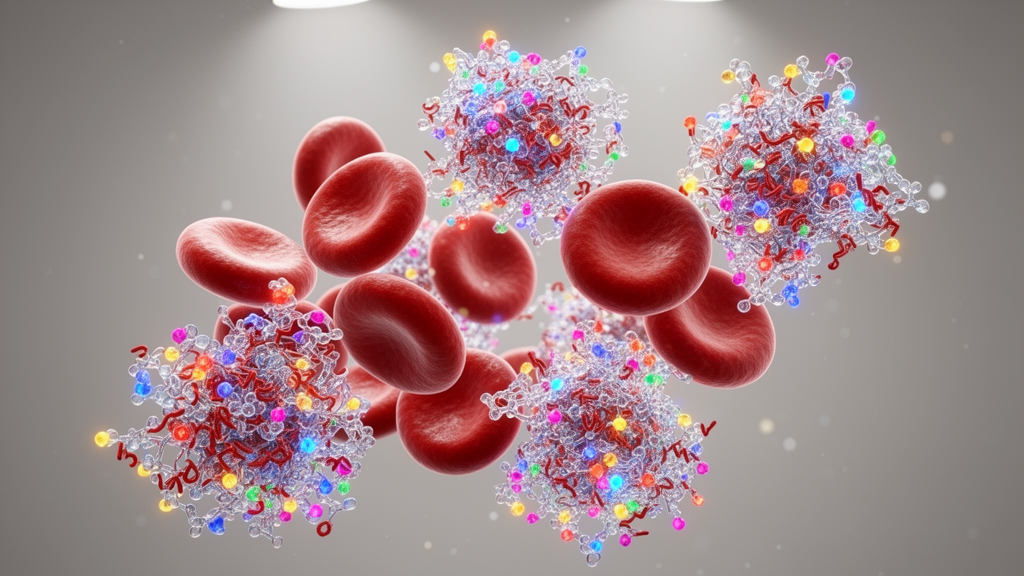
Plasma Proteogenomic Study Identifies Potential Drug Targets for Sickle Cell Disease

Plasma Proteogenomic Study Identifies Potential Drug Targets for Sickle Cell Disease

Share on FacebookShare on TwitterShare on LinkedinShare on RedditShare on Telegram

A proteogenomic analysis of the plasma proteome in patients with sickle cell disease has identified genetic variants associated with circulating protein levels, providing an opportunity to prioritize new therapeutic targets. Sickle cell disease is a blood disorder caused by mutations in the β-globin gene that affects more than seven million individuals worldwide, yet there remain few therapeutic options available to treat patients. To address this clinical need, researchers demonstrated how combining human genetics and high-throughput proteomics can help identify novel drug targets.

In the study, investigators measured the levels of 5,411 plasma proteins and tested their associations with common genetic variation in 343 patients with sickle cell disease. Following conditional analyses, the team identified 560 protein quantitative trait loci, or pQTL. Among these detected loci, 58 signals, representing approximately 10 percent of the total, were novel findings that expand the current understanding of protein level variation in the disease.

The research revealed that many of these pQTL are not specific to patients with sickle cell disease. Instead, multiple loci also associate with clinically relevant traits, including hemoglobin concentration and triglyceride levels, in non-SCD African Americans evaluated through the Million Veteran Program.

When comparing cohorts, the effect sizes of the pQTL appeared largely concordant between individuals with sickle cell disease and non-SCD individuals. Nonetheless, the authors detected clear examples of heterogeneity at specific loci, such as APOL1 and haptoglobin, suggesting an interaction between the circulating plasma proteome and the underlying sickle cell disease genotype.

Finally, the researchers combined their pQTL data with genome-wide association study results for fetal hemoglobin in a Mendelian randomization analysis. This analytical pipeline prioritized four proteins—ENPP5, LBP, PTX3, and ZP3—that may increase fetal hemoglobin production. By combining high-throughput DNA genotyping and plasma proteome profiling, the investigation confirms known variants while identifying new genetic associations informed by human genetics.

Subject of Research: Proteogenomic analysis of plasma proteins and therapeutic targets in sickle cell disease

Article Title: Proteogenomic analysis of 5,411 plasma proteins in sickle cell disease patients

Article References: Groza, C., Chignon, A., Lo, K. S., Bellegarde, V., Bartolucci, P., & Lettre, G. (2026). Proteogenomic analysis of 5,411 plasma proteins in sickle cell disease patients. PLOS Genetics, 22(11), e1012377. https://doi.org/10.1371/journal.pgen.1012377

Image Credits: AI Generated

DOI: 10.1371/journal.pgen.1012377

Keywords: sickle cell disease, plasma proteome, proteogenomics, protein quantitative trait loci, pQTL, fetal hemoglobin, HbF, ENPP5, LBP, PTX3, ZP3, APOL1, haptoglobin, Million Veteran Program, Mendelian randomization, β-globin gene

News Source: Drew Townsend. (November 16, 2026). Plasma Proteogenomic Study Identifies Potential Drug Targets for Sickle Cell Disease. Scienmag.


Tags: APOL1ENPP5fetal hemoglobinhaptoglobinHbFLBPMendelian randomizationMillion Veteran Programplasma proteomepQTLprotein quantitative trait lociProteogenomicsPTX3sickle cell diseaseZP3β-globin gene
Share12Tweet7Share2ShareShareShare1

Related Posts

FES Kinase Knockdown Inhibits Gastric Cancer Cell Growth and Enhances Imatinib Response

FES Kinase Knockdown Inhibits Gastric Cancer Cell Growth and Enhances Imatinib Response

November 18, 2026
Novel Star-Shaped Polymer Adhesive Prevents Leakage in Ex Vivo Intestinal Model

Novel Star-Shaped Polymer Adhesive Prevents Leakage in Ex Vivo Intestinal Model

November 18, 2026

Beam-Membrane Vocal Fold Model Captures Laryngeal Posturing and Phonation Dynamics

November 18, 2026

Wheat Pathogen Multidrug Resistance Driven by Transposons and Polygenic Architecture

November 18, 2026

POPULAR NEWS

  • Spain NTD Drug Study Reveals Severe Territorial Gaps Across Autonomous Communities

    Spain NTD Drug Study Reveals Severe Territorial Gaps Across Autonomous Communities

    29 shares
    Share 12 Tweet 7
  • Guinea Health Study Reveals Severe Workforce Unemployment Despite Rising Professional Training

    29 shares
    Share 12 Tweet 7
  • Rootstock Signaling Networks Dynamically Reprogram Fruit Quality Across Horticultural Crops

    29 shares
    Share 12 Tweet 7
  • Review Uncovers How Group 2 Innate Lymphoid Cells Bridge Neuroimmune Communication

    29 shares
    Share 12 Tweet 7

About

We bring you the latest biotechnology news from best research centers and universities around the world. Check our website.

Follow us

Recent News

Deep Learning Framework Detects Bad Driving Behavior in Surveillance Video Images

Proposed Personalized Yoga Framework for Type 2 Diabetes Awaits Clinical Validation

Appetite Suppressants Linked to Substantial Nutrient Shortfalls in Small Exploratory Study

Subscribe to Blog via Email

Enter your email address to subscribe to this blog and receive notifications of new posts by email.

Join 88 other subscribers
  • Contact Us

Bioengineer.org © Copyright 2023 All Rights Reserved.

Welcome Back!

Login to your account below

Forgotten Password?

Retrieve your password

Please enter your username or email address to reset your password.

Log In
No Result
View All Result
  • Homepages
    • Home Page 1
    • Home Page 2
  • News
  • National
  • Business
  • Health
  • Lifestyle
  • Science

Bioengineer.org © Copyright 2023 All Rights Reserved.