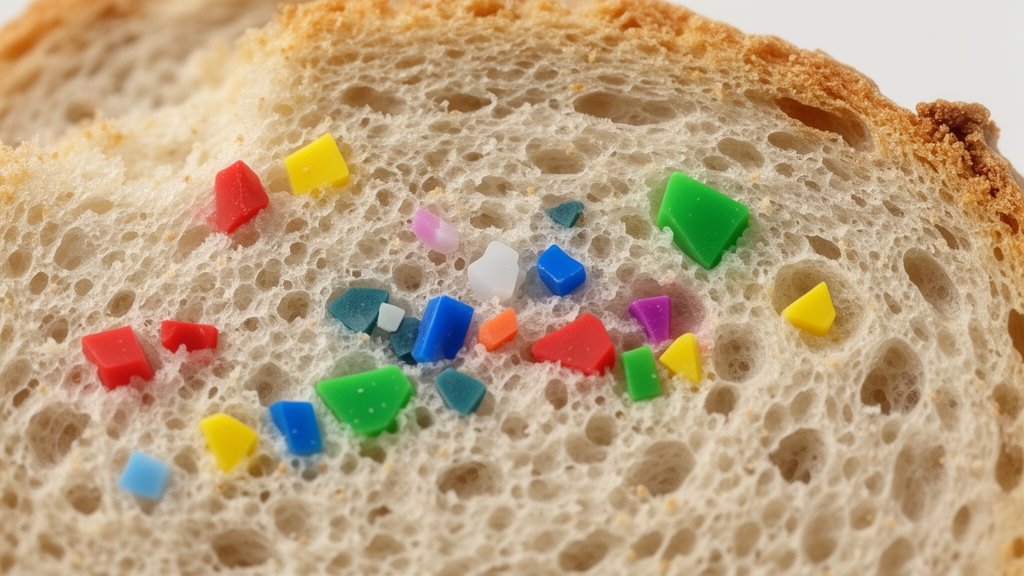
Micro- and nanoplastic contamination in food systems concentrates most heavily in aquaculture and processed foods, with ingestion confirmed by the systemic presence of plastic particles in human tissues, according to a two-tiered systematic review of 55 studies following Preferred Reporting Items for Systematic Reviews and Meta-Analyses guidelines. The investigation provides an integrated farm-to-fork synthesis connecting environmental entry points, food processing, packaging, dietary intake, and human biomonitoring alongside artificial intelligence applications for particle detection. The authors synthesized this evidence to address inconsistent and non-standardised methodologies that have hindered a clear understanding of human exposure to these emerging contaminants.
The systematic review evaluated evidence across two analytical tiers, allocating 37 studies to Tier One to examine exposure pathways from farm to fork.
Within the 37 Tier One exposure studies, plastic fibres predominated across multiple food chain stages. The highest particle concentrations were identified in aquaculture products and processed foods. Conversely, the authors found that terrestrial agricultural crops and soils remain critically understudied, highlighting an evident scarcity of research on land-based food production systems.
Human biomonitoring data evaluated in Tier One confirmed the ingestion and systemic internal presence of micro- and nanoplastics in biological samples. The review documented plastic particles in human stool, urine, whole blood, and tumour tissues. These physiological observations substantiate that diet serves as a primary exposure pathway delivering plastic contaminants directly into the human body and circulating systems.
Tier Two assessed 18 studies investigating the application of artificial intelligence to optical detection methods, focusing on Raman spectroscopy and Fourier transform infrared spectroscopy. Within these evaluations, machine learning and deep learning architectures demonstrated expert-level accuracy, improved analytical reproducibility, and decreased spectrum annotation time. However, persistent heterogeneity across experimental datasets continues to limit the broader standardization of these automated spectroscopic workflows.
The review underscored that reported artificial intelligence detection accuracies exceeding 95 percent were predominantly obtained using curated or synthetic spectral libraries rather than messy real-world substrates. Independent external validation across complex environmental, food, and water matrices remains limited. To enhance comparability across future research, the authors outlined minimum reporting standards encompassing dataset provenance, spectral pre-processing protocols, validation strategies, polymer classes, colourants, and misclassification reporting to support standardized biomonitoring and inform food safety regulation.
The identification of the food-system stages most susceptible to micro- and nanoplastic contamination provides clear, actionable priorities for targeted monitoring, mitigation, and regulatory development.
Subject of Research: Dietary microplastic exposure pathways and artificial intelligence-assisted spectroscopic detection
Article Title: Micro- and nanoplastics in food and water from farm-to-fork: exposure pathways, human biomonitoring and AI-enhanced detection – a systematic review
Article References: Gormley, O., Petchkongkaew, A., Aueviriyavit, S., Khoomrung, S., Visessanguan, W., Elliott, C., Cao, C., Corpinot, M. K., & Hardiman, G. (2026). Micro- and nanoplastics in food and water from farm-to-fork: exposure pathways, human biomonitoring and AI-enhanced detection – a systematic review. npj Science of Food. https://doi.org/10.1038/s41538-026-01054-5
Image Credits: AI Generated
DOI: 10.1038/s41538-026-01054-5
Keywords: microplastics, nanoplastics, systematic review, PRISMA guidelines, food safety, human biomonitoring, aquaculture, processed foods, dietary exposure, Raman spectroscopy, Fourier transform infrared spectroscopy, machine learning, deep learning, synthetic spectral libraries, external validation, reporting standards, polymer classification
News Source: Daisy Hatcher. (November 16, 2026). Systematic Review Links Diet and Processed Foods to Systemic Microplastic Exposure. Scienmag.