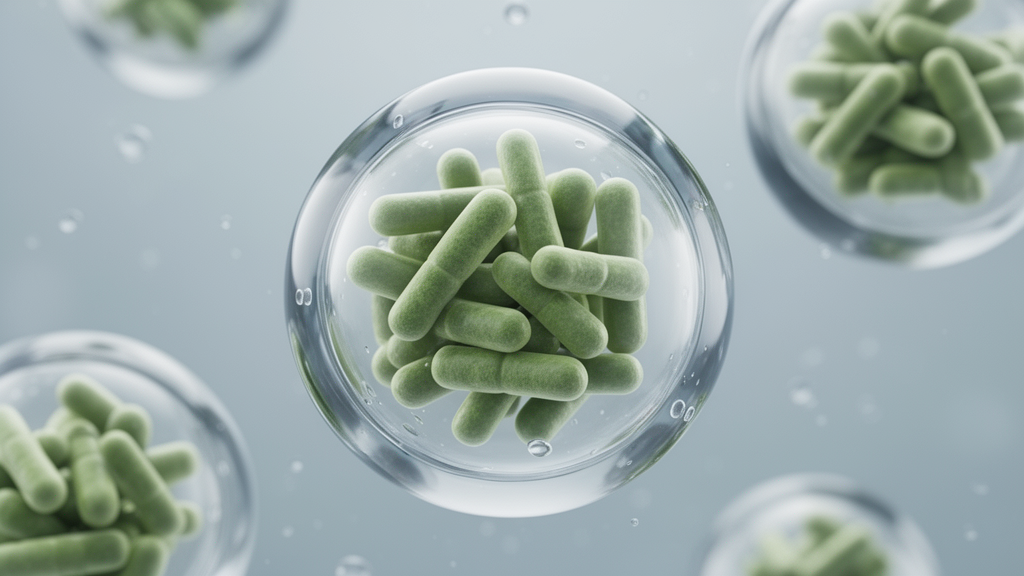
A newly formulated water-in-oil-in-water double emulsion system successfully protected encapsulated probiotic bacteria against simulated gastrointestinal stresses and mitigated colonic inflammation in a rodent model of acute ulcerative colitis. Delivering viable beneficial microorganisms directly to the lower digestive tract remains a persistent biochemical challenge because delicate bacterial cells readily degrade during thermal processing, extended storage, and passage through acidic gastric juices and bile salts. In an investigation examining structured food-grade matrices, an international research team developed and characterized an oleogel-stabilized multi-compartment carrier designed to house living bacterial cultures within microscopic inner water droplets. When tested in adult male Wistar rats suffering from chemically induced intestinal inflammation, the optimized encapsulation platform diminished tissue necrosis, preserved mucosal architecture, and lowered macroscopic disease severity to an extent comparable to conventional pharmaceutical steroid treatment.
Probiotics, specifically lactic acid bacteria such as Lactobacillus paracasei subsp. paracasei 431, provide demonstrable biological benefits to host intestinal environments when consumed in substantial quantities, typically at or exceeding nine log colony-forming units per milliliter. Nevertheless, preserving high bacterial viability during commercial food manufacturing and transit across the upper digestive system continues to restrict their broader application in shelf-stable nutritional formulations. Many standard technological approaches, such as industrial spray-drying, freeze-drying, coacervation, and complex multilayer polysaccharide extrusion, suffer from marked limitations. Dehydration and elevated thermal exposure can kill sensitive bacterial cultures, whereas complex multilayer architectures frequently introduce processing bottlenecks, escalate manufacturing expenses, and fail to incorporate cleanly into semi-solid or liquid food products. Double emulsions structured with biopolymers present an alternative by establishing physical shields within inner water phases, though conventional variants remain vulnerable to droplet coalescence, phase inversion, and gravitational separation.
To overcome structural vulnerabilities inherent to classical double emulsions, the authors systematically engineered an oleogel-reinforced water-in-oil-in-water architecture incorporating ethyl cellulose in the middle lipid layer alongside native guar gum within both the internal and external aqueous compartments. Dissolving ethyl cellulose into sunflower oil at elevated temperatures between 110 and 120 degrees Celsius for 90 minutes induced the formation of a robust, hydrophobic polymer network upon cooling. Biochemical evaluation confirmed minimal primary lipid oxidation following this thermal preparation, recording a peroxide value of only 1.5 milliequivalents of oxygen per kilogram of oil. The inner dispersed phase was subsequently prepared by dispersing freshly harvested probiotic cells into an aqueous solution containing varying proportions of guar gum, which was combined with the structured sunflower oil and polyglycerol polyricinoleate before being homogenized into a primary water-in-oil emulsion at 5800 revolutions per minute.
The formulation architecture was optimized using a three-factor, three-level Box–Behnken experimental design to evaluate how fluctuating concentrations of ethyl cellulose in the oil phase and guar gum across both aqueous phases influenced mean droplet diameter, centrifugal physical stability, and bacterial encapsulation efficiency. Mathematical modeling demonstrated that increasing the proportion of guar gum in both aqueous compartments directly expanded droplet size while simultaneously improving encapsulation yields and physical resistance to centrifugal phase separation. Quadratic response surface analysis identified an optimal system comprising 2.8 percent ethyl cellulose in the lipid phase, 0.25 percent guar gum in the internal aqueous phase, and 0.74 percent guar gum in the outer aqueous phase. Under these specific parameters, the predictive model achieved a 90.5 percent emulsion stability, a 95.8 percent encapsulation efficiency, and an average droplet diameter of 777.5 nanometers, aligning closely with experimental validation measurements that showed relative errors below ten percent.
Microscopic morphological examinations illuminated clear differences between the optimized double emulsion formulation and non-optimized structural variations prepared with higher stabilizer concentrations. Under optical microscopy, the optimized formulation displayed a uniform one-droplet-in-one-droplet morphology where discreet internal water compartments remained neatly enveloped by continuous lipid envelopes. In contrast, double emulsions formulated with elevated polymer quantities—such as four percent ethyl cellulose alongside 0.75 percent guar gum—formed irregular, enlarged droplets containing numerous clustered aqueous compartments and exhibited a polydispersity index approaching one. Although high biopolymer levels can elevate fluid viscosity to slow macroscopic creaming, extreme aqueous viscosity simultaneously impedes turbulent shearing during mechanical homogenization, preventing the fluid vortices required to break down dispersing droplets and producing anomalous particle aggregates measuring up to 20 micrometers in diameter.
In vitro biological challenges confirmed that double-emulsion encapsulation created an effective physical defense against digestive stresses that otherwise destroy non-encapsulated probiotics. When subjected to an simulated gastric environment consisting of sodium phosphate buffer adjusted to pH 2.3 for two hours at 35 degrees Celsius, free unencapsulated Lactobacillus paracasei experienced massive microbial mortality, dropping to a residual viable count of 3.18 log colony-forming units per milliliter. In contrast, cells encapsulated within the double emulsion carrier maintained significantly higher viable counts under identical conditions, showing negligible viability loss. Furthermore, when exposed to 0.3 percent bile salts in broth for 24 hours, recoverable viable bacterial counts within the optimized emulsion rose from 5.15 to 7.20 log colony-forming units per milliliter, a phenomenon attributed to the recovery of sublethally injured cells, physical de-agglomeration of trapped bacteria, and possible nutrient-assisted proliferation during the extended in vitro assay period.
Dynamic mechanical analysis of the emulsion networks after 20 days of ambient storage revealed fundamental differences in structural rheology between the optimized and high-concentration formulations. Both systems demonstrated pronounced shear-thinning behavior across increasing angular frequencies, a property characteristic of macromolecular biopolymer networks. However, the high-concentration formulation was dominated by its storage modulus exceeding its loss modulus across intermediate frequencies, evidencing a stiff, solid-like viscoelastic gel matrix. In contrast, the optimized formulation displayed predominantly viscous liquid behavior, maintaining a loss modulus that remained above its storage modulus throughout testing. This moderate viscoelasticity established sufficient physical integrity to avert phase separation over weeks of storage while maintaining an open, fluid-like internal microenvironment that permitted mobile molecular rearrangements and avoided locking encapsulated bacterial payloads inside excessively rigid polymer cages.
The therapeutic efficacy of the optimized delivery vehicle was subsequently evaluated in male Wistar rats with acute colitis triggered by intrarectal administration of two milliliters of four percent acetic acid. Animals were monitored across a 10-day period for clinical indices including percentage of body weight loss, stool consistency, and visible rectal bleeding, which were compiled into a standardized composite Disease Activity Index score ranging from zero to three. Untreated colitic control rats experienced severe systemic wasting, persistent watery diarrhea, extensive rectal hemorrhaging, and heightened mortality. Oral gavage administration of the optimized double emulsion carrying viable Lactobacillus paracasei significantly suppressed these clinical signs, lowering overall Disease Activity Index scores to levels statistically comparable to those achieved by daily oral administration of ten milligrams per kilogram of the anti-inflammatory corticosteroid prednisolone.
Post-mortem histopathological examinations of excised colon tissue corroborated the clinical findings, revealing that the encapsulated bacterial formulation prevented severe structural destruction of the lower bowel. Colonic tissue sections taken from untreated colitic rodents exhibited extensive mucosal damage characterized by severe crypt loss, focal epithelial necrosis, and heavy transmural infiltration of inflammatory immune cells. Rats treated with the optimized probiotic double emulsion exhibited marked preservation of mucosal architecture, intact crypt depth, and a significant reduction in semi-quantitative microscopic damage scores compared to untreated animals. Notably, macroscopic and histological evaluations of control animals receiving bacteria-free blank emulsions confirmed that the protective carrier vehicle alone did not confer notable anti-inflammatory benefits, demonstrating that the observed tissue preservation stemmed directly from the viable probiotics delivered by the engineered vehicle.
Despite these favorable findings, the researchers emphasized that important experimental limitations govern the interpretation of the data. The acute acetic acid chemical injury model primarily mimics immediate mucosal ulceration and localized epithelial damage rather than the chronic, fluctuating, immune-mediated pathology observed in human ulcerative colitis patients. Furthermore, because specific parameters such as gastrointestinal transit kinetics, bacterial colonic adhesion, in vivo release rates, and long-term strain colonization were not directly tracked, the exact mechanisms linking fluid-like rheological behavior to improved therapeutic outcomes remain plausible working hypotheses rather than fully proven pathways. The investigators concluded that validating the long-term clinical potential of this biopolymer-stabilized emulsion platform will require further investigation across chronic disease models, including dextran sulfate sodium-induced colitis, alongside detailed evaluations of microbial pharmacokinetics and translational human dosage requirements.
Subject of Research: Probiotic encapsulation in optimized double emulsions for colitis treatment
Article Title: Optimized W1/O/W2 Double Emulsions for Lactobacillus paracasei Encapsulation: Stability, Viability, and Anti‐Inflammatory Efficacy in a Rat Model of Ulcerative Colitis
Article References: Mahmoudzadeh, L., Chadorshabi, S., Shamloo, E., Tabibiazar, M., Homayouni‐Rad, A., Mahmoudzadeh, M., & Andishmand, H. (2026). Optimized W1 /O/ W2 Double Emulsions for Lactobacillus paracasei Encapsulation: Stability, Viability, and Anti‐Inflammatory Efficacy in a Rat Model of Ulcerative Colitis. Food Science & Nutrition, 14(11), Article e72598. https://doi.org/10.1002/fsn3.72598
Image Credits: AI Generated
DOI: 10.1002/fsn3.72598
Keywords: Lactobacillus paracasei, double emulsions, probiotic encapsulation, ulcerative colitis, Wistar rats, ethyl cellulose, guar gum, Box-Behnken design, emulsion stability, droplet size, acid tolerance, bile tolerance, prednisolone, disease activity index, histopathology, colonic mucosal injury
News Source: Alan Morgan. (November 19, 2026). Optimized Double Emulsions Protect Probiotics and Ease Colitis Symptoms in Rats. Scienmag.