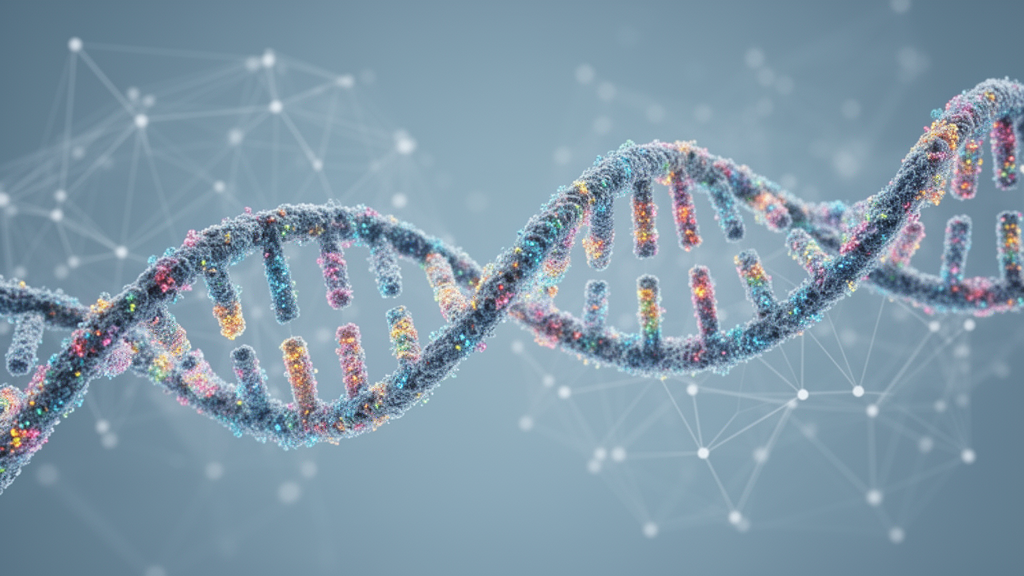
A computational framework integrating whole-genome bisulfite sequencing datasets across more than ninety human tissues and cell types has enabled the systematic genome-wide characterization of DNA methylation and the sequence-based prediction of context-specific variant effects. Published in Nature Genetics by a team led by researchers Weiguang Mao, Kathleen M. Chen, Christopher Y. Park, Chandra L. Theesfeld, and Olga G. Troyanskaya, the investigation establishes a unified compendium of five-methylcytosine measurements covering all twenty-eight million cytosine-phosphate-guanine dinucleotide loci throughout the human genome. Cytosine methylation serves indispensable regulatory roles in transcriptional control, genomic stability, imprinting, and developmental programming, yet determining how nucleotide sequences govern cell-type-specific epigenetic patterns has remained an enduring challenge in functional genomics. To resolve these continuous epigenetic landscapes, the authors harmonized disparate profiling studies into a standardized data resource, derived functional methylation classes across human chromosomes, and engineered Wreath, a specialized residual convolutional neural network that predicts continuous methylation levels and variant impacts directly from primary DNA sequence windows.
Constructing the underlying data compendium required curating and reprocessing six hundred ninety-six whole-genome bisulfite sequencing profiles sourced from international consortia and individual biomedical repositories. Because these independent profiling efforts utilized divergent laboratory protocols, disparate data formats, and discordant reference assemblies, the investigators executed a multi-step standardization procedure followed by cross-profile alignment. The standardization workflow retained human autosomes and sex chromosomes while discarding unplaced contigs, filtered non-CpG methylation signals, aggregated strand-specific read counts, lifted older coordinates over to the GRCh38 human genome assembly, and verified uniform local coordinate calibrations for cytosine-phosphate-guanine sites. Following profile-level cleaning and coordinate harmonization, biological and technical replicates derived from shared experimental sources were merged using arithmetic mean aggregation. This pipeline distilled the initial collection into two hundred ninety-six consolidated methylation profiles spanning over ninety distinct tissues and cell types, establishing a comprehensive whole-genome resource that avoids synthetic imputation across measured positions and provides a standardized foundation for machine learning applications.
To translate this compendium into an interpretable genome-wide regulatory annotation, the researchers partitioned the human genome into contiguous one-hundred-base-pair tiling intervals and analyzed variation in methylation across all two hundred ninety-six profiling tracks. Filtering out sex chromosomes to prevent sex-specific biological biases, the team intersected the twenty-eight million profiled CpG sites with whole-genome tiling bins, yielding an analytical matrix of fourteen million genomic bins. Dimensionality reduction via principal components analysis revealed that the top thirty principal components accounted for 82.9 percent of the total embedded variance across profiles. After z-score normalization of these thirty dimensions to prevent low-variance biological features from being obscured, the researchers constructed a k-nearest neighbor graph based on cosine similarity and applied the Leiden community detection algorithm. Systematically calibrating clustering parameters through grid searches against the Fowlkes-Mallows index established optimal cluster stability at eighty nearest neighbors and a resolution parameter of two, ultimately partitioning the human methylome into forty-three reproducible clusters reflecting distinct epigenetic behaviors.
Biological characterization demonstrated that twenty of the forty-three clusters exhibit uniform, constitutively elevated methylation levels across tissues, enriched for diverse transposable repeat elements and repressive histone modifications such as H3K36me3, H3K27me3, H3K9me3, and H3K9me2. The researchers concentrated subsequent biological investigations on the remaining twenty-three clusters, designated as methylation classes or MeCs, which represent 47.26 percent of the clustered bins and capture dynamic, tissue-specific or ubiquitous regulatory activities. Projecting these twenty-three classes into a two-dimensional Uniform Manifold Approximation and Projection space demonstrated clear functional organization, separating hypomethylated promoter elements from tissue-specific hypermethylated regions. Notably, functionally related anatomical structures grouped consistently within the embedding space: gastrointestinal and intestinal clusters aligned adjacent to genitourinary epithelial groups, hematopoietic lineages clustered together while separating from epithelial domains, and four brain-associated classes occupied coherent territories enriched for distinctive neural transcription factor binding motifs. Furthermore, an embryogenesis class designated C27 exhibited consistently low methylation in pluripotent stem cells and early germ layers, corresponding precisely with developmental stages characterized by epigenetic resetting.
Analyzing promoter architecture using these methylation classes resolved long-standing questions regarding how CpG density and continuous methylation levels dictate transcriptional behavior across mammalian genes. Promoters are classically recognized as CpG-dense, hypomethylated regions whose hypermethylation correlates with transcriptional silencing, yet the investigators identified two distinct promoter-associated classes, designated C17 and C41, that display divergent structural and functional properties. Within C41 consistently hypomethylated regions, CpG density exhibited no meaningful correlation with methylation levels (Pearson correlation r equals negative 0.034, P equals 0.031). Conversely, C17 variably hypomethylated regions demonstrated a statistically significant negative correlation between CpG density and methylation levels (Pearson correlation r equals negative 0.38, P less than 2.2 times 10 to the negative sixteenth power), indicating selective nucleotide usage. Categorizing human gene promoters into those containing exclusively C17 bins and those containing combined C17 and C41 bins revealed that dual-class promoters possessed significantly higher rates of transcription initiation as quantified by cap analysis of gene expression sequencing.
These architectural promoter distinctions corresponded directly with distinct biological functions and evolutionary constraint profiles across the human transcriptome. Gene Ontology enrichment analyses revealed that genes harboring combined C17 and C41 promoters were strongly enriched for ubiquitously expressed housekeeping genes (odds ratio 21.13, P less than 2.2 times 10 to the negative sixteenth power) participating in core cellular maintenance programs, including translation, DNA repair machinery, and messenger RNA processing. In contrast, genes whose promoters consisted exclusively of C17 variably hypomethylated bins mapped to specialized tissue-restricted biological pathways, such as synaptic transmission and intercellular cell adhesion. The C17 class was additionally over-represented across genomic imprinting regions, which govern specialized neurodevelopmental and parent-of-origin processes. Evolutionary analysis further revealed that genes driven by dual C17 and C41 promoters displayed substantially higher negative selection, as reflected by elevated probability of loss-of-function intolerance scores derived from gnomAD (P less than 2.2 times 10 to the negative sixteenth power), confirming that promoter methylation class compositions separate vital cellular genes from specialized physiological regulators.
To determine whether these twenty-three methylation classes capture functional variations underlying complex human phenotypes, the investigators performed stratified linkage disequilibrium score regression across sixty well-powered genome-wide association studies. Analyzing forty-seven diseases and physiological traits from the UK Biobank alongside thirteen external clinical summary datasets, the researchers conditioned their models on baseline functional annotations to estimate partitioned trait heritability. Seventeen of the twenty-three methylation classes exhibited statistically significant enrichments across fifty-one distinct clinical and physiological traits at a false discovery rate below 0.1. Immune-cell-specific traits mapped specifically to hematopoietic methylation classes, while cardiovascular traits such as diastolic blood pressure and coronary disease enriched within the C29 endothelial cell class. Four distinct brain-specific methylation classes significantly explained heritability across neurobiologically grounded phenotypes, while Alzheimer’s disease demonstrated significant association with the C25 monocyte and macrophage class, corroborating neuropathological evidence linking microglial activation to neurodegenerative decline. Furthermore, traits related to human lifespan, frailty, and extreme longevity displayed associations with brain, skeletal muscle, adipose tissue, and centromeric methylation classes.
To decipher the sequence rules dictating these methylation patterns, the team engineered Wreath, a deep learning architecture designed to predict continuous methylation values across all two hundred ninety-six tissue profiles at single-CpG resolution. The model takes a 2,048-base-pair DNA sequence centered upon a target CpG dinucleotide and executes multi-task learning through residual dilated convolutions, providing an effective receptive field of two kilobases. Rather than minimizing mean squared error, which struggles with the bimodal distribution of methylation data near zero and one, the authors optimized Wreath using a differentiable formulation of Spearman’s rank correlation implemented through torchsort. By projecting model predictions onto a permutahedron, this loss objective directly penalizes discrepancies between true and soft ranks across tissue profiles. To boost predictive performance, Wreath incorporated transfer learning by initializing convolutional weights from a sequence model previously trained on broad chromatin profiles. Evaluated on holdout test chromosomes eight and nine, Wreath achieved an average Spearman rank correlation of 0.640 and a Pearson correlation of 0.825 across all two hundred ninety-six methylation profiles, demonstrating close alignment with experimental whole-genome measurements.
Interpreting Wreath’s learned representations via DeepLIFT attribution scoring and the TF-MoDISco algorithm extracted sixty-six distinct methylation sequence motifs across eleven tissue contexts, which the authors compared against 1,387 chromatin motifs identified by the Sei model. While certain regulatory motifs demonstrated low inter-tissue divergence, such as the ubiquitously acting architectural factor CTCF and NFIC-TLX1, other sequence motifs exhibited pronounced tissue-restricted activity, including Spi1 patterns in pulmonary and splenic profiles where DNA methyltransferase interactions occur. Jointly embedding methylation and chromatin motif patterns into shared projection spaces revealed both shared and modality-specific syntax. Core transcription factor motifs contributed consistently to both epigenomic modalities, yet distinct nucleotide variations differentiated five-methylcytosine recognition from active histone marks such as H3K27ac and H3K4me3. These comparative analyses indicate that while chromatin accessibility and DNA methylation operate cooperatively within shared regulatory domains, their sequence determinants contain fine-grained nucleotide distinctions that guide distinct molecular effector complexes.
Finally, the authors evaluated Wreath’s ability to predict the functional consequences of genetic sequence variants by benchmarking model predictions against quantitative trait locus data and clinical mutation databases. Analyzing tissue-specific methylation quantitative trait loci from the Genotype-Tissue Expression project, Wreath variant effect predictions correlated robustly with empirical effect sizes, correctly determining the direction of methylation change for over 90 percent of the top twenty percent highest-impact variants, with directional accuracy reaching 98 percent in whole blood. Applying Wreath to 1,121 curated regulatory noncoding pathogenic mutations from the Human Gene Mutation Database demonstrated that disease-causing variants produce significantly larger predicted methylation disruptions than common population variants from the 1000 Genomes Project (P less than 7.84 times 10 to the negative eighty-fourth power). In specific clinical cases, including noncoding mutations in an enhancer linked to N-acetylglutamate synthase deficiency and regulatory variants in the fetal hemoglobin gene promoter, Wreath generated precise mechanistic hypotheses by predicting tissue-specific hypermethylation or hypomethylation events mediated by transcription factor binding disruptions.
Subject of Research: Genome-wide characterization of DNA methylation and deep learning variant effect prediction
Article Title: A framework for genome-wide characterization of DNA methylation and variant effect prediction
Article References: Mao, W., Chen, K. M., Park, C. Y., Theesfeld, C. L., & Troyanskaya, O. G. (2026). A framework for genome-wide characterization of DNA methylation and variant effect prediction. Nature Genetics, 58(11), 2859-2868. https://doi.org/10.1038/s41588-026-02807-4
Image Credits: AI Generated
DOI: 10.1038/s41588-026-02807-4
Keywords: DNA methylation, deep learning, whole-genome bisulfite sequencing, epigenomics, variant effect prediction, computational biology, gene regulation, chromatin architecture, GWAS heritability, promoter regulation, mQTL analysis, noncoding variants, transcription factor motifs, functional genomics, convolutional neural networks, human genetics
News Source: Juliet Wilcox. (November 14, 2026). Deep Learning Framework Maps Epigenomic Landscapes and Predicts Variant Methylation Impacts. Scienmag.