• HOME
  • NEWS
  • EXPLORE
    • CAREER
      • Companies
      • Jobs
    • EVENTS
    • iGEM
      • News
      • Team
    • PHOTOS
    • VIDEO
    • WIKI
  • BLOG
  • COMMUNITY
    • FACEBOOK
    • INSTAGRAM
    • TWITTER
Wednesday, April 1, 2026
BIOENGINEER.ORG
No Result
View All Result
  • Login
  • HOME
  • NEWS
  • EXPLORE
    • CAREER
      • Companies
      • Jobs
        • Lecturer
        • PhD Studentship
        • Postdoc
        • Research Assistant
    • EVENTS
    • iGEM
      • News
      • Team
    • PHOTOS
    • VIDEO
    • WIKI
  • BLOG
  • COMMUNITY
    • FACEBOOK
    • INSTAGRAM
    • TWITTER
  • HOME
  • NEWS
  • EXPLORE
    • CAREER
      • Companies
      • Jobs
        • Lecturer
        • PhD Studentship
        • Postdoc
        • Research Assistant
    • EVENTS
    • iGEM
      • News
      • Team
    • PHOTOS
    • VIDEO
    • WIKI
  • BLOG
  • COMMUNITY
    • FACEBOOK
    • INSTAGRAM
    • TWITTER
No Result
View All Result
Bioengineer.org
No Result
View All Result
Home NEWS Science News Biology

Researchers uncover ‘local heroes’ of immune system

Bioengineer by Bioengineer
January 24, 2018
in Biology, Science News
Reading Time: 2 mins read
0
Share on FacebookShare on TwitterShare on LinkedinShare on RedditShare on Telegram
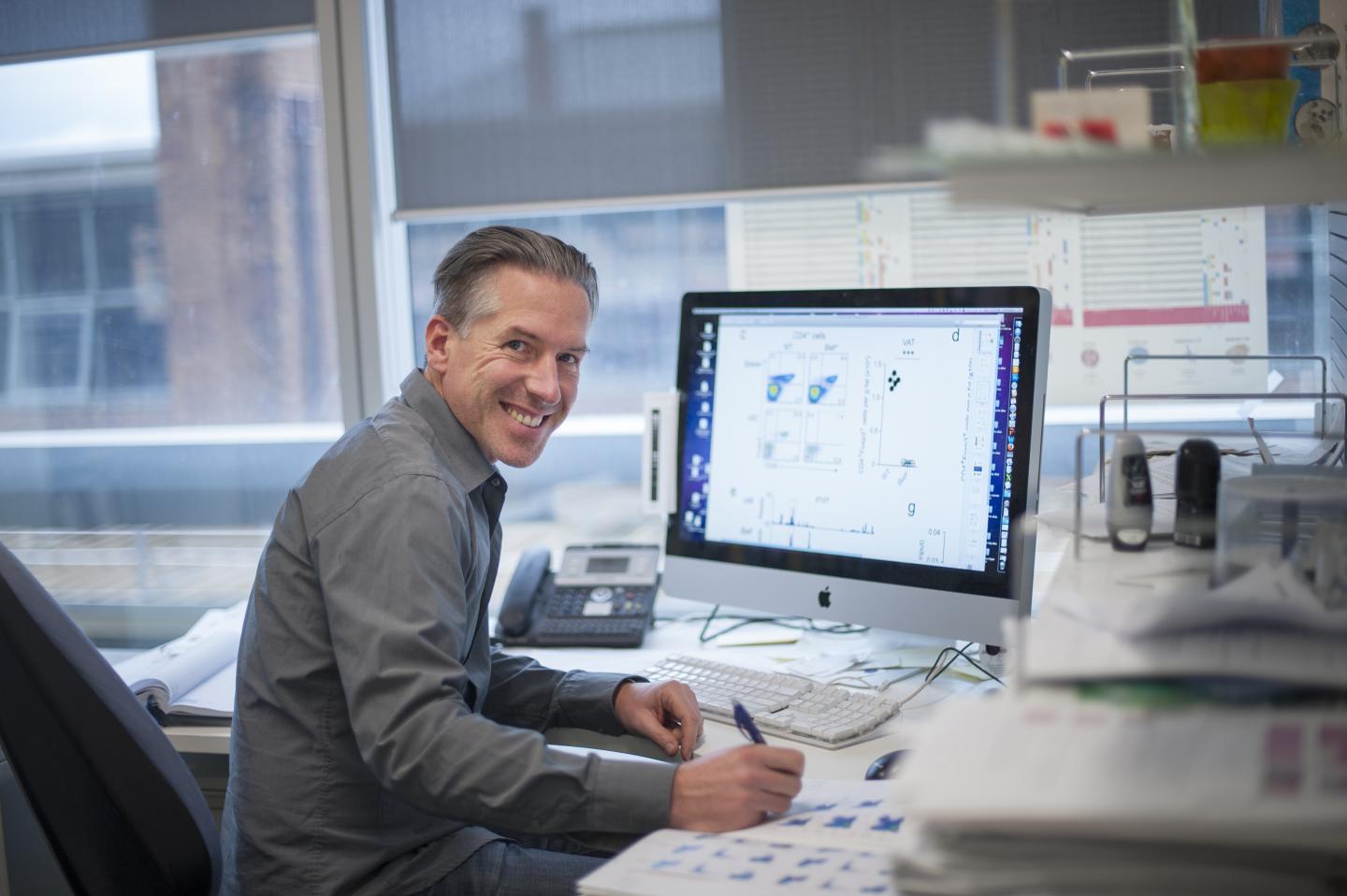
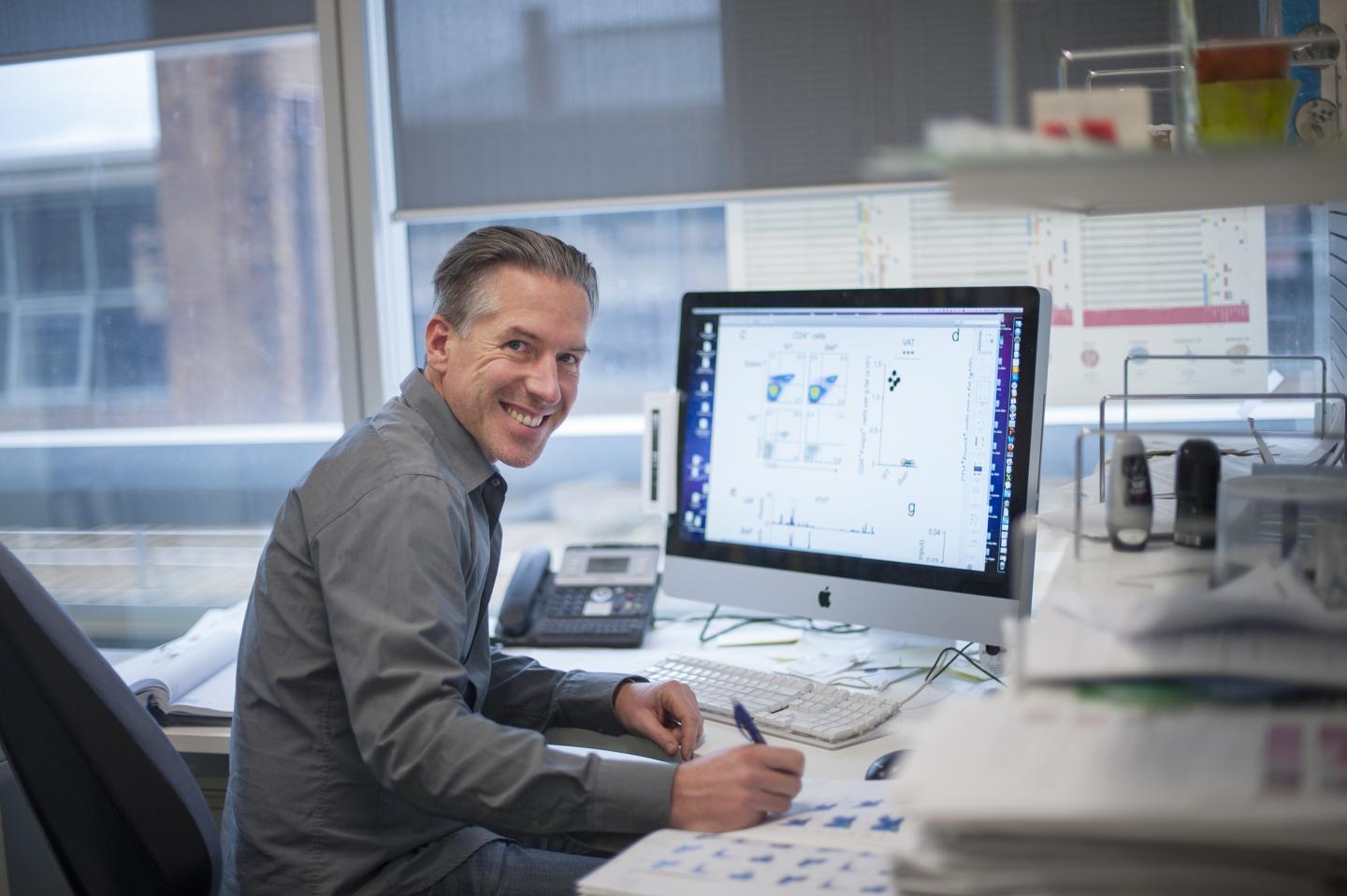
IMAGE

Melbourne researchers have uncovered the genes responsible for the way the body fights infection at the point of 'invasion' – whether it's the skin, liver, lungs or the gut.

Research led by Dr Axel Kallies and Dr Klaas van Gisbergen at the Walter and Eliza Hall Institute of Medical Research, and Dr Laura Mackay from the University of Melbourne at the Peter Doherty Institute for Infection and Immunity has identified the genes Hobit and Blimp1 and found that these genes control a universal molecular program responsible for placing immune cells at the 'front lines' of the body to fight infection and cancer.

The presence of these organ-residing cells, which differ strikingly from their counterparts circulating in the blood stream, is key to local protection against viruses and bacteria.

Walter and Eliza Hall Institute's Dr Kallies said the human body was fighting disease-causing pathogens every minute of its life.

Dr Kallies said identifying how immune cells remain in the part of the body where they are needed most was critical to developing better ways to protect us from infections such as malaria or HIV.

"Discovering these 'local heroes' and knowing how the localised immune response is established allows us to find ways to ensure the required cells are positioned where they are needed most," Dr Kallies said.

"This research will help us understand how immune cells adapt, survive and respond within the organs they protect. This is critical to rid the body of pathogens even before they are established and may also have implications for understanding how the spread of cancer could be prevented."

The Doherty Institute's Dr Laura Mackay, who is also an associate investigator with the Australian Research Council Centre of Excellence in Advanced Molecular Imaging, said the factors that control the 'tissue-residency' of immune cells – their ability to locally reside in different organs of the body – was previously unknown.

"These results have major implications for developing strategies to induce immune cells in tissues that protect against infectious diseases," Dr Mackay said.

"It's a crucial discovery for future vaccine strategies – Hobit and Blimp1 would be key to placing immune cells in the tissues, which we know are really important for protection."

The findings have just been published in the journal Science.

###

This research was supported by the Victorian State Government Operational Infrastructure Support and the Australian Government National Health and Medical Research Council Independent Research Institute Infrastructure Support Scheme.

Media Contact

Ebru Yaman
[email protected]
042-803-4089
@WEHI_research

Home

Share12Tweet8Share2ShareShareShare2

Related Posts

Unraveling Sleep Genetics via Wearable Device Data

April 1, 2026
Dopamine Drives Dynamic Social Specialization

Dopamine Drives Dynamic Social Specialization

April 1, 2026

FOLR3 and Neutrophils Worsen Sepsis Inflammation

April 1, 2026

Manchester Professor Named Expert Reviewer for Government Nuclear Decommissioning Review

April 1, 2026
Please login to join discussion

POPULAR NEWS

  • blank

    Revolutionary AI Model Enhances Precision in Detecting Food Contamination

    96 shares
    Share 38 Tweet 24
  • Imagine a Social Media Feed That Challenges Your Views Instead of Reinforcing Them

    1006 shares
    Share 398 Tweet 249
  • Promising Outcomes from First Clinical Trials of Gene Regulation in Epilepsy

    51 shares
    Share 20 Tweet 13
  • Popular Anti-Aging Compound Linked to Damage in Corpus Callosum, Study Finds

    43 shares
    Share 17 Tweet 11

About

BIOENGINEER.ORG

We bring you the latest biotechnology news from best research centers and universities around the world. Check our website.

Follow us

Recent News

Unraveling Sleep Genetics via Wearable Device Data

Dopamine Drives Dynamic Social Specialization

FOLR3 and Neutrophils Worsen Sepsis Inflammation

Subscribe to Blog via Email

Enter your email address to subscribe to this blog and receive notifications of new posts by email.

Join 78 other subscribers
  • Contact Us

Bioengineer.org © Copyright 2023 All Rights Reserved.

Welcome Back!

Login to your account below

Forgotten Password?

Retrieve your password

Please enter your username or email address to reset your password.

Log In
No Result
View All Result
  • Homepages
    • Home Page 1
    • Home Page 2
  • News
  • National
  • Business
  • Health
  • Lifestyle
  • Science

Bioengineer.org © Copyright 2023 All Rights Reserved.