Targeted radionuclide therapy has transformed the treatment of advanced cancers by combining tumor-targeting ligands with therapeutic radionuclides, offering meaningful efficacy with limited toxicity. Agents such as [¹⁷⁷Lu]Lu-DOTATATE and [¹⁷⁷Lu]Lu-PSMA-617 are approved in Europe and the United States for advanced neuroendocrine tumors and metastatic castration-resistant prostate cancer, respectively. These approvals followed phase III trials that demonstrated improved outcomes for patients with these conditions. As the field evolves, clinicians face increasing demands for more precise imaging to personalize treatment and monitor response effectively.
Two complementary approaches may support treatment personalization in this context. First, parameters such as standardized uptake values and total tumor volume can be extrapolated from SPECT/CT imaging to provide follow-up and early indicators of treatment response. However, post-therapy SPECT/CT currently lacks standardized response criteria, unlike PSMA PET, which has established protocols. Recent data suggest that visual scoring systems applied to SPECT/CT may serve as feasible tools for routine response monitoring, particularly in diseases where conventional morphological and biochemical criteria often lack sensitivity due to indolent kinetics and heterogeneous receptor expression.
Second, individualized absorbed dose estimation remains a critical but challenging aspect of therapy. This process requires long multi-time-point acquisitions and pharmacokinetic modeling to optimize activity administration. While theoretically capable of personalizing treatment, this approach is difficult to implement in routine clinical practice and has not yet been validated in phase III trials, which typically rely on fixed-activity protocols. The integration of advanced imaging technology aims to bridge this gap between clinical needs and technical feasibility.
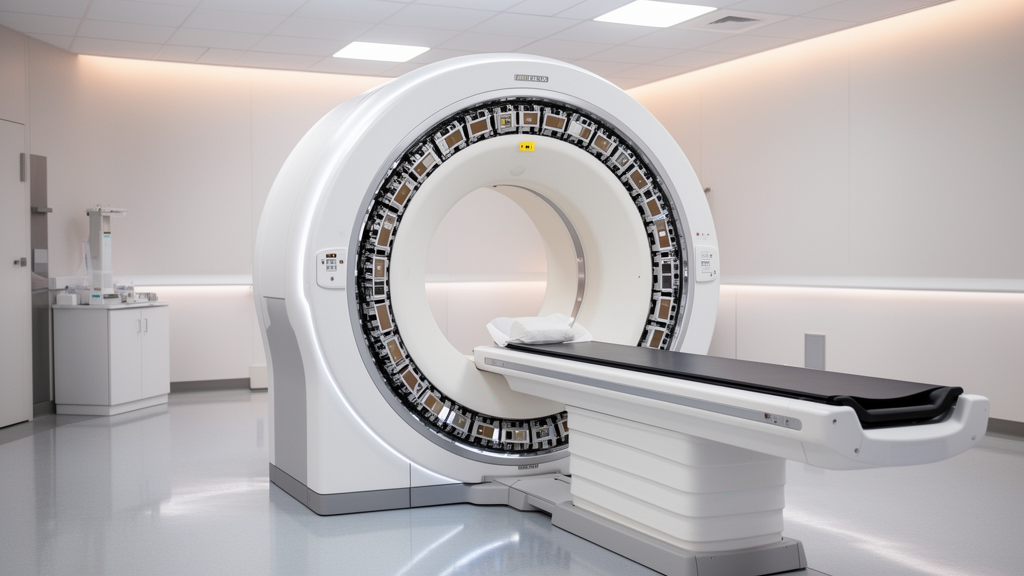
Conventional dual-head Anger camera SPECT/CT systems require approximately 60 minutes for complete whole-body planar and tomographic acquisitions. In contrast, 3D-ring CZT systems utilize a twelve-detector ring geometry to achieve whole-body scans in 12 to 20 minutes, depending on the number of bed positions. This speed enables what is described as SPECT at the speed of PET, providing satisfactory image quality for clinical decision-making while significantly reducing patient time in the scanner.
Studies demonstrate that 3D-ring CZT systems provide superior sensitivity, energy resolution, and dead-time performance compared to conventional Anger cameras. These technical advantages permit shorter acquisition times or lower administered activities. However, image quality depends on the optimization of reconstruction parameters, with satisfactory diagnostic accuracy achievable only under appropriate conditions. The technology allows for simultaneous high-resolution acquisition of multiple energy peaks with better energy discrimination, which enhances quantification and reduces acquisition time.
Recent investigations have highlighted the role of quantitative SPECT/CT imaging in assessing tumor response to [¹⁷⁷Lu]Lu-PSMA therapy for metastatic castration-resistant prostate cancer. One study underscored the importance of total tumor volume quantification, showing that early increases in this metric at six weeks after treatment strongly correlate with shorter progression-free survival. Another study evaluated a 3D-ring CZT system for rapid same-day post-infusion imaging, demonstrating that a reduction in positive total tumor volume predicted significantly improved overall survival and PSA progression-free survival, whereas changes in maximum or mean standardized uptake values did not.
Furthermore, recent investigations demonstrated that whole-body SPECT/CT data acquired from 3D-ring CZT gamma cameras can streamline personalized organ dosimetry using automated pipelines. These methods achieve reliable absorbed dose calculations that closely match standard methods. These preliminary data suggest that 3D-ring CZT-based SPECT/CT may enhance the clinical feasibility of tumor volume quantification and dosimetry in targeted radionuclide therapy, though comparative studies against conventional SPECT/CT are needed to confirm advantages in accuracy and clinical impact.
In the context of neuroendocrine tumors treated with [¹⁷⁷Lu]Lu-DOTATATE, evidence indicates that measuring absorbed dose and monitoring disease volume changes provides strong predictive value for treatment response and outcome. SUV-based quantification with SPECT/CT was found feasible in clinical practice, showing good correlation with PET/CT despite lower SUV values and higher metabolic tumor volumes. Post-therapy biomarkers such as changes in tumor burden score could predict therapy response early in patients with unresectable or metastatic well-differentiated tumors, offering a valuable tool for monitoring treatment efficacy.
More recent studies evaluated the feasibility of using 3D-ring CZT systems for whole-body imaging compared to standard SPECT. One study showed that rapid whole-body scans achieved lesion detection rates for large lesions comparable to standard SPECT and pre-therapy PET, while improving patient compliance and enabling faster post-therapy imaging. Another study compared dosimetry calculations in patients who underwent both conventional SPECT and whole-body 3D-ring CZT SPECT scans at multiple time points after injection. Activity concentrations and absorbed doses were not significantly different between the two methods, demonstrating that dosimetry is feasible and reliable with shorter acquisition times using CZT technology.
Challenges remain for the application of these cameras to alpha-emitting radionuclides, which are emerging in early-phase clinical trials. Quantitative imaging and dosimetry for alpha emitters are limited mostly to early clinical cases without standardized protocols. Difficulties include low gamma yields, complex decay chains, and daughter nuclide redistribution due to recoil effects. Additionally, current CZT crystals have limited detection efficiency for high-energy gamma rays, and fixed collimation in 3D-ring systems cannot be adjusted for different energy ranges, potentially limiting protocol optimization for specific clinical applications.
Currently available 3D-ring CZT systems include the GE Healthcare StarGuide and Spectrum Dynamics Veriton, both utilizing twelve CZT detectors in ring configurations. While sharing common advantages in sensitivity and acquisition speed compared to conventional Anger cameras, these systems may differ in specific detector geometry, patient positioning mechanisms, and proprietary reconstruction algorithms.
3D-ring CZT technology represents a significant potential advancement over conventional Anger camera systems, offering higher sensitivity, faster acquisition, and more accessible quantitative assessment in clinical routine. These features may enhance personalized treatment and response assessment in targeted radionuclide therapy. To achieve widespread clinical adoption, efforts should focus on harmonizing acquisition and reconstruction protocols, validating quantitative methods, and demonstrating cost-effectiveness. Advances in dosimetry models, multiparametric imaging, and integration of artificial intelligence could further enhance accuracy and efficiency.
Large-scale collaborative studies are essential to link 3D-ring CZT-based imaging metrics with long-term outcomes and fully realize the clinical impact of this technology.
In a phase 1 study presented at the SNMMI 2023, six patients with melanoma were scanned with [²⁰³Pb]Pb-VMT01 using a 3D-ring CZT gamma camera prior to therapy. The imaging demonstrated retention of the radiopharmaceutical within tumors at 24 hours post-injection, with acceptable dosimetry results.
Another phase 1 trial involving [²¹¹At]At-PSMA-5 for metastatic castration-resistant prostate cancer described the capability of performing post-therapeutic scans using a 3D-ring CZT gamma camera three hours after administration. This approach targeted the 79 keV X-rays emitted by the daughter nuclide of [²¹¹Po]Po.
Subject of Research: 3D-ring CZT gamma camera technology in targeted radionuclide therapy
Article Title: 3D-ring CZT gamma cameras in theranostics: is it a revolution?
Article References: Noamen, H., Cras, Y., Garcia, C., Hong, S., Iagaru, A., & Deandreis, D. (2026). 3D-ring CZT gamma cameras in theranostics: is it a revolution?. EJNMMI Reports, 10(1), Article 21. https://doi.org/10.1186/s41824-026-00300-z
Image Credits: AI Generated
DOI: 10.1186/s41824-026-00300-z
Keywords: CZT gamma cameras, theranostics, SPECT/CT, radionuclide therapy, prostate cancer, neuroendocrine tumors, medical imaging, dosimetry, nuclear medicine, treatment response, D-ring, gamma
News Source: Ophelia Keating. (November 12, 2026). 3D-Ring CZT Cameras Accelerate Nuclear Medicine Imaging. Scienmag.