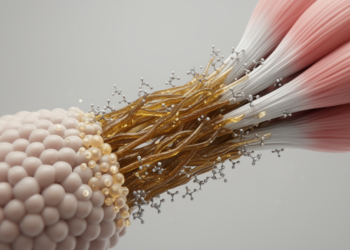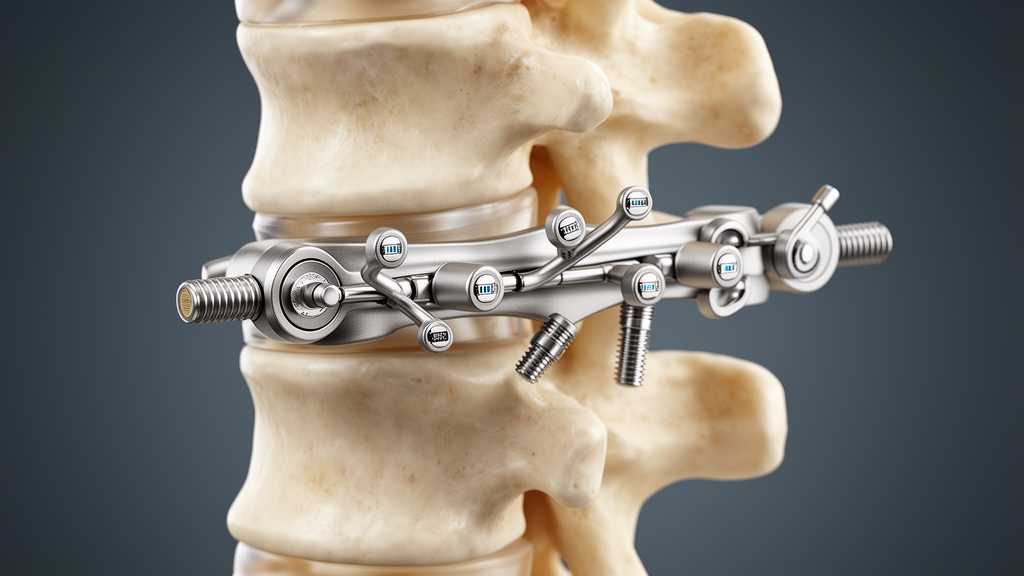
While traditional lumbosacral arthrodesis remains a standard surgical intervention to achieve mechanical stability through pedicle screw fixation and interbody fusion, the procedure permanently eliminates segmental motion. This rigid immobilization is frequently accompanied by long-term clinical sequelae, including accelerated adjacent segment disease, paraspinal muscle atrophy, and altered lower-extremity gait mechanics. In response to these established drawbacks, a narrative review published in Discover Sensors by an interdisciplinary research team led by Rahul Kumar examines emerging translational engineering paradigms designed to preserve physiological spinal kinematics. The authors synthesize recent advances spanning mechanically tunable implant constructs, bioadaptive polymeric and composite materials, soft robotic mechanisms, and embedded microscale sensor networks capable of delivering continuous, real-time biomechanical feedback from within the spinal column.
Because clinical literature combining adaptive mechanical constructs with active sensor feedback remains largely conceptual and preclinical, the investigators selected a structured narrative review methodology rather than a formal meta-analysis. Their investigation encompassed literature searches across PubMed, Web of Science, Scopus, and IEEE Xplore from database inception through March 2024 for English-language publications covering motion-preserving spinal devices, smart implants, soft robotics, and adjacent segment biomechanics. The authors noted that existing scoping and systematic reviews have historically maintained narrow investigative boundaries, focusing isolated attention on surgical techniques or specific implant designs while omitting the convergence of material science, energy harvesting, edge computing, and sensor-guided closed-loop control.
A primary objective in engineering dynamic spinal stabilization involves replicating the complex, time-dependent viscoelastic response of native spinal tissues to avoid the deleterious consequences of stress shielding. When an excessively rigid metallic construct absorbs disproportionate physiological load, the absence of natural mechanical stimulation can induce local osteopenia, screw loosening, and structural failure. The review details how bioadaptive polymeric formulations, particularly biocompatible polyurethane elastomers, can be tailored across a broad spectrum of stiffness and damping coefficients to function as dynamic interlaminar and interspinous spacers. By absorbing and dissipating kinetic energy during multi-planar spinal motion, these compliant materials help mitigate stress concentrations transferred to adjacent vertebrae. Furthermore, thermal and mechanical shape-memory alloys, such as nickel-titanium formulations, allow compact device deployment via minimally invasive surgical corridors before expanding in situ to provide customized structural geometry and stabilized load sharing.
To capture the direction-dependent mechanical performance of native spinal structures, investigators are increasingly turning to advanced hybrid biomaterials and computational modeling techniques. Composite hydrogels reinforced with high-aspect-ratio carbon nanotubes, ceramic nanoparticles, or biocompatible polymer fibers exhibit anisotropic viscoelastic behavior that closely approximates the biomechanics of the native intervertebral disc annulus fibrosus. These constructs can be supplemented with bioactive agents such as bone morphogenetic proteins to encourage stable tissue integration at adjacent bony margins. Finite element analysis has emerged as an indispensable computational methodology to refine these tunable designs, allowing engineers to simulate variations in Young modulus, Poisson ratio, and spacer geometry. Computational models enable precise quantification of sagittal alignment, multi-planar segmental range of motion, and neuroforaminal volume decompression, while directly forecasting stress redistribution across facet joints and adjacent spinal levels.
Beyond passive viscoelastic biomaterials, the review highlights emerging soft robotic actuation frameworks capable of dynamically modulating implant stiffness in response to patient posture and daily physical demands. Hydraulic and pneumatic interbody prototypes incorporate regulated internal fluid chambers that permit postoperative adjustments of lordotic curvature and construct rigidity. Concurrently, magnetorheological fluids and elastomers—materials that exhibit rapid, reversible viscosity alterations when subjected to controlled magnetic fields—are being explored within interspinous process spacers. In conceptual closed-loop architectures, onboard microcontrollers process real-time kinetic data captured by integrated sensors to continuously calibrate the surrounding magnetic flux. This responsiveness enables an implant to deliver high structural rigidity during vigorous, high-load activities where spinal stability is compromised, while reverting to a compliant state during low-demand periods of rest to maintain physiological range of motion.
Continuous monitoring of internal mechanical environments requires the seamless incorporation of microelectromechanical systems and nanosensors directly into load-bearing spinal hardware. Piezoresistive and capacitive strain gauges developed for orthopedic applications are being integrated into pedicle screws and interbody fusion cages, yielding continuous measurements of mechanical deformation under daily physiological weight-bearing routines. In parallel, thin-film capacitive and piezoelectric pressure sensors positioned near facet joint articulating surfaces or within interbody cages capture spatial contact force distributions and intradiscal pressures across the nucleus pulposus and annulus fibrosus. Furthermore, embedded three-axis inertial measurement units containing miniaturized gyroscopes and accelerometers track segmental spinal kinematics with high temporal fidelity. When processed using multi-sensor fusion algorithms, these inertial measurements can identify subtle pathological motions, including micro-instability and aberrant coupled rotations that provide early warnings of hardware loosening.
Material scientists are also advancing intrinsically conductive polymers and polymer-matrix nanocomposites that transform structural implant components into functional sensing elements without compromising physical dimensions. Conductive polymers such as polypyrrole, polyaniline, and poly(3,4-ethylenedioxythiophene) polystyrene sulfonate alter their electrical resistance in direct, predictable correlation with applied tensile strain and compressive forces. By dispersing conductive nanofillers—including single-layer graphene sheets, functionalized metallic nanoparticles, and aligned carbon nanotubes—throughout flexible polyurethane substrates, researchers have demonstrated highly sensitive strain-sensing skins. These ultrathin, flexible nanocomposite films can be conformally adhered to existing implant geometries or 3D-printed with integrated internal sensor housings using high-resolution additive manufacturing. This additive approach captures localized, high-resolution biomechanical metrics across the bone-implant interface while preserving the primary implant footprint.
Operating embedded active sensors and onboard control electronics within deep spinal tissues necessitates reliable wireless communication standards and sustainable energy management strategies. Low-power communication protocols, such as Bluetooth Low Energy and Near-Field Communication, facilitate non-invasive data transmission to external receivers while maintaining low baseline electrical consumption and data security compliance. Because permanent internal chemical batteries present finite functional operational lifespans and surgical replacement hazards, research efforts are emphasizing energy scavenging mechanisms. Embedded piezoelectric transducers can harvest kinetic vibrations and mechanical strain generated during normal human ambulation, converting mechanical energy into electrical power. Additionally, transcutaneous wireless inductive coupling systems transfer electrical energy across the skin barrier from external transmitting coils to internal receiver circuits, ensuring reliable, continuous device operation without percutaneous wiring.
Processing continuous streams of biomechanical telemetry in real time requires robust digital signal processing and artificial intelligence algorithms operating at the network edge. Digital signal processors and ultra-low-power microcontrollers can analyze localized sensor readings instantaneously, triggering micro-actuators when measured load thresholds are breached during sudden lumbar flexion. For more intricate pattern recognition, real-time edge computing platforms and event-driven neuromorphic processing architectures, such as research-grade neuromorphic chips, execute asynchronous predictive models with minimal energy consumption and negligible heat dissipation. However, the review emphasizes that initial clinical implementations will favor external or wearable computation modules over fully autonomous internal controllers. To mitigate risks from signal degradation or sensor drift, implantable architectures must incorporate conservative safe-mode programming that automatically defaults to passive mechanical stability whenever sensing, telemetry, or computational subsystems encounter an error.
Navigating the translational journey from benchtop concept to routine clinical application requires extensive validation under rigorous international regulatory standards. Novel dynamic spinal constructs must undergo comprehensive in vitro mechanical fatigue evaluation under simulated physiological loading in compliance with ASTM F2077 and ISO 12189 standards, alongside extensive biological safety screening under ISO 10993. Preclinical validation further requires large-animal in vivo models that accurately mirror human lumbar biomechanics to assess long-term biocompatibility and osseointegration under Good Laboratory Practice regulations.
The review concludes with a measured assessment of clinical evidence limitations and outstanding material challenges. Most published clinical investigations of existing dynamic stabilization hardware remain observational or retrospective, characterized by modest cohort sizes and intermediate follow-up periods ranging from one to five years. Concerns regarding polyurethane oxidative degradation, Nitinol nickel ion leaching, screw loosening, and inconsistent protection against adjacent segment degeneration underscore the necessity for rigorous prospective randomized clinical trials. Looking forward, the authors anticipate that dynamic stabilization data streams will converge with external robotic exoskeletons to guide personalized gait rehabilitation and proprioceptive retraining. Furthermore, extending these adaptive stabilization platforms to pediatric populations experiencing congenital spinal deformities or oncology patients undergoing structural reconstruction after spinal tumor resections will require multicenter international registries and standardized data architectures to ensure clinical efficacy and long-term durability.
Subject of Research: Translational engineering advances in mechanically tunable implants and sensor-enabled dynamic spinal stabilization
Article Title: Dynamic spine stabilization through mechanically tuned constructs and embedded biomechanical feedback systems: a narrative review
Article References: Kumar, R., Bouras, A., Phadke, R., Salman, S., Kaur, H., Sporn, K., Damian, A., Paladugu, P., Vaja, S., Tavakkoli, A., & Lee, N. J. (2026). Dynamic spine stabilization through mechanically tuned constructs and embedded biomechanical feedback systems: a narrative review. Discover Sensors, 2(1), Article 26. https://doi.org/10.1007/s44397-026-00053-1
Image Credits: AI Generated
DOI: 10.1007/s44397-026-00053-1
Keywords: dynamic spine stabilization, lumbar instability, mechanically tunable implants, embedded biomechanical sensors, microelectromechanical systems, magnetorheological fluids, finite element analysis, polyurethane elastomers, shape memory alloys, nanocomposite sensors, piezoelectric energy harvesting, inductive power transfer, neuromorphic computing, premarket approval, adjacent segment disease, soft robotics, wireless telemetry, spinal biomechanics
News Source: Denise Maddox. (November 12, 2026). Review Evaluates Mechanically Tunable Implants and Embedded Sensors for Dynamic Spine Stabilization. Scienmag.