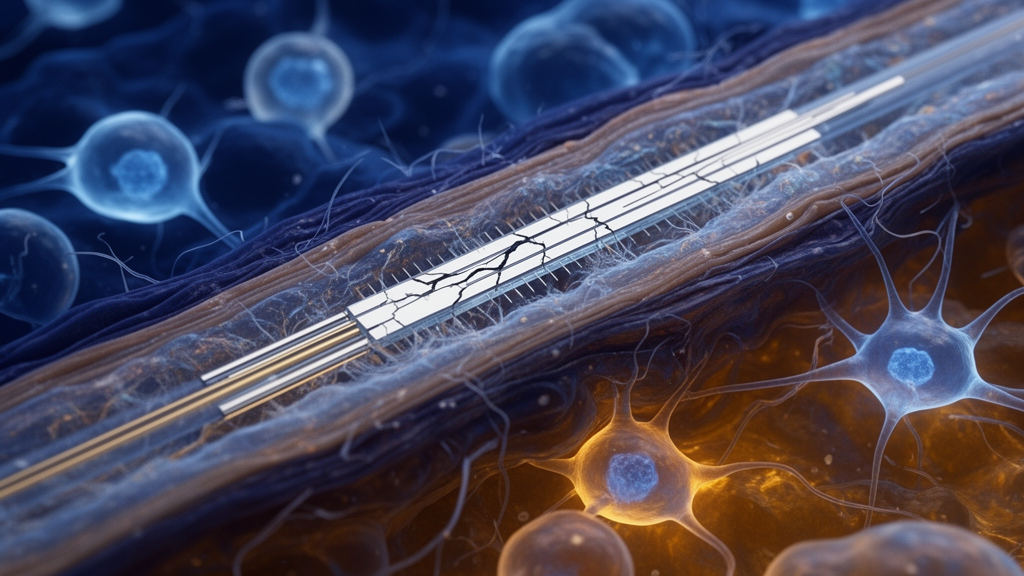
Implanted neural interfaces represent a specialized class of bioelectronic medical systems designed to treat disabling neurological conditions by sensing endogenous electrical activity or injecting therapeutic stimulation directly into neural tissue. Unlike conventional cardiac implants such as pacemakers, these bioelectronic assemblies operate in immediate contact with fragile structures within the central and peripheral nervous systems, including the cerebral cortex, deep subcortical nuclei, the spinal cord, and peripheral nerve bundles. Over several decades of clinical practice, technologies such as cochlear implants, deep brain stimulation leads, and spinal cord stimulators have demonstrated remarkable therapeutic durability, frequently functioning inside human tissue for years or even decades. At the same time, expanding investigational clinical trials and off-label therapeutic explorations continue to introduce high-density electrode arrays, depth electrodes, and endovascular recording systems. Despite these clinical achievements, every core subcomponent of an implanted system—encompassing the internal pulse generator or data acquisition unit, the hermetic packaging, wireless power and telemetry modules, flexible lead wires, and the conductive electrode surfaces—remains subject to severe physical and biological challenges. A comprehensive review published in Bioelectronic Medicine evaluates the intricate technological vulnerabilities, mechanical strains, and host tissue reactions that govern the operating lifespan of these devices, establishing that long-term clinical reliability requires an integrated understanding of device physics, electrochemical limits, and cellular immune responses.
The electronic core of an implantable neural interface typically integrates a power source, custom integrated circuits, amplifiers, and filtering hardware responsible for generating controlled electrical pulses or digitizing low-amplitude neural signals. In fully implantable platforms, such as standard deep brain stimulation or spinal cord stimulation devices, the pulse generator is completely enclosed within the body to eliminate transcutaneous wiring, which otherwise presents an open conduit for opportunistic bacterial infections and tract fistulas. However, primary non-rechargeable batteries eventually become depleted, requiring invasive revision surgeries to replace the pulse generator. Clinical research indicates that older patient cohorts receiving deep brain stimulation frequently prefer fixed-life batteries to rechargeable designs because avoiding frequent recharging routines reduces the lifestyle burden of the device, yet surgical generator replacements carry a significantly higher rate of hardware infection than the primary implantation procedure. Furthermore, expanding onboard computational architectures and multichannel recording arrays consume substantial electrical power, necessitating larger battery cells and bulkier protective housing. Large pulse generator housings concentrate mechanical stress on overlying soft tissues, with reported rates of pressure sores, wound dehiscence, hematomas, and skin erosion spanning between 1 percent and 27 percent across patient populations. Wireless power transmission and telemetry systems introduce additional physical constraints, as tissue safety limits dictate that radio frequency power density must stay below eighty milliwatts per square centimeter to prevent thermal injury, while miniaturized internal coils suffer reduced magnetic coupling that paradoxically increases operational power demands.
Protecting delicate internal electronics from the warm, conductive saline environment of living tissue necessitates robust hermetic enclosures, which are traditionally fabricated from biocompatible titanium shells sealed with feedthrough assemblies made of ceramic or fused silica insulators. When high-density feedthrough assemblies or weld joints develop microscopic seal defects, the intrusion of bodily moisture and physiological ions triggers rapid corrosive degradation, insulation breakdown, electrical short circuits, open circuits, and total loss of front-end amplifier sensitivity. Beyond the primary housing, the structural integrity of the flexible lead wires bridging the generator to distant neural targets represents one of the most mechanically vulnerable links in the hardware chain. Insulated with inert polymer sheaths such as silicone, polyimide, or parylene, these conductors must endure repetitive mechanical bending and tensile stress throughout the lifetime of the recipient. Mechanical fatigue failure is especially pronounced when leads traverse mobile anatomical structures, including the limbs, the neck, the supraclavicular space, the moving orbits of the eyes, or the spinal column. Patients diagnosed with dynamic movement disorders, such as dystonia, experience particularly high rates of lead fatigue fractures due to persistent muscle contractions. Mechanical breakdown of the outer polymer sheath causes electrical current leakage that lowers stimulation delivery to the target while risking inadvertent off-target neural excitation, whereas complete conductor fracture produces an open circuit and can leave retained wire fragments behind during explantation.
At the distal end of the implant, conductive electrodes interface directly with living cells to sense minute field potentials or deliver electrical charge, but their performance is strictly bounded by interfacial electrochemistry. Clinical electrode contacts are primarily manufactured from noble metals such as platinum or platinum-iridium alloys, often modified with sputtered or electrodeposited coatings like iridium oxide to enhance charge transfer characteristics. When an electrode stimulates neural tissue, electrical charge injection drives interfacial processes that can be either reversible or irreversible. Irreversible reactions occur when the electrode potential exceeds the electrochemical water window, causing the direct electrolysis of water into hydrogen and oxygen gases, altering localized tissue pH through hydroxyl ion accumulation, and generating reactive oxygen species. These uncontrolled electrochemical events induce electrode dissolution, local tissue necrosis, and acute material degradation. Non-uniform geometric charge distribution exacerbates these hazards, because electric charge concentrates intensely along the outer perimeters of planar pad electrodes and at the sharpened tips of penetrating microelectrode shanks. Elevated charge density accelerates metal corrosion, resulting in the shedding of potentially cytotoxic metal ions and microparticulates into surrounding neural structures, an effect seen when alternative metals like tungsten or stainless steel undergo rapid oxidative breakdown compared to more stable noble alloys.
When neural interfaces penetrate the central nervous system, they breach the protective blood-brain barrier and provoke a complex, multi-phase immune cascade that directly impairs functional longevity. The blood-brain barrier, maintained by the specialized neurovascular unit comprising endothelial cells, pericytes, astrocytes, microglia, and adjacent neurons, is disrupted upon physical insertion of penetrating shanks, such as deep brain stimulation leads, depth electrodes, and intracortical arrays. This structural breach causes local vascular trauma, microhemorrhages, and the extravasation of systemic red blood cells into the cerebral parenchyma. Hemolysis releases free iron into the neural tissue, catalyzing cytotoxic Fenton reactions that produce destructive reactive oxygen species, triggering lipid peroxidation, excitotoxicity, and widespread neuronal degeneration around the implant tract. In the sub-acute phase following implantation, resting surveyor microglia transform into active phagocytic phenotypes, migrating toward the foreign body to form a dense reactive layer that typically spans a perimeter of twenty to thirty-five micrometers surrounding the electrode shank. Activated microglia and infiltrating systemic macrophages release pro-inflammatory cytokines, tumor necrosis factor-alpha, interleukin-1-beta, nitric oxide, and proteolytic enzymes in an attempt to degrade the synthetic foreign material. Simultaneously, locally elevated chondroitin sulfate proteoglycans inhibit neurite outgrowth and elevate interfacial electrical impedance, reducing signal-to-noise ratios for neural recording while restricting the spatial distribution of therapeutic electrical fields.
The long-term chronic phase of the central tissue response is characterized by the formation of an encapsulating glial scar that permanently isolates the neural interface from neighboring brain tissue. Over days and weeks, reactive astrocytes surrounding the lesion become hypertrophic and interlock their cellular processes, creating a dense, high-impedance fibrous sheath around the electrode track with structural reinforcement from meningeal fibroblasts derived from the pia mater. This encapsulating cellular barrier physically displaces functional cell bodies away from the conductive sites, precipitating progressive neuronal dieback and synaptic disruption in the immediate peri-electrode volume. In the peripheral nervous system, foreign body dynamics follow a distinct pathway across spinal and cranial nerve trajectories. Upon device insertion or cuff placement, blood plasma proteins including albumin, fibrinogen, fibronectin, vitronectin, and complement factors rapidly adsorb onto the biomaterial surface to create a provisional protein matrix that matures into a fibrin thrombus. Infiltrating neutrophils dominate the acute stage, followed by mast cell degranulation releasing histamine and inflammatory mediators that recruit circulating macrophages and lymphocytes. When macrophages fail to clear the non-degradable biomaterial, they coalesce into multinucleated foreign body giant cells that direct fibroblasts and endothelial cells to deposit thick sheets of collagenous granulation tissue, forming an irreversible fibrous capsule that elevates stimulation thresholds. In the inner ear, severe surgical insertion trauma during cochlear implant placement can trigger neo-ossification, where ectopic bone deposition creates a highly resistive barrier that degrades residual hearing and impairs auditory nerve stimulation.
Beyond static biological encapsulation, continuous physical movement between implanted hardware and surrounding soft tissue drives ongoing inflammatory trauma and structural degradation. Relative displacement occurs on both macroscopic and microscopic scales. Macro-motion involves large-scale shifts of implanted components relative to host anatomy, such as the natural motion of the spinal cord within the vertebral canal, the displacement of intramuscular electrodes during voluntary limb flexion, or gravity-induced downward lead migration in spinal cord or sacral neuromodulation systems. Unanchored or poorly secured leads can migrate entirely away from their intended physiological targets, causing immediate loss of therapeutic benefit or damaging adjacent anatomical structures. Conversely, micromotion represents persistent, sub-millimeter oscillations between rigid electrode shanks and compliant neural tissue driven by cardiac contractions, arterial pulsation, respiratory excursions, and fluctuations in cerebrospinal fluid pressure. The severe mechanical mismatch between stiff silicon or metal electrodes and the soft, viscoelastic parenchyma concentrates shear strain along the device margins. Sharp electrode tips act as mechanical stress concentrators during micromotion, sustaining localized gliosis, microvascular shearing, insulation delamination, and tip blunting. Because single-unit recording arrays require target neuronal somas to remain within approximately one hundred and thirty micrometers of the active electrode surface, the combination of micromotion-induced shear injury, local neurodegeneration, and glial displacement frequently causes chronic recording failure in intracortical brain-computer interfaces.
The clinical consequences of device degradation and biological rejection are substantial, manifesting as loss of therapeutic efficacy, symptom recurrence, off-target stimulation, tissue damage, or systemic infection. Retrospective clinical registries and regulatory reporting systems, including the United States Food and Drug Administration Manufacturer and User Facility Device Experience database, illustrate variable complication profiles across device classes. In deep brain stimulation, documented complications include hardware-related infections in 4 percent of recipients, lead migration in 12.3 percent, intracranial hemorrhages in 6.1 percent, lead fractures in 1.4 percent, and procedural mortality between 0.2 and 0.32 percent. Spinal cord stimulation cohorts experience device malfunctions in 27.1 percent of cases, lead migrations between 3.07 and 9.97 percent, surgical infections ranging from 3.4 to 10 percent, and pulse generator explantations in 2.67 percent. Dorsal root ganglion stimulation reports lead defects in up to 39 percent of patients, surgical revisions in 29 percent, and retained lead fragments upon explant in 12 percent. Vagus nerve stimulation systems demonstrate lead fracture rates between 3 and 11.9 percent, alongside generator explantations due to hardware dysfunction in 4 to 16.8 percent of cases. To standardize the clinical evaluation of these adverse events, researchers have adapted the surgical Clavien-Dindo classification into an eight-tier grading framework ranging from Grade I minor issues managed with non-invasive reprogramming, through intermediate grades requiring medical therapy or outpatient surgical revision, up to Grade VII life-threatening septic conditions requiring intensive care and Grade VIII patient mortality.
To prevent premature in vivo failures, bioelectronic engineering relies on rigorous multi-stage preclinical testing regimens spanning benchtop characterization, accelerated environmental aging, and longitudinal animal studies. Standardized benchtop fatigue protocols, such as those established by the American Society for Testing and Materials, subject lead assemblies to millions of accelerated mechanical bending cycles to identify strain thresholds prior to human implantation. Thin-film electrode coatings undergo tape-adhesion testing to verify bonding integrity, while scanning electron microscopy inspects conductive surfaces for microcracks, pinhole insulation defects, and substrate delamination. Accelerated aging protocols immerse active and passive assemblies in heated physiological solutions—including phosphate-buffered saline, artificial cerebrospinal fluid, and peroxide-doped media that simulate oxidative stress—to model years of physiological exposure over compressed timelines. Electrochemical diagnostics provide quantitative verification of interface health, measuring charge storage capacity through cyclic voltammetry within the safe water window and determining the charge injection limit using biphasic voltage transients. Electrochemical impedance spectroscopy maps interfacial resistance across wide frequency bands, where target recording baseline impedances between 2 and 150 kilohms support high signal fidelity, whereas impedance levels exceeding 1.5 megaohms severely suppress single-unit neural yields. In vivo animal models subsequently confirm device biocompatibility, tracking systemic and localized biomarkers of ongoing neurotrauma such as phosphorylated neurofilament heavy subunit, glial fibrillary acidic protein, and inflammatory cytokines, while post-mortem histological sections quantify foreign body capsule thickness, microglial infiltration, and neuronal survival.
Addressing the complex technical and biological barriers confronting next-generation neural interfaces has catalyzed extensive innovation across materials science, surgical engineering, and intelligent device design. To minimize insertion trauma and blood-brain barrier disruption, investigators are advancing less invasive delivery paradigms, including injectable electronics like the Injectrode, ultra-flexible mesh lattices delivered through fine needles, and endovascular arrays such as the Stentrode, which seats recording contacts inside cerebral veins to bypass direct cortical penetration. Material compliance represents another major design frontier, where conventional rigid titanium packaging and silicon shanks are increasingly replaced by low-stiffness polymers, flexible electronic dura matrices, and stretchable peripheral nerve cuffs that match the mechanical elasticity of surrounding tissues. To facilitate the implantation of ultra-flexible microelectrodes without causing buckling during insertion, temporary shuttle carriers composed of bioresorbable polymers, polyethylene glycol, or carboxymethyl cellulose provide transient structural stiffness before dissolving harmlessly in tissue fluids. Bioactive surface engineering further suppresses foreign body reactions through the localized elution of anti-inflammatory drugs, neurotrophic factors, and peptide coatings that reduce microglial recruitment and prevent dense encapsulation. Concurrently, closed-loop stimulation algorithms utilizing recorded compound action potentials and machine-learning decoders dynamically adjust pulse amplitude, frequency, and current steering profiles to match natural biomimetic firing patterns, establishing a highly adaptive paradigm that enhances therapeutic efficacy while mitigating biological and hardware failure.
Subject of Research: Failure mechanisms and engineering strategies for long-term implanted neural interfaces
Article Title: Overcoming failure: improving acceptance and success of implanted neural interfaces
Article References: Dalrymple, A. N., Jones, S. T., Fallon, J. B., Shepherd, R. K., & Weber, D. J. (2025). Overcoming failure: improving acceptance and success of implanted neural interfaces. Bioelectronic Medicine, 11(1), Article 6. https://doi.org/10.1186/s42234-025-00168-7
Image Credits: AI Generated
DOI: 10.1186/s42234-025-00168-7
Keywords: neural interfaces, deep brain stimulation, cochlear implants, spinal cord stimulation, biocompatibility, foreign body response, electrode corrosion, electrochemical impedance, lead wire fatigue, hermetic packaging, glial scar, micromotion, biomaterials, closed loop stimulation, neurovascular unit, charge storage capacity
News Source: Cassandra Pierce. (November 12, 2026). Review Outlines Mechanical and Biological Failure Modes in Implanted Neural Interfaces. Scienmag.