• HOME
  • NEWS
  • EXPLORE
    • CAREER
      • Companies
      • Jobs
    • EVENTS
    • iGEM
      • News
      • Team
    • PHOTOS
    • VIDEO
    • WIKI
  • BLOG
  • COMMUNITY
    • FACEBOOK
    • INSTAGRAM
    • TWITTER
Wednesday, November 18, 2026
BIOENGINEER.ORG
No Result
View All Result
  • Login
  • HOME
  • NEWS
  • EXPLORE
    • CAREER
      • Companies
      • Jobs
        • Lecturer
        • PhD Studentship
        • Postdoc
        • Research Assistant
    • EVENTS
    • iGEM
      • News
      • Team
    • PHOTOS
    • VIDEO
    • WIKI
  • BLOG
  • COMMUNITY
    • FACEBOOK
    • INSTAGRAM
    • TWITTER
No Result
View All Result
Bioengineer.org
No Result
View All Result
Home NEWS Science News Biology

Review Maps Endothelial Plasticity in Post-Stroke Vascular Repair

by
November 10, 2026
in Biology
Reading Time: 2 mins read
0
Review Maps Endothelial Plasticity in Post-Stroke Vascular Repair

Review Maps Endothelial Plasticity in Post-Stroke Vascular Repair

Share on FacebookShare on TwitterShare on LinkedinShare on RedditShare on Telegram

However, a new review published in Cell Communication and Signaling highlights a critical limitation in this natural repair mechanism. The newly formed vessels are often structurally immature, poorly perfused, and hyperpermeable.

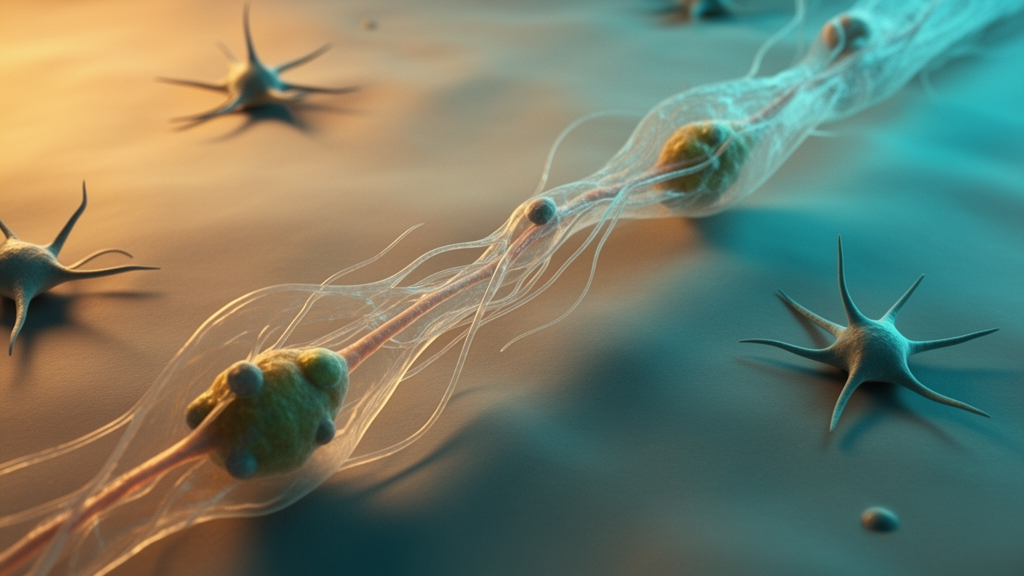
During vascular sprouting, these cells transiently acquire a specific state known as the tip-cell state. Tip cells occupy the leading edge of vascular sprouts and are responsible for guiding the direction of new vessel growth. They respond to specific environmental signals, including hypoxic signals, gradients of vascular endothelial growth factor, and cues from the extracellular matrix.

A central theme of the review is the concept of endothelial plasticity. The authors distinguish between fixed endothelial subpopulations and dynamic functional states. Tip and stalk-associated phenotypes are not permanent identities but rather reversible states that individual endothelial cells can transition into and out of. This plasticity is regulated by complex signaling pathways, including VEGF-Notch signaling, metabolic remodeling, and cell-cell interactions.

The review traces the continuum of reparative cerebral angiogenesis from the initial sprouting phase to functional maturation. It emphasizes the contributions of tip-cell-like endothelial states to directed migration, endothelial rearrangement, and early vascular network patterning.

Beyond endothelial cells, the review discusses the coordinated contributions of other cellular and molecular players in vascular repair. The authors note that the repair process is further complicated by factors such as inflammation, oxidative stress, matrix metalloproteinase activation, and endothelial senescence.

The study type is a review, synthesizing existing knowledge on tip-stalk endothelial plasticity in the context of post-stroke cerebrovascular repair. The scope of the review is broad, covering the molecular mechanisms of tip-cell behavior, the cellular interactions that drive vascular maturation, and the pathological factors that impede repair. The review establishes an integrated framework spanning vascular sprouting, vascular maturation, and barrier restoration.

The review emphasizes the need to shift therapeutic strategies in stroke care. Instead, therapeutic strategies should aim to promote vascular normalization and functional blood-brain barrier restoration.

By distinguishing early sprouting events from later maturation and barrier restoration, the review offers a nuanced perspective on cerebrovascular repair. It underscores the importance of timing and coordination in the repair process.

Subject of Research: Tip-stalk endothelial plasticity in post-stroke cerebrovascular repair

Article Title: From vascular sprouting to blood–brain barrier restoration: tip–stalk endothelial plasticity in post-stroke cerebrovascular repair

Article References: Wu, X., Tang, X., Li, Z., Wang, J., Jiang, J., Li, J., Tang, Z., Zhou, L., & Ai, K. (2026). From vascular sprouting to blood–brain barrier restoration: tip–stalk endothelial plasticity in post-stroke cerebrovascular repair. Cell Communication and Signaling. https://doi.org/10.1186/s12964-026-03308-x

Image Credits: AI Generated

DOI: 10.1186/s12964-026-03308-x

Keywords: ischemic stroke, angiogenesis, blood-brain barrier, endothelial plasticity, tip cells, vascular repair, VEGF-Notch signaling, cell communication, vascular, sprouting, blood, brain

News Source: Cassandra Pierce. (November 10, 2026). Review Maps Endothelial Plasticity in Post-Stroke Vascular Repair. Scienmag.

Tags: angiogenesisbloodBlood-brain barrierBraincell communicationendothelial plasticityischemic strokesproutingtip cellsvascularvascular repairVEGF-Notch signaling
Share12Tweet7Share2ShareShareShare1

Related Posts

Data-Driven Dynamical Models Accurately Predict Social Decision-Making in Trust Games

Data-Driven Dynamical Models Accurately Predict Social Decision-Making in Trust Games

November 18, 2026
Phosphorylated Viral LEF-6 Drives RNA Polymerase Export to Activate Very Late Genes

Phosphorylated Viral LEF-6 Drives RNA Polymerase Export to Activate Very Late Genes

November 18, 2026

LcWRKY18 Represses Anthocyanin Biosynthesis During High Temperature Leaf Fading in Loropetalum

November 18, 2026

Community Mangrove Protection in Belize Could Safeguard Millions in Blue Carbon

November 18, 2026

POPULAR NEWS

  • Colonial Legacies and Environmental Shifts Drive Mesoamerican Zoonotic Disease Vulnerabilities

    Colonial Legacies and Environmental Shifts Drive Mesoamerican Zoonotic Disease Vulnerabilities

    29 shares
    Share 12 Tweet 7
  • Motor Imagery Vividness Shows No Link to Parkinson’s Motor Symptom Severity

    29 shares
    Share 12 Tweet 7
  • Brain Tumour Review Identifies Ferroptosis Checkpoints and Spatial Therapeutic Vulnerabilities

    29 shares
    Share 12 Tweet 7
  • Hepatitis C Vesicles Maintain Immunosuppressive Signals Despite Antiviral Cure in Cirrhosis

    29 shares
    Share 12 Tweet 7

About

We bring you the latest biotechnology news from best research centers and universities around the world. Check our website.

Follow us

Recent News

Reducing Sugar Systems Modulate Flavor and Maillard Pathways in Whole-Wheat Lye Bread

Propafenone-Centered Stepwise Regimen Shows Efficacy for Pediatric Supraventricular Tachycardia

Custom 3D Titanium Plates Accelerate Mandibular Angle Fracture Surgery in Trial

Subscribe to Blog via Email

Enter your email address to subscribe to this blog and receive notifications of new posts by email.

Join 88 other subscribers
  • Contact Us

Bioengineer.org © Copyright 2023 All Rights Reserved.

Welcome Back!

Login to your account below

Forgotten Password?

Retrieve your password

Please enter your username or email address to reset your password.

Log In
No Result
View All Result
  • Homepages
    • Home Page 1
    • Home Page 2
  • News
  • National
  • Business
  • Health
  • Lifestyle
  • Science

Bioengineer.org © Copyright 2023 All Rights Reserved.