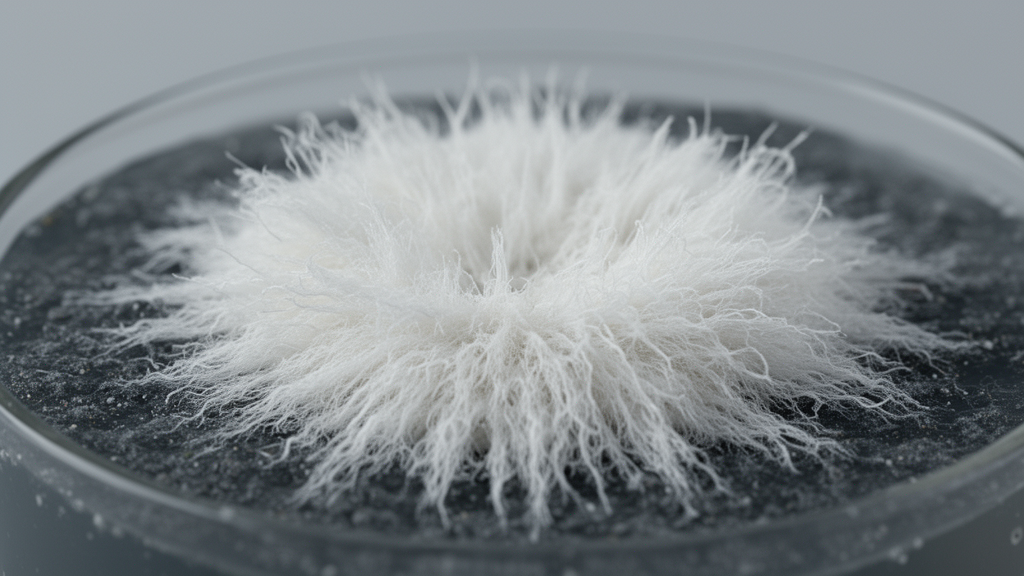
Researchers from Thapar Institute of Engineering and Technology in India have identified an endophytic fungus, Berkeleyomyces rouxiae, that produces two significant bioactive compounds, podophyllotoxin and deoxypodophyllotoxin. This finding, published in Frontiers in Pharmacology, represents a potential alternative to the traditional harvesting of these metabolites from the medicinal plant Podophyllum hexandrum, whose sustainable production remains a significant challenge. The study, conducted by Anviksha and Sudhakara Reddy, isolates and characterizes this fungal strain, designated PH12, as a source for these pharmacologically important lignans.
The research team began by isolating endophytic fungi from P. hexandrum, a plant valued for its production of podophyllotoxin and deoxypodophyllotoxin. In this study, the researchers aimed to screen these fungal isolates for their ability to produce the target compounds, which are known for their biological activities. This approach seeks to establish a more sustainable method for obtaining these valuable natural products.
To identify the most promising fungal isolate, the team screened 25 different isolates using thin-layer chromatography and high-performance liquid chromatography. Among the 25 isolates, PH12 emerged as the most promising candidate for further investigation.
Structural analyses of the metabolites produced by this fungus verified the presence of podophyllotoxin and deoxypodophyllotoxin. The fungal isolate produced podophyllotoxin at a concentration of 53.8 µg/g dry weight and deoxypodophyllotoxin at 32.3 µg/g dry weight. This is reported as among the first instances of B. rouxiae producing both specific lignans.
The study further evaluated the antibacterial, antioxidant, and cytotoxic activities of the fungal-derived compounds. Fungal podophyllotoxin (fPT) showed IC50 values of 2.491 ± 0.08 µg/mL against E. coli and 2.388 ± 0.07 µg/mL against S. aureus. Fungal deoxypodophyllotoxin (fDPT) showed IC50 values of 2.602 ± 0.09 µg/mL against E. coli and 2.528 ± 0.07 µg/mL against S. aureus.
These results were compared with standard podophyllotoxin and deoxypodophyllotoxin to assess the relative potency of the fungal-derived compounds. The standards showed IC50 values of 2.467 ± 0.08 µg/mL and 2.519 ± 0.09 µg/mL against E. coli, and 2.243 ± 0.06 µg/mL and 2.459 ± 0.08 µg/mL against S. aureus, respectively. The similarity in IC50 values between the fungal compounds and the standards suggests that the fungal-derived lignans retain significant antibacterial activity.
In addition to antibacterial properties, the fungal compounds demonstrated concentration-dependent antioxidant activity. This was assessed using the DPPH assay and the reducing power assay. In the DPPH assay, fPT and fDPT had IC50 values of 325.6 µg/mL and 404.2 µg/mL, respectively. In the reducing power assay, the IC50 values were 339.3 µg/mL for fPT and 465.1 µg/mL for fDPT. For comparison, the standard compounds showed IC50 values of 302.7 µg/mL and 370.9 µg/mL in the DPPH assay, and 306.6 µg/mL and 439.1 µg/mL in the reducing power assay. These data indicate that the fungal lignans possess antioxidant capabilities comparable to the standard compounds.
The IC50 value for fPT was found to be 1.336 µg/mL, while fDPT exhibited an IC50 value of 18.32 ng/mL. These values were compared with the standards, which showed IC50 values of 1.284 µg/mL for podophyllotoxin and 16.46 ng/mL for deoxypodophyllotoxin. The close similarity in cytotoxicity between the fungal-derived compounds and the standards suggests that the fungal lignans maintain their biological activity against cancer cells.
The study highlights the potential of endophytic fungi as a sustainable source of pharmacologically important compounds. By identifying B. rouxiae as a producer of both podophyllotoxin and deoxypodophyllotoxin, the research offers an alternative to the extraction of these compounds from P. hexandrum.
Subject of Research: Identification of endophytic fungus Berkeleyomyces rouxiae as a producer of podophyllotoxin and deoxypodophyllotoxin
Article Title: Endophytic Berkeleyomyces rouxiae producing podophyllotoxin and deoxypodophyllotoxin with antibacterial, antioxidant, and cytotoxic activities
Article References: Anviksha, A., & Reddy, M. S. (2026). Endophytic Berkeleyomyces rouxiae producing podophyllotoxin and deoxypodophyllotoxin with antibacterial, antioxidant, and cytotoxic activities. Frontiers in Pharmacology, 17, Article 1992195. https://doi.org/10.3389/fphar.2026.1992195
Image Credits: AI Generated
DOI: 10.3389/fphar.2026.1992195
Keywords: Berkeleyomyces rouxiae, podophyllotoxin, deoxypodophyllotoxin, endophytic fungi, Podophyllum hexandrum, lignans, antibacterial activity, antioxidant activity, cytotoxicity, sustainable production, Endophytic, Berkeleyomyces
News Source: Roger Howard. (November 10, 2026). Fungus found producing key anticancer lignans. Scienmag.