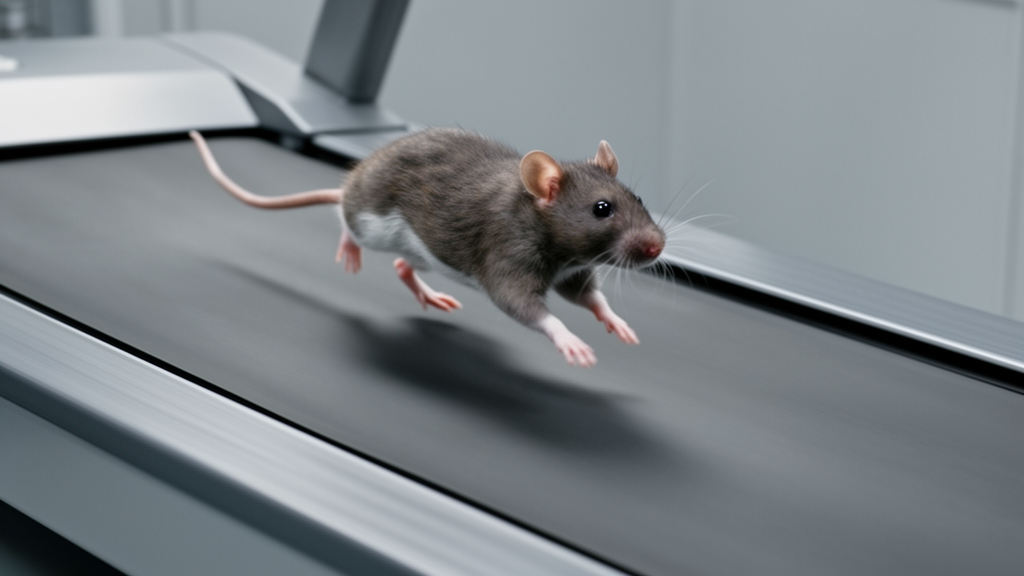
Chronic downhill treadmill running accelerates the progression of a genetic muscle disease in a rat model of desminopathy, according to a study published in the Journal of Cachexia, Sarcopenia and Muscle. The research demonstrates that eccentric-biased exercise, which involves repeated lengthening of muscle fibers under load, exacerbates muscle dysfunction and increases the formation of toxic protein aggregates in animals carrying a specific desmin mutation. This finding challenges the common assumption that physical activity is universally beneficial for muscular dystrophies and suggests that exercise prescriptions for patients with desminopathy may need to be carefully tailored to avoid harm.
Desminopathies are a group of clinically heterogeneous muscular dystrophies caused by more than 60 disease-causing variants in the desmin gene. Desmin is an intermediate filament protein that plays a central role in linking myofibrils, mitochondria, and the sarcolemma, ensuring proper force transmission and stress distribution within skeletal muscle fibers. When desmin is altered, this structural scaffold is compromised, leading to myofibrillar disarray, impaired mitochondrial function, and altered mechanical and regenerative properties. The most prevalent pathogenic variant in human desminopathy is the R350P mutation, which is associated with impaired skeletal muscle integrity and susceptibility to mechanical stress. Symptoms typically emerge between the second and fifth decade of life, including muscular weakness, wasting, and cardiomyopathy.
To investigate the impact of chronic mechanical stress on this condition, researchers engineered a CRISPR-Cas9 knock-in rat model carrying the homologous mutation R349P. Previous studies using this model showed a relatively mild phenotype in young rats and lower susceptibility to sarcolemmal and cytoskeletal damage following acute eccentric exercise in older rats. The research team hypothesized that the challenge of lacking functional desmin might preadapt the animals to acute mechanical stress, but that a more chronic exercise stimulus would be required to trigger the full pathophysiology. They specifically tested whether a six-week treadmill-running protocol, including four weeks of downhill running, would accelerate the rate of disease progression in these mutant rats.
The study involved male rats between 400 and 560 days of age, divided into wild-type (WT), heterozygous (HET), and homozygous mutant (Des) groups. The animals were randomly assigned to sedentary or exercise groups, with investigators blinded to genotype. The exercise protocol consisted of two weeks of acclimatization followed by four weeks of downhill running at a -10 degree decline. Rats performed incremental load tests on Monday, Wednesday, and Friday, while walking at 40% of their maximal speed on Tuesday and Thursday to maintain a state of chronic physical activity without overexertion. This standardized approach allowed for direct comparison of running capacity and exposure to progressive workloads across the different genotypes.
Running performance in the Des rats declined significantly over the course of the four-week training period. At baseline, after acclimatization, the Des rats ran for a mean of 804 seconds, which was similar to the wild-type rats’ performance. However, by the final incremental load test on day 24, the Des rats ran for a mean of only 399 seconds, compared to 940 seconds for the wild-type rats. This represents a 50% decrease in running performance for the Des animals over the four weeks, while the wild-type and heterozygous animals maintained their running times. The difference between the wild-type and Des groups became highly significant during the fourth week of training, underscoring that eccentric-biased exercise exacerbated muscle function in the mutant animals.
Histopathological analysis of the soleus muscle revealed distinct changes in the Des rats. Sedentary Des rats already showed a higher percentage of fibers with internalized nuclei compared to wild-type and heterozygous rats, a sign of chronic myopathy. After running, the Des rats had fewer fibers with internalized nuclei, but the overall fiber size and number per section remained unchanged, suggesting an impaired adaptation to the chronic exercise stimulus. The most notable finding was the near-doubling of desmin-positive sarcoplasmic aggregates in the running Des group compared to the sedentary Des group. These aggregates, which are a hallmark of desminopathy in humans, are thought to promote disease progression by disrupting sarcomere architecture and affecting protein homeostasis.
Western blot analysis of muscle proteins provided further insight into the cellular mechanisms underlying the observed decline. Baseline levels of cytoskeletal proteins were altered in the Des animals, potentially reflecting increased baseline stress and stress-adaptive mechanisms. For instance, muscle LIM protein, which is prominent in the establishment and maintenance of myofilament structure, was elevated in sedentary Des rats. However, while running increased this protein in wild-type and heterozygous rats, it did not increase in the Des rats. This lack of adaptive response suggests that the mutant muscle is unable to adequately remodel its cytoskeletal structure in response to mechanical loading. Additionally, septin 1, a protein linked to other protein aggregation diseases, was elevated at baseline in sedentary Des rats but decreased after running, pointing towards a preadaptive response that is exhausted by the exercise protocol.
Proteins involved in protein quality control and apoptosis also responded differently depending on the genotype. In the Des rats, Atg7, a protein associated with the ubiquitin-proteasome system, increased by 2.2-fold with running, while it slightly decreased in wild-type rats. Similarly, the total amount of ubiquitinated proteins rose by 26% in Des rats but declined by 23% in wild-type rats. Caspase 3, an apoptosis-related protease, increased in all genotypes with running, with the highest increase observed in the Des rats. These data indicate that the mutations in desmin affect the balance between proteostasis and apoptosis under mechanical stress, potentially leading to impaired protein degradation and the accumulation of toxic aggregates.
The study also examined membrane repair mechanisms, but found no evidence of significant sarcolemmal damage in the Des rats. Quantification of fibers staining positive for rat-IgG, a marker of membrane damage, showed that no myofibers of the sedentary animals had signs of membrane damage, and only one Des animal in the running cohort had a negligible percentage of IgG-positive fibers. This finding suggests that membrane injury is not the primary pathogenic mechanism in this model, aligning with clinical data where serum creatine kinase, a marker of muscle membrane damage, is elevated in fewer than 60% of desminopathy patients. Instead, the progression of the disease appears to be driven by intracellular processes such as protein aggregation and impaired quality control.
Stable isotope labeling experiments revealed modestly elevated baseline protein turnover in the gastrocnemius tissue of the Des rats, which did not increase after training. This matches the histological and western blot data, suggesting that muscle remodeling is elevated at baseline in Des rats but does not adapt in response to external stimuli. The inability to upregulate protein turnover in response to exercise may contribute to the accumulation of damaged proteins and the exacerbation of the disease phenotype. These findings highlight the complex interplay between mechanical stress, protein homeostasis, and muscle function in desminopathy.
Several limitations of the study must be considered when interpreting the results. Human desminopathy is typically autosomal dominant, whereas the rat model used in this study is autosomal recessive, which may involve different disease mechanisms. Additionally, treadmill running is an integrated performance measure that involves multiple muscle groups, and the robust decline in running performance in the Des rats may be influenced by progressive cardiomyopathy, as desmin is strongly expressed in the heart. Future studies are needed to directly investigate the role of the heart in this model and to compare the desmin network composition in rats with that in mice and humans to improve the translational relevance of the findings.
In summary, this study demonstrates that downhill running reduces running capacity and exacerbates desmin aggregation in desminopathic rats. The findings highlight the importance of tailoring exercise recommendations for patients with desminopathy, given the potential for harm from certain types of physical activity. Since physical therapy is currently the only prescribed therapeutic approach for this disease, understanding the specific effects of different exercise modalities is crucial for developing safe and effective treatment strategies. The R349P Des rat model provides a convenient tool for testing new therapies that target protein aggregates and protein quality control, with the ultimate goal of improving muscle function and ameliorating disease progression in patients.
Subject of Research: Chronic Exercise Accelerates Disease Progression in a Rat Model of Desminopathy
Article Title: Chronic Exercise Accelerates Disease Progression in a Rat Model of Desminopathy
Article References: Langer, H. T., Haritonow, N., Joshi, A. S., Avey, A. M., Bizieff, A., Mohammad, H., Zbinden‐Foncea, H., Hellerstein, M., Hahn, K., Stenzel, W., Baar, K., & Mossakowski, A. A. (2026). Chronic Exercise Accelerates Disease Progression in a Rat Model of Desminopathy. Journal of Cachexia, Sarcopenia and Muscle, 17(6), Article e70369. https://doi.org/10.1002/jcsm.70369
Image Credits: AI Generated
DOI: 10.1002/jcsm.70369
Keywords: Chronic, Exercise, Accelerates, Disease, Progression, Model, Desminopathy, scientific research
News Source: Ophelia Keating. (November 9, 2026). Downhill Running Accelerates Desminopathy Progression in Rats. Scienmag.