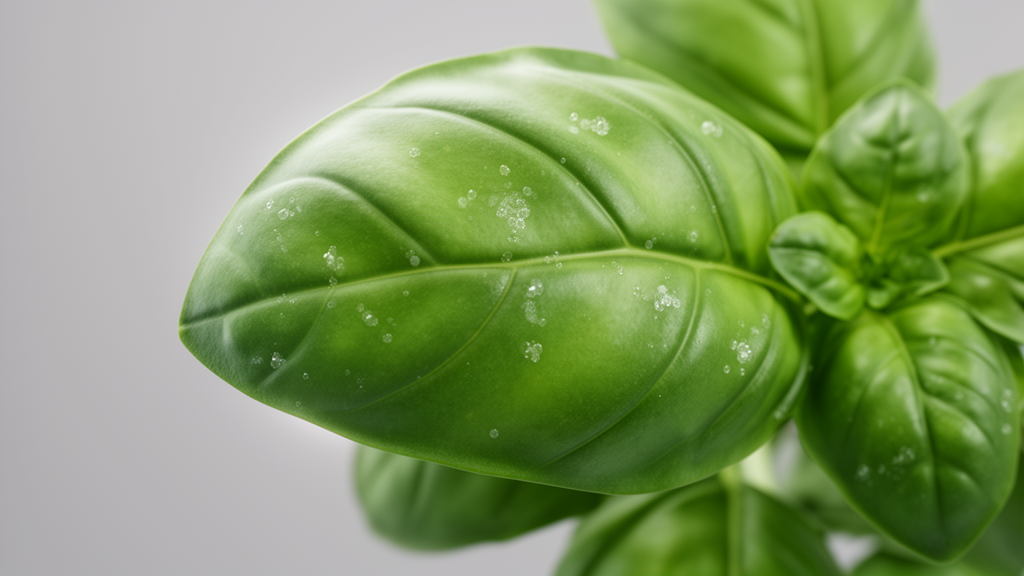
Researchers have demonstrated that silicon–salicylic acid nanocomposites can significantly mitigate the adverse biochemical effects of severe lead stress in basil plants while also reducing the amount of lead available in the soil. Published in the journal Chemical and Biological Technologies in Agriculture, the study evaluates the potential of these nanocomposites, referred to as Si–SA NCs, to regulate plant metabolic responses and remove lead from aqueous systems. Lead contamination represents a serious constraint, particularly in medicinal and aromatic plants such as basil. By combining silicon and salicylic acid into a single nanocomposite structure, the researchers aimed to create a more efficient strategy for reducing lead toxicity compared to using either component alone.
The study specifically examined the effects of these nanocomposites under severe lead stress conditions, defined as a soil concentration of 1000 mg kg−1.
Before testing the biological effects, the researchers characterized the synthesized Si–SA nanocomposites using a suite of analytical techniques. These included UV–Vis spectroscopy, dynamic light scattering, zeta potential analysis, Fourier-transform infrared spectroscopy, Raman spectroscopy, X-ray diffraction, scanning electron microscopy, and transmission electron microscopy. These methods confirmed the successful formation of the nanocomposites and their structural properties. Additionally, the nanocomposites exhibited a biphasic salicylic acid release profile, indicating controlled-release behavior.
Under severe lead stress, basil plants exhibited marked biochemical changes, including significant increases in anthocyanin, proline, and soluble sugars, along with a reduction in total protein content. However, the application of Si–SA nanocomposites effectively moderated these metabolic disturbances. The nanocomposites limited the increase in soluble sugars to 12%, whereas untreated lead-stressed plants showed a 61% increase. Furthermore, the nanocomposites reduced protein loss to 9%, compared with a 34% loss in the stressed control group. These findings suggest that the nanocomposites help maintain metabolic stability in the face of high lead concentrations.
Interestingly, anthocyanin accumulation appeared to be mainly driven by the lead stress itself and was not significantly modified by the applied treatments. The study also found that Si–SA nanocomposites decreased DTPA-extractable lead in post-harvest soil by 37.3% compared with the lead control.
In addition to their effects on soil and plant metabolism, the nanocomposites reduced the translocation of lead from roots to leaves. In aqueous conditions, the nanocomposites achieved up to 60% lead removal, outperforming silicon or salicylic acid applied individually.
The findings suggest that Si–SA nanocomposites can alleviate lead-induced biochemical disturbances in basil, decrease chemically extractable lead in soil, reduce lead movement to the aerial parts, and contribute to lead removal under aqueous conditions. Although these results indicate the potential of Si–SA nanocomposites as a multifunctional nano-enabled system for lead stress mitigation, the authors emphasize the need for further studies under field conditions. Additional research across different plant species and contamination levels is required to confirm the broader applicability of these nanocomposites.
Subject of Research: Mitigation of lead stress in basil using silicon–salicylic acid nanocomposites
Article Title: Silicon–salicylic acid nanocomposites modulate lead uptake and biochemical responses in basil (Ocimum basilicum L.) under severe Pb stress
Article References: Tavallali, V., Yousefi, A., Jahromi, B. B., Niazmand, A., & Darvishzadeh, M. D. (2026). Silicon–salicylic acid nanocomposites modulate lead uptake and biochemical responses in basil (Ocimum basilicum L.) under severe Pb stress. Chemical and Biological Technologies in Agriculture. https://doi.org/10.1186/s40538-026-01112-w
Image Credits: AI Generated
DOI: 10.1186/s40538-026-01112-w
Keywords: lead contamination, basil, nanocomposites, silicon, salicylic acid, plant stress, heavy metals, soil remediation, salicylic, acid, modulate, lead
News Source: Gregory Coleman. (November 8, 2026). Nanocomposites Modulate Lead Uptake in Basil Plants. Scienmag.