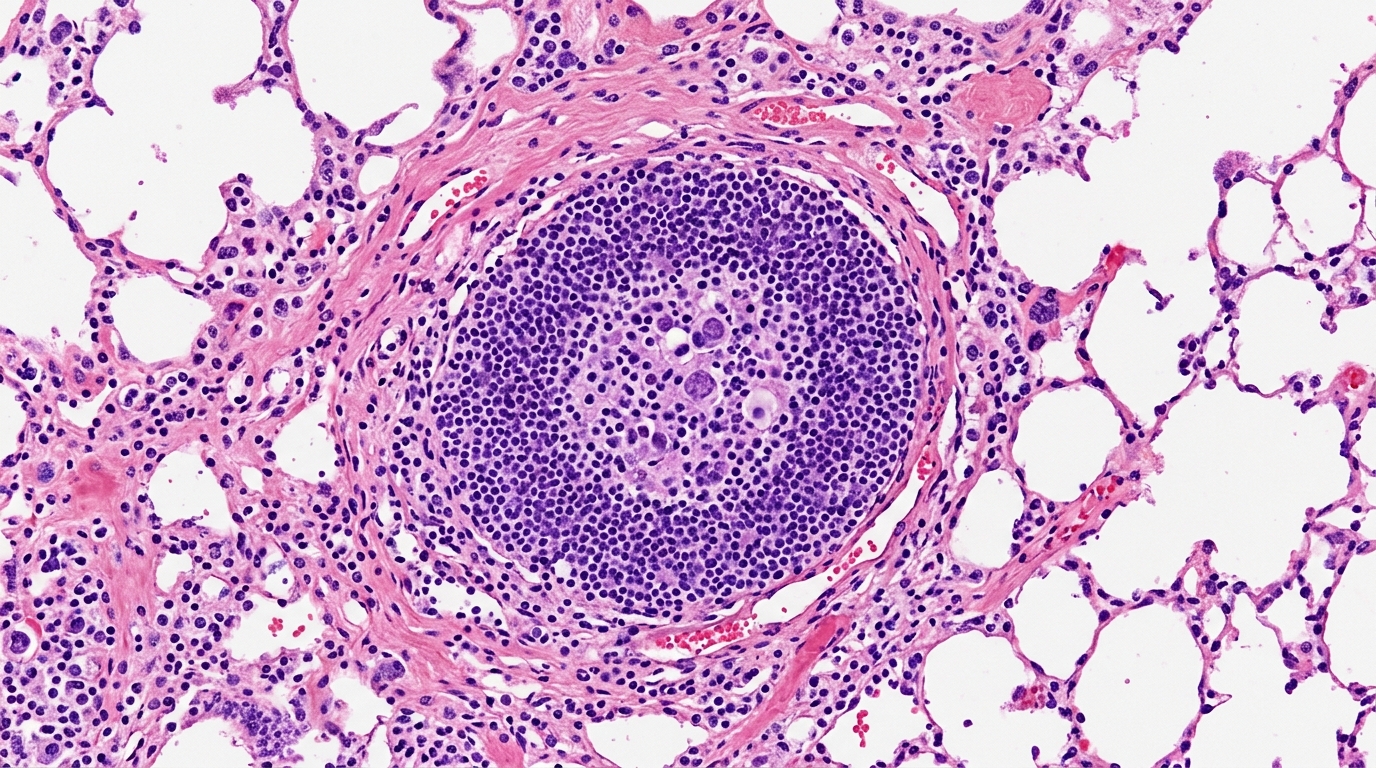
Researchers from three centers analyzed 254 patients with non-small cell lung cancer to determine how tertiary lymphoid structures differ between peritumoral inflammation and the tumor bed following neoadjuvant immunochemotherapy. The study, published in Cellular Oncology, found that these immune structures in the inflammatory tissue surrounding the tumor are more abundant and mature than those within the tumor bed itself. This spatial distinction appears to have significant prognostic implications for patients undergoing treatment for resectable non-small cell lung cancer.
The investigation focused on the biological and prognostic differences between tertiary lymphoid structures located in peritumoral inflammation and those found in the tumor bed. While previous research has associated the presence of these structures with favorable outcomes in lung cancer patients receiving neoadjuvant immunochemotherapy, the specific role of their location remained unclear.
The study included 98 patients treated with neoadjuvant immunochemotherapy, 54 patients treated with neoadjuvant chemotherapy, and 102 treatment-naïve patients. Researchers assessed the abundance and maturation of tertiary lymphoid structures in both the peritumoral inflammation and the tumor bed. They correlated these findings with pathological response and survival outcomes. Additionally, exploratory spatial transcriptomics were used to characterize the cellular composition and intercellular communication within these structures.
The results showed that peritumoral inflammation was significantly more prevalent in the neoadjuvant immunochemotherapy cohort, affecting 77.5% of patients, compared to 50.0% in the neoadjuvant chemotherapy group and 26.5% in the treatment-naïve group. In the immunochemotherapy group, tertiary lymphoid structures in the peritumoral inflammation were more abundant and mature than those in the tumor bed.
Statistical analysis revealed that tertiary lymphoid structures associated with peritumoral inflammation were independently linked to recurrence-free survival. This association held true even after adjusting for major pathological response, the abundance of structures in the tumor bed, and other clinicopathological factors. A predictive nomogram incorporating ypN stage and features related to peritumoral inflammation achieved areas under the curve of 0.894, 0.884, and 0.887 for predicting recurrence-free survival at one, two, and three years, respectively.
Spatial transcriptomics provided further insight into the biological differences between the two locations. The analysis revealed distinct transcriptional and immune profiles for the structures in peritumoral inflammation compared to those in the tumor bed. Specifically, the peritumoral structures showed greater plasma cell abundance and more active interactions with the tumor microenvironment.
The study concludes that neoadjuvant immunochemotherapy is associated with a higher prevalence of peritumoral inflammation and greater abundance and maturation of tertiary lymphoid structures. The structures in this region demonstrated greater prognostic value and a more immune-active microenvironment than those in the tumor bed. These results support the use of spatial assessment of tertiary lymphoid structures for postoperative risk stratification in patients with resectable non-small cell lung cancer.
By distinguishing between structures in different anatomical locations, this research highlights the importance of spatial heterogeneity in immune response. The findings suggest that evaluating the peritumoral environment may provide more accurate predictive information than assessing the tumor bed alone.
Subject of Research: Prognostic value of spatially distinct tertiary lymphoid structures in NSCLC
Article Title: Spatial heterogeneity and prognostic value of tertiary lymphoid structures in peritumoral inflammation and tumor beds after neoadjuvant immunochemotherapy for resectable NSCLC
Article References: Xie, M., Gao, J., Zhang, Y., Zhang, X., Deng, H., Xu, T., Shi, W., Yao, J., Jing, Y., & Xue, X. (2026). Spatial heterogeneity and prognostic value of tertiary lymphoid structures in peritumoral inflammation and tumor beds after neoadjuvant immunochemotherapy for resectable NSCLC. Cellular Oncology. https://doi.org/10.1007/s13402-026-01287-2
Image Credits: AI Generated
DOI: 10.1007/s13402-026-01287-2
Keywords: NSCLC, tertiary lymphoid structures, neoadjuvant immunochemotherapy, peritumoral inflammation, tumor bed, recurrence-free survival, spatial transcriptomics, lung cancer, Spatial, heterogeneity, prognostic, value
News Source: Nathaniel Bowman. (November 8, 2026). Lymphoid Structures in Lung Inflammation Predict Survival After Therapy. Scienmag.