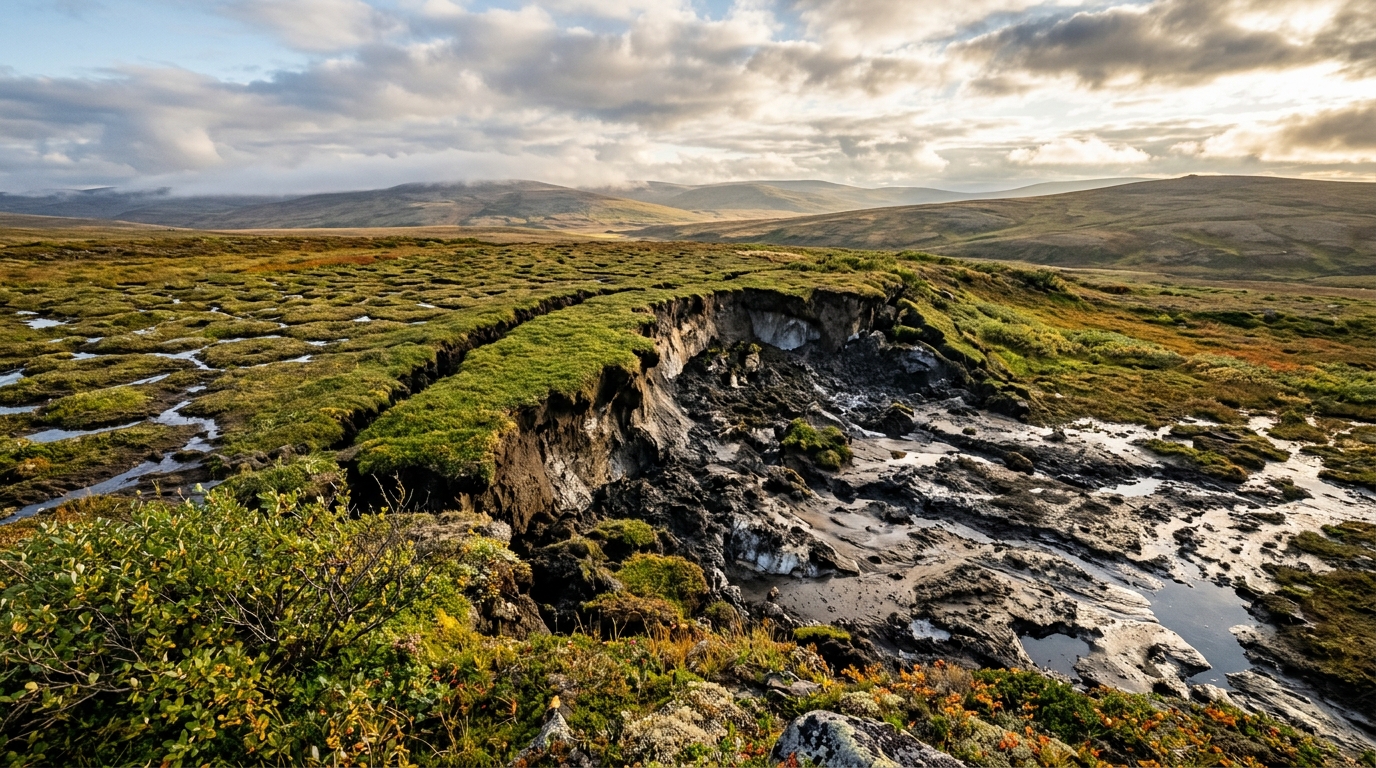
Analysis of satellite observations spanning from 2000 to 2023 demonstrates that vegetation resilience across permafrost ecosystems underwent a widespread reversal after 2008, despite persistent greening trends across these high-latitude regions. Rapid warming in permafrost environments is actively destabilizing ecosystem functioning, creating mounting concerns regarding how plant communities can withstand and recover from natural disturbances. While vegetation resilience initially showed an increase during the earlier portion of the observational record, that trajectory experienced a widespread reversal after 2008.
Evaluating environmental predictors alongside atmospheric moisture conditions revealed that this post-2008 decline in vegetation resilience was most strongly associated with intensifying atmospheric drought. In examining the broader drivers of regional drying, investigations into ocean evaporation and atmospheric moisture transport suggest that shifts in oceanic moisture supply may have contributed to the elevated atmospheric drought conditions observed across permafrost landscapes after 2008. These findings identify atmospheric drought as a key constraint governing permafrost vegetation stability and suggest that ocean–land moisture interactions are involved in modulating this process.
Satellite assessments and environmental records indicate that wildfires further amplified losses in vegetation resilience within fire-disturbed areas.
The empirical findings also reveal a decoupling between continued vegetation greening and underlying ecological resilience, which carries critical consequences for regional carbon dynamics. Despite satellite evidence indicating ongoing greening across permafrost ecosystems, the post-2008 downturn in vegetation resilience signals a notable destabilization of plant carbon uptake. This documented relationship between vegetation resilience variations and carbon-uptake variability indicates that greenness metrics alone do not reflect the true capacity of permafrost plant life to sustain stable carbon capture under climate stress.
Current process-based and predictive models fail to capture this observed reversal in vegetation resilience, indicating a substantial underestimation of climate risks threatening high-latitude carbon sinks. Improving the representation of atmospheric drought, moisture dynamics, and wildfire impacts within predictive models is essential for accurately evaluating the future stability of permafrost ecosystems.
Subject of Research: Reversal of vegetation resilience in permafrost ecosystems
Article Title: Widespread reversal of vegetation resilience in permafrost ecosystems
Article References: Guo, Z., Wang, J., Smith, T., Li, W., Zhang, K., Wu, J., Zhou, Y., & Gong, P. (2026). Widespread reversal of vegetation resilience in permafrost ecosystems. Nature Plants. https://doi.org/10.1038/s41477-026-02462-x
Image Credits: AI Generated
DOI: 10.1038/s41477-026-02462-x
Keywords: permafrost ecosystems, vegetation resilience, atmospheric drought, wildfires, carbon sinks, satellite observations, climate change, moisture transport, Widespread, reversal, vegetation, resilience
News Source: Drew Townsend. (November 8, 2026). Permafrost Vegetation Resilience Reversed After 2008 Despite Continued Greening. Scienmag.