• HOME
  • NEWS
  • EXPLORE
    • CAREER
      • Companies
      • Jobs
    • EVENTS
    • iGEM
      • News
      • Team
    • PHOTOS
    • VIDEO
    • WIKI
  • BLOG
  • COMMUNITY
    • FACEBOOK
    • INSTAGRAM
    • TWITTER
Saturday, November 7, 2026
BIOENGINEER.ORG
No Result
View All Result
  • Login
  • HOME
  • NEWS
  • EXPLORE
    • CAREER
      • Companies
      • Jobs
        • Lecturer
        • PhD Studentship
        • Postdoc
        • Research Assistant
    • EVENTS
    • iGEM
      • News
      • Team
    • PHOTOS
    • VIDEO
    • WIKI
  • BLOG
  • COMMUNITY
    • FACEBOOK
    • INSTAGRAM
    • TWITTER
No Result
View All Result
Bioengineer.org
No Result
View All Result
Home NEWS Science News Health

Motivational Interviewing Improves Dyadic Stroke Self-Care in Randomised Controlled Trial

by
November 7, 2026
in Health
Reading Time: 2 mins read
0
Motivational Interviewing Improves Dyadic Stroke Self-Care in Randomised Controlled Trial

Motivational Interviewing Improves Dyadic Stroke Self-Care in Randomised Controlled Trial

Share on FacebookShare on TwitterShare on LinkedinShare on RedditShare on Telegram

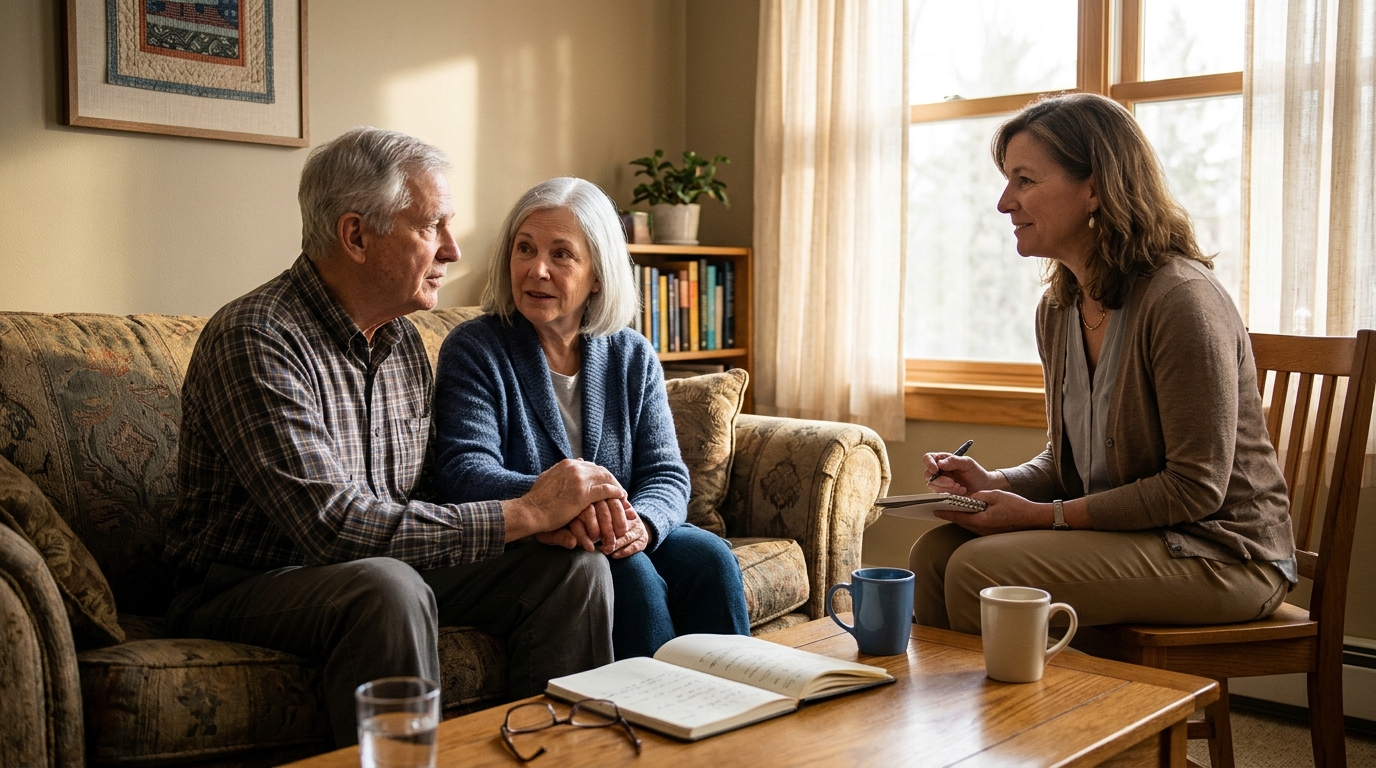
In a randomised controlled trial evaluating stroke survivors and spousal caregivers, a motivational interviewing intervention led to significantly higher scores across all six co-primary dyadic self-care outcomes at a three-month follow-up compared to usual care.

The clinical trial addressed persistent difficulties in post-stroke recovery, noting that stroke survivors frequently struggle with self-care behaviours such as medication adherence, diet, exercise, and symptom monitoring. Prior trials that focused on patient self-care alone have produced inconsistent results. Because many stroke survivors depend heavily on spousal caregivers, the researchers evaluated a dyadic approach. The study was structured to assess the effect of motivational interviewing on dyadic self-care as primary outcomes, while additionally evaluating secondary outcomes comprising stroke health knowledge, mutuality, and self-efficacy.

The trial enrolled a total of 74 stroke survivor–spousal caregiver dyads who were randomly assigned in a 1:1 ratio to either the motivational interviewing intervention group or a usual-care control group. Investigators tracked participant outcomes across multiple measurement intervals, conducting assessments at baseline, immediately post-intervention, and at subsequent 1-month and 3-month follow-up visits.

By the 3-month follow-up, dyads in the intervention group achieved statistically significant advantages over the control group across all six co-primary outcomes (all P < 0.05). These co-primary endpoints evaluated stroke survivors’ self-care maintenance, monitoring, and management, alongside spousal caregivers’ contributions to each respective behaviour. Specifically, the unadjusted between-group difference reached 25.21 points (95% CI 20.34 to 30.09; P < 0.05) for self-care maintenance among stroke survivors, and 19.44 points (95% CI 11.11 to 30.56; P < 0.05) for caregiver contribution to self-care maintenance.

The investigators concluded that the motivational interviewing intervention was associated with improvements in dyadic self-care and related psychosocial outcomes among stroke survivor–spousal caregiver dyads. Describing the data as preliminary findings, the authors observed that targeted behavioural interventions may help reduce stroke-related burden, while noting that further confirmatory trials are warranted. The study was registered with the Chinese Clinical Trial Registry under registration number ChiCTR2100053591.

Subject of Research: Motivational interviewing for dyadic stroke self-care

Article Title: Motivational interviewing to improve dyadic self-care (MOTIVATE-DSC) in stroke survivors and spousal caregivers: randomised controlled trial

Article References: Xue, M., Wang, W., Wang, S., Li, R., Gu, Y., Dou, Y., Mei, Y., Zhang, Q., Chen, J., & Zhang, Z. (2026). Motivational interviewing to improve dyadic self-care (MOTIVATE-DSC) in stroke survivors and spousal caregivers: randomised controlled trial. BMC Nursing. https://doi.org/10.1186/s12912-026-05591-y

Image Credits: AI Generated

DOI: 10.1186/s12912-026-05591-y

Keywords: stroke rehabilitation, motivational interviewing, dyadic self-care, stroke survivors, spousal caregivers, randomised controlled trial, self-care maintenance, Motivational, interviewing, improve, dyadic, self-care

News Source: Cassandra Pierce. (November 7, 2026). Motivational Interviewing Improves Dyadic Stroke Self-Care in Randomised Controlled Trial. Scienmag.
Tags: dyadicdyadic self-careImproveinterviewingMotivationalmotivational interviewingrandomised controlled trialself-careself-care maintenancespousal caregiversstroke rehabilitationstroke survivors
Share12Tweet7Share2ShareShareShare1

Related Posts

Probable Chlamydia abortus infection linked to severe pneumonia

Probable Chlamydia abortus infection linked to severe pneumonia

November 7, 2026
KRAS Status Unlinked to Nutrition and Inflammation in Colorectal Cancer

KRAS Status Unlinked to Nutrition and Inflammation in Colorectal Cancer

November 7, 2026

Screening Tool Evaluates Paternal Perinatal Affective Symptoms in Polish Fathers

November 7, 2026

Vitamin E and Selenium Nanoparticles Mitigate Mercury Toxicity in Tilapia

November 7, 2026

POPULAR NEWS

  • Tomographic Study Assesses Interzonal Toric Stability Across Different Corneal Zones

    Tomographic Study Assesses Interzonal Toric Stability Across Different Corneal Zones

    29 shares
    Share 12 Tweet 7
  • Research report: Phytotoxic potential of Ranunculus testiculatus aqueous extract: physiological responses and molecular docking/putative ligand interactions with barley α-amylase

    29 shares
    Share 12 Tweet 7
  • High-fibre, fermented-food diet trial will test gut-brain route to easing adult ADHD symptoms

    29 shares
    Share 12 Tweet 7
  • Research report: Effects of a game-based exergame intervention on motor competence and balance in children with autism spectrum disorder: a multiple-baseline single-case experimental study

    29 shares
    Share 12 Tweet 7

About

We bring you the latest biotechnology news from best research centers and universities around the world. Check our website.

Follow us

Recent News

Probable Chlamydia abortus infection linked to severe pneumonia

KRAS Status Unlinked to Nutrition and Inflammation in Colorectal Cancer

Decentralized Blockchain Architecture Protects Electronic Prescriptions Against Duplication and Forgery

Subscribe to Blog via Email

Enter your email address to subscribe to this blog and receive notifications of new posts by email.

Join 86 other subscribers
  • Contact Us

Bioengineer.org © Copyright 2023 All Rights Reserved.

Welcome Back!

Login to your account below

Forgotten Password?

Retrieve your password

Please enter your username or email address to reset your password.

Log In
No Result
View All Result
  • Homepages
    • Home Page 1
    • Home Page 2
  • News
  • National
  • Business
  • Health
  • Lifestyle
  • Science

Bioengineer.org © Copyright 2023 All Rights Reserved.