• HOME
  • NEWS
  • EXPLORE
    • CAREER
      • Companies
      • Jobs
    • EVENTS
    • iGEM
      • News
      • Team
    • PHOTOS
    • VIDEO
    • WIKI
  • BLOG
  • COMMUNITY
    • FACEBOOK
    • INSTAGRAM
    • TWITTER
Friday, November 6, 2026
BIOENGINEER.ORG
No Result
View All Result
  • Login
  • HOME
  • NEWS
  • EXPLORE
    • CAREER
      • Companies
      • Jobs
        • Lecturer
        • PhD Studentship
        • Postdoc
        • Research Assistant
    • EVENTS
    • iGEM
      • News
      • Team
    • PHOTOS
    • VIDEO
    • WIKI
  • BLOG
  • COMMUNITY
    • FACEBOOK
    • INSTAGRAM
    • TWITTER
No Result
View All Result
Bioengineer.org
No Result
View All Result
Home NEWS Science News Biology

Palm Wine Isolate Fructobacillus fructosus Shows Probiotic Potential In Vitro

by
November 6, 2026
in Biology
Reading Time: 2 mins read
0
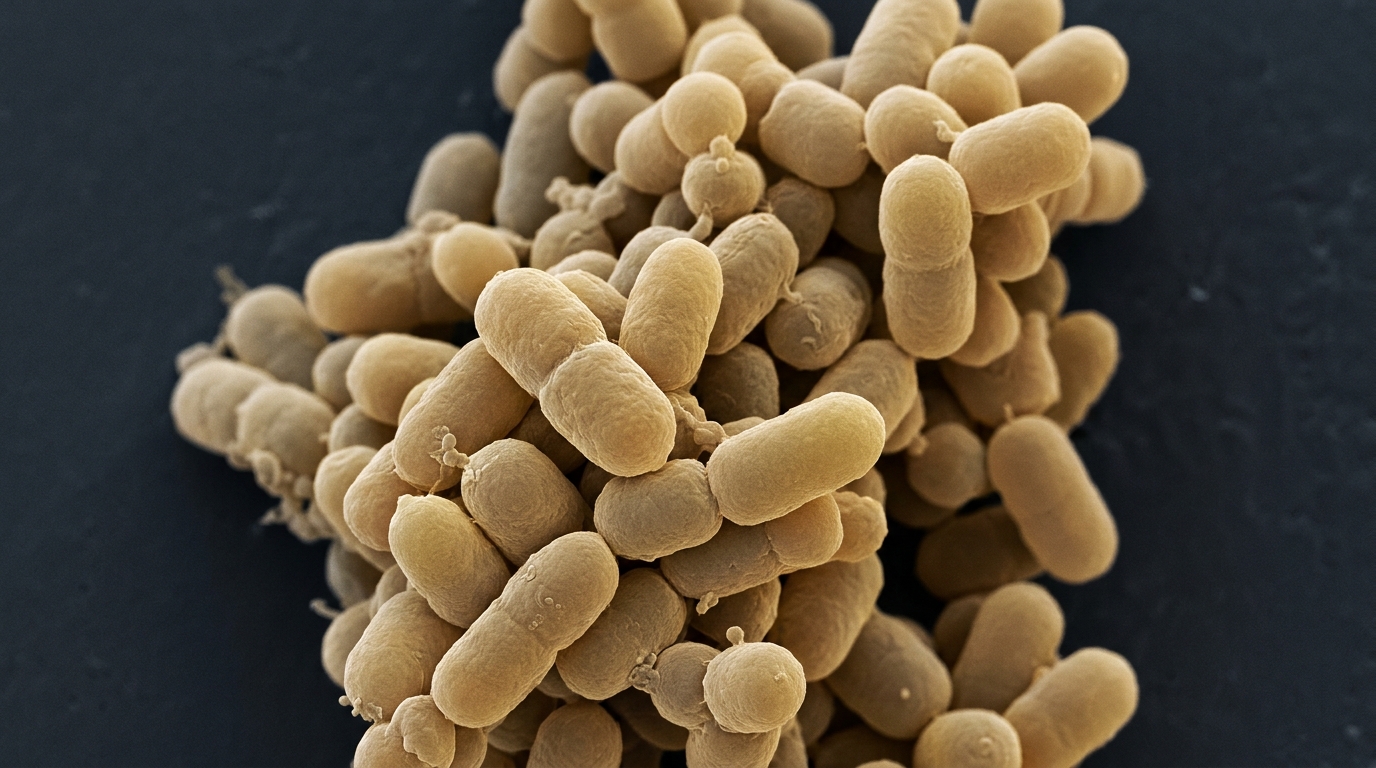
Palm Wine Isolate Fructobacillus fructosus Shows Probiotic Potential In Vitro

Palm Wine Isolate Fructobacillus fructosus Shows Probiotic Potential In Vitro

Share on FacebookShare on TwitterShare on LinkedinShare on RedditShare on Telegram

An in vitro study of the bacterial strain Fructobacillus fructosus MRS-3, isolated from traditional palm wine, demonstrated functional probiotic potential alongside a baseline biological safety profile. Taxonomic identification of the isolate was confirmed as Fructobacillus fructosus (GenBank accession PV123975.1) through 16S rRNA gene sequencing and phylogenetic analysis. Laboratory screening assays revealed that the isolate is capable of growth across a broad range of pH levels, salt concentrations, and temperatures.

In simulated gastrointestinal survivability evaluations, the strain exhibited tolerance to both acidic and bile salt environments. Measured viable cell counts under acidic conditions ranged from 5.3 to 5.9 log CFU/mL, while counts under bile salt exposure reached 5.4 to 5.98 log CFU/mL. Furthermore, the strain demonstrated pronounced cell surface traits in vitro, displaying an auto-aggregation rate of 94.8% and cell-surface hydrophobicity of 90% toward xylene, 90.9% toward toluene, and 76% toward hexane.

The researchers also documented that strain MRS-3 co-aggregated with selected indicator strains and exhibited measurable adhesion to Caco-2 intestinal epithelial cells. Baseline biological safety testing showed no hemolytic activity in a hemolysis assay, alongside antibiotic susceptibility inhibition zones spanning 18 to 27 mm under the experimental conditions evaluated against reference minimum inhibitory concentration breakpoints.

Although the empirical findings establish a functional in vitro baseline for this specialized fructophilic lactic acid bacterium from traditional fermented ecosystems, the authors emphasized that the observed phenotypic traits require future targeted in vivo validation before any probiotic efficacy can be confirmed in living organisms.

Subject of Research: In vitro probiotic and safety evaluation of Fructobacillus fructosus MRS-3

Article Title: Fructobacillus fructosus isolated from palm wine: functional screening and safety evaluation as a potential probiotic

Article References: Sudarsini, B., & Indira, M. (2026). Fructobacillus fructosus isolated from palm wine: functional screening and safety evaluation as a potential probiotic. 3 Biotech, 16(12), Article 490. https://doi.org/10.1007/s13205-026-05116-z

Image Credits: AI Generated

DOI: 10.1007/s13205-026-05116-z

Keywords: Fructobacillus fructosus, probiotics, palm wine, lactic acid bacteria, gastrointestinal tolerance, in vitro screening, bacterial safety, Caco-2 adhesion, Fructobacillus, fructosus, isolated, palm

News Source: Gregory Coleman. (November 6, 2026). Palm Wine Isolate Fructobacillus fructosus Shows Probiotic Potential In Vitro. Scienmag.
Tags: bacterial safetyCaco-2 adhesionFructobacillusFructobacillus fructosusfructosusgastrointestinal tolerancein-vitro screeningIsolatedlactic acid bacteriaPalmpalm wineprobiotics
Share12Tweet7Share2ShareShareShare1

Related Posts

Magnolia Bark Compounds Evaluated for Antioxidant Activity and Apoptosis Protein Interactions

Magnolia Bark Compounds Evaluated for Antioxidant Activity and Apoptosis Protein Interactions

November 6, 2026
Transient Growth Regulator Flooding Enhances Direct Shoot Regeneration in Stubborn Grain Legumes

Transient Growth Regulator Flooding Enhances Direct Shoot Regeneration in Stubborn Grain Legumes

November 6, 2026

Engineered Bacteria Produce L-Threonine From Acetate Using pH-Controlled Cultivation

November 6, 2026

Tanzania’s first UDOM health conference maps progress and gaps from maternal care to kidney transplants

November 6, 2026

POPULAR NEWS

  • Green Incentives Cannot Bridge Profitability Gap in European Kelp Cultivation

    Green Incentives Cannot Bridge Profitability Gap in European Kelp Cultivation

    29 shares
    Share 12 Tweet 7
  • Rethinking Continuous Endpoints in Clinical Decision Analysis Through Decision Curves

    29 shares
    Share 12 Tweet 7
  • Physics-Informed Graph Network Improves Fatigue Life Prediction for Robotic Arms

    29 shares
    Share 12 Tweet 7
  • Researchers Propose Dynamical Systems Framework for Complex Emotional Needs

    29 shares
    Share 12 Tweet 7

About

We bring you the latest biotechnology news from best research centers and universities around the world. Check our website.

Follow us

Recent News

Brainstem Cholinergic Neurons Drive Electroacupuncture Anti-Inflammatory Effects in Arthritic Mice

Magnolia Bark Compounds Evaluated for Antioxidant Activity and Apoptosis Protein Interactions

Researchers Propose Standardized Measurement Framework to Evaluate Caregiver Respite Care Globally

Subscribe to Blog via Email

Enter your email address to subscribe to this blog and receive notifications of new posts by email.

Join 86 other subscribers
  • Contact Us

Bioengineer.org © Copyright 2023 All Rights Reserved.

Welcome Back!

Login to your account below

Forgotten Password?

Retrieve your password

Please enter your username or email address to reset your password.

Log In
No Result
View All Result
  • Homepages
    • Home Page 1
    • Home Page 2
  • News
  • National
  • Business
  • Health
  • Lifestyle
  • Science

Bioengineer.org © Copyright 2023 All Rights Reserved.