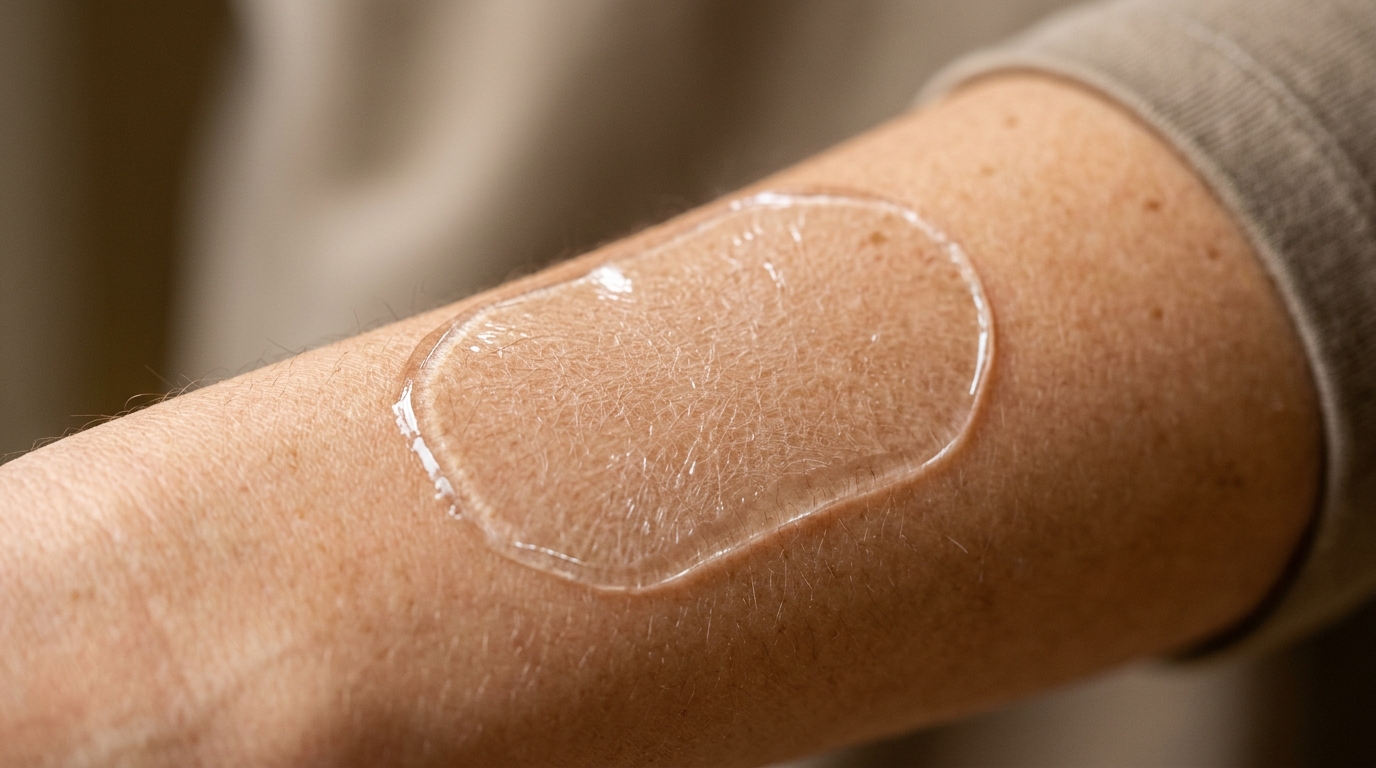
In laboratory tests, the resulting Fe/K/Li-C/A thermoelectric hydrogel reached a peak Seebeck coefficient of −4.67 mV·K⁻¹, a maximum power density of 30.86 mW·m⁻² under a 40 K temperature gradient, and an optimal ionic thermoelectric figure of merit (ZTi) of 0.557.
Thermoelectric hydrogels are attractive because they pair the ionic thermoelectric effect of electrolytes with the mechanical compliance of hydrogels, making them candidates for body-heat-driven power supplies and wearable sensors. Hybrid systems that add nanofillers such as carbon nanotubes can improve conductivity and stability but may damage stretchability, while conductive polymer composites such as PEDOT:PSS hydrogels face limited long-term hydration stability.
Existing fixes each carry trade-offs. Incorporating hygroscopic salts into polymer networks slows dehydration but often causes embrittlement and ion leakage at high loadings. Binary solvent systems such as water–glycerol mixtures suppress evaporation and impart antifreezing properties, but their dependence on organic cosolvents may reduce biocompatibility. Polymer–nanofiller composites, including hydrogels containing polydopamine-modified carbon nanotubes, have achieved strong adhesion and enhanced water retention. Despite these efforts, the authors note that most reported thermoelectric hydrogels still exhibit significant water loss within days and limited resistance to mechanical stress, restricting their long-term use in wearable or biomedical devices.
The new material builds on a one-pot synthesis. The researchers combined 5 M acrylamide, 3 wt.% sodium carboxymethyl cellulose, 0.025 M N,N’-methylene bisacrylamide as a crosslinker, and 0.01 M ammonium persulfate as a thermal initiator, stirred the mixture until fully dissolved, cast it into molds, and dried it in a forced-air oven at 80 °C for 12 hours to yield fully dehydrated hydrogel polymers. These polymers were then immersed in ion-containing solutions to produce variants designated Fe-C/A, K-C/A, Li-C/A, Fe/K-C/A, Fe/Li-C/A, and Fe/K/Li-C/A, corresponding to the absorbed ion species. A pure polyacrylamide hydrogel prepared by the same process without carboxymethyl cellulose served as the control.
Structural analysis supported the double-network design. Fourier transform infrared spectroscopy showed that the characteristic peaks of the C/A hydrogel closely resemble those of carboxymethyl cellulose, indicating that the carboxyl group of CMC is well absorbed and forms hydrogen-bond interactions between amide and carbonyl groups. The appearance of a characteristic peak of the -C≡N group at 2042 cm⁻¹ and a broad peak corresponding to water of crystallization at 3000–3700 cm⁻¹ in the Fe/K/Li-C/A TEH confirmed successful absorption of the ferricyanide and ferrocyanide salts. The physical crosslinking between carboxyl groups on CMC-Na and amide groups via hydrogen bonding produces an interpenetrating double-crosslinked network alongside the chemically polymerized polyacrylamide entangled structure.
Mechanical testing quantified the benefit. The pure polyacrylamide hydrogel exhibited a maximum stress of 146.7 kPa and a maximum tensile strain of 98.2%, while the C/A hydrogel reached a maximum stress of 282.8 kPa and a maximum tensile strain of 469.5%—1.93 and 4.78 times the control values, respectively. Immersion in ionic solutions reduced these properties to varying degrees: the highest measured stress after ion loading was 209.6 kPa with a tensile strain of 213.8% for Fe-C/A, and the lowest was 141.1 kPa with a strain of 144.6% for Fe/K-C/A. The authors attribute this decline to the large size of the complex ferricyanide and ferrocyanide ions and the high density of LiCl and KCl, which interact strongly with the carboxyl groups in CMC and create local stress concentration in the network.
At 25 °C and 30% relative humidity, the C/A hydrogel lost water continuously for 20 days before reaching equilibrium, and the Fe/K/Li-C/A TEH retained 59.46% of its initial mass, compared with only 14.90% for the control C/A hydrogel without LiCl. At 65% RH over two weeks, Fe/K/Li-C/A TEH held 90% of its initial mass, the highest among the samples, and only the Fe-C/A and Fe/K-C/A samples showed surface salt crystallization, while Li-containing samples maintained high wettability. When dehydrated hydrogel was placed at 25 °C and 65% RH, it regained its maximum achievable mass within one week, with the abstract reporting 90% water absorption within 8 days. The researchers credit the strong interactions between Li⁺/Cl⁻ ions and water molecules for the enhanced retention, and note that even hydrogels without Li⁺ showed some absorption capacity, possibly because ions form strong electrostatic interactions with carboxyl groups that increase crosslinking density.
The thermoelectric performance arises from two cooperating mechanisms. The redox couple K₃[Fe(CN)₆]/K₄[Fe(CN)₆] drives a thermoelectric effect: on the hot side, Fe(CN)₆⁴⁻ oxidizes to Fe(CN)₆³⁻, creating a charge imbalance that sends electrons through an external circuit to the cold side, generating a potential difference. In-situ Raman spectroscopy tracked this chemistry directly, with the characteristic peaks of Fe(CN)₆⁴⁻ and Fe(CN)₆³⁻ at 2040 cm⁻¹ and 2095 cm⁻¹ showing a gradual increase in ferricyanide on the hot side when the cold end was held at 25 °C and the hot end at 65 °C; the hydrogel visibly shifted from green-yellow to orange to red on the hot side while the cold side showed no obvious color change. At a ΔT of 10 K, the Seebeck coefficient rose from −3.71 mV·K⁻¹ for the hydrogel containing only the redox couple to −4.01 mV·K⁻¹ with Li⁺, −4.42 mV·K⁻¹ with K⁺, and −4.67 mV·K⁻¹ with all three ions combined. At a ΔT of 40 K, the maximum electrical power density measured 30.9 mW·m⁻².
Molecular dynamics simulations reinforced the mechanism. In a 1615-atom model containing CMC chains, a polyacrylamide network, and the inorganic ions, with a 40 K gradient imposed between regions held at 338 K and 298 K, both Li⁺ and K⁺ showed substantially higher mean squared displacement in the ferricyanide-containing system, while Cl⁻ diffusion remained comparable between systems. The calculated Seebeck coefficient increased from 0.24 mV/K in the ferricyanide-free system to 0.373 mV/K upon ferricyanide incorporation, with the thermoelectric voltage rising from 9.48 mV to 14.71 mV—simulated values that, the authors say, provide a physical basis for the improved performance. Electrochemical testing with cyclic voltammetry showed two oxidation peaks merging into one as the scan rate increased from 10 to 50 mV/s, marking a transition from diffusion-controlled to reaction-controlled processes, and impedance spectra recorded from 303 to 338 K showed impedance decreasing as temperature rose, indicating enhanced ionic mobility at elevated temperatures.
Demonstrations pointed toward practical use. Encapsulated with scotch tape and monitored daily at a 10 K temperature difference, the Fe/K/Li-C/A TEH recorded a maximum voltage of −40.74 mV after one week, an 8.58% decrease from its initial value. When eight cells were connected in series, the highest recorded voltage reached −277.19 mV, 6.13 times that of a single cell, showing that output scales with the number of integrated units. An array of four units placed on human skin at an ambient 25 °C generated a maximum voltage output of 114 mV by exploiting the temperature difference between the body and its surroundings.
Subject of Research: Interpenetrating double-network thermoelectric hydrogels for wearable body-heat energy harvesting
Article Title: Interpenetrating double-network thermoelectric hydrogels with enhanced mechanical stability, superior water retention, and high thermoelectric performance
Article References: Liu, Y., Zhu, D., Zhang, W., Bing, N., & Yu, W. (2026). Interpenetrating double-network thermoelectric hydrogels with enhanced mechanical stability, superior water retention, and high thermoelectric performance. Carbon Neutrality, 5(1), Article 9. https://doi.org/10.1007/s43979-026-00162-1
Image Credits: AI Generated
DOI: 10.1007/s43979-026-00162-1
Keywords: thermoelectric hydrogel, double network, carboxymethyl cellulose, polyacrylamide, Seebeck coefficient, water retention, body heat, wearable electronics, ionic thermoelectric, LiCl, ferricyanide redox, molecular dynamics
News Source: Denise Maddox. (November 6, 2026). Double-Network Hydrogel Turns Body Heat Into Electricity While Staying Tough and Hydrated. Scienmag.