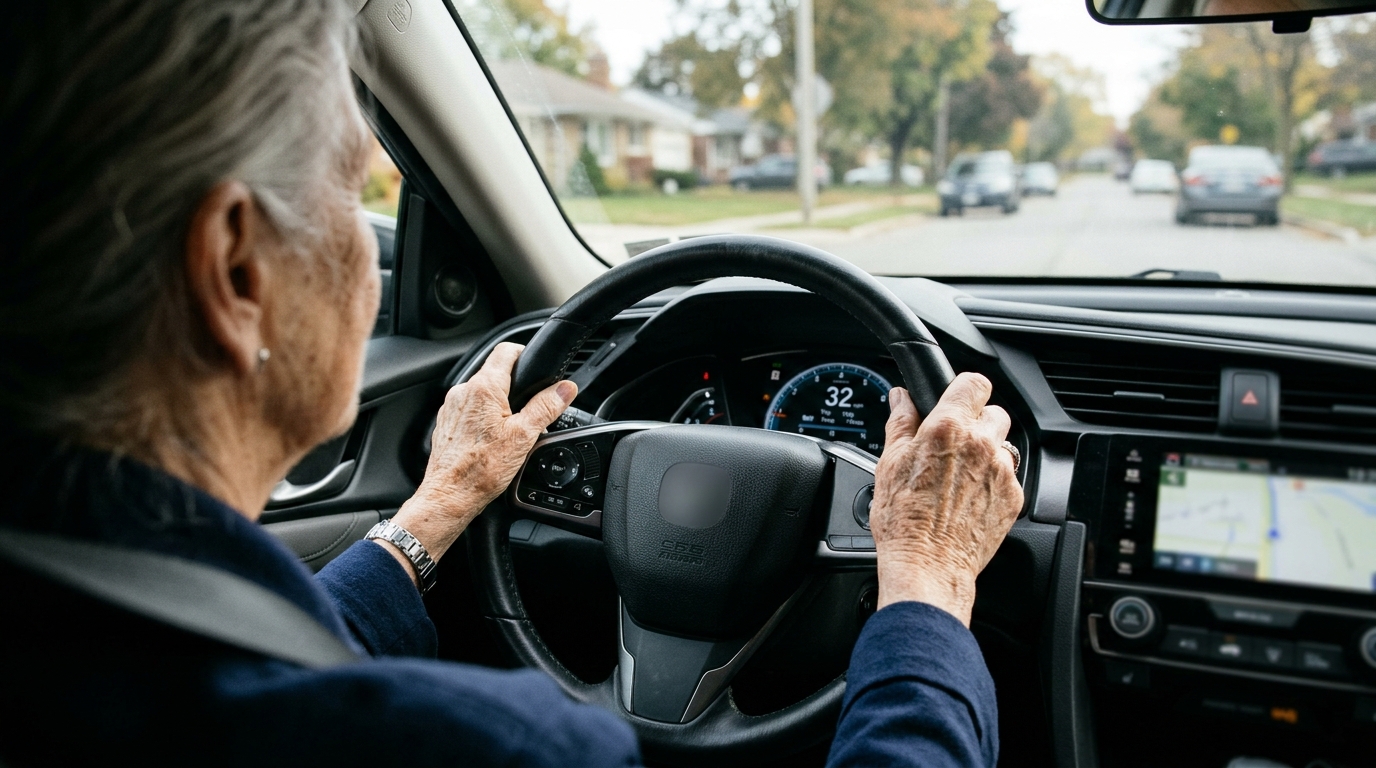
Subtle adjustments in everyday driving habits among older adults may serve as sensitive early indicators of declining physiological reserve and multidimensional frailty long before clinical disability or cognitive impairment becomes officially recognized. In a narrative synthesis published in Discover Aging, researchers led by Shuzo Kumagai and Takao Yamasaki examined the complex relationships connecting age-related systemic decline with real-world automotive performance. Safe operation of a motor vehicle represents one of the most intricate daily activities performed by aging populations, demanding the continuous and dynamic integration of sensory perception, motor control, executive cognitive function, attention allocation, and psychosocial adaptation. While traditional geriatric assessments evaluate physical frailty through discrete physical measurements such as diminished grip strength, low physical activity levels, unintentional weight loss, general exhaustion, and reduced walking speed, automotive mobility operates as an ecologically valid real-world manifestation of intrinsic capacity and functional reserve. As physiological reserves diminish, older individuals frequently alter their driving patterns by restricting nighttime trips, avoiding unfamiliar routes, reducing weekly mileage, and engaging in deliberate self-regulation, demonstrating how behavioral mobility adaptations mirror underlying physiological vulnerabilities across diverse biological systems.
The conceptual framework established in the review emphasizes that driving competence cannot be adequately captured by isolated physical or cognitive measures, but rather emerges from the coordinated functioning of multiple physiological domains under unpredictable real-world environmental stressors. Healthy aging models advanced in public health focus on preserving functional ability, which relies directly on an individual’s intrinsic capacity—the composite of all physical and mental capabilities. Within this architecture, functional reserve constitutes the physiological buffer that enables an individual to maintain performance despite ongoing age-related decline or sudden situational demands, whereas resilience represents the capacity to recover following functional disruptions. While standardized laboratory tests measure isolated capacities under controlled, predictable settings, driving places drivers in dynamic environments requiring instantaneous hazard recognition, divided attention, visual tracking, and rapid motor execution. Consequently, the authors suggest that driving behavior provides an ecologically sensitive barometer of whether an individual possesses sufficient functional reserve to handle environmental challenges, with subtle behavioral restrictions functioning as an early warning sign of systemic vulnerability across physical, sensory, and cognitive systems.
Physical frailty plays a direct and mechanically observable role in diminishing driving capabilities through musculoskeletal weakness, impaired balance, slowing reaction speed, and overall decreased physical endurance. Operating a vehicle demands physical proficiency in pedal manipulation, steering wheel control, postural maintenance, and rapid emergency braking maneuvers. Age-related muscular deterioration, especially lower-extremity weakness, impairs the driver’s capacity to modulate acceleration smoothly or execute decisive braking maneuvers during sudden traffic perturbations, while reduced postural stability hinders rapid physical adjustments to changing road dynamics. Synthesizing observational data, the review highlights findings from the LongROAD cohort, in which researchers tracked 2,990 enrolled older drivers, including 2,964 participants with baseline frailty evaluations. In that cohort, analysis by Crowe and colleagues demonstrated that each unit increase in frailty was associated with an adjusted risk ratio of 2.38 for low-mileage driving, alongside adjusted hazard ratios for complete driving cessation of 4.15 for prefrail drivers and 6.08 for frail drivers compared to non-frail counterparts. Further investigation of 2,986 LongROAD participants by Mielenz and colleagues reported an adjusted hazard ratio of 6.12 for driving cessation among prefrail or frail drivers relative to non-frail individuals, demonstrating strong statistical links between measurable physical frailty markers and the contraction of real-world driving behavior.
Beyond physical limitations, cognitive vulnerability and cognitive frailty—defined specifically as the simultaneous coexistence of physical frailty and cognitive impairment in the absence of overt dementia—profoundly alter driving safety and performance. Safe vehicle operation demands the continuous execution of higher-order cognitive processes, including executive control, visuospatial reasoning, working memory, route planning, divided attention, and risk judgment under uncertain environmental conditions. Although mild cognitive decline does not automatically render an individual an unsafe driver, depleted cognitive reserve severely restricts the driver’s capacity to compensate for unexpected traffic situations, hazardous road conditions, or complex multi-lane navigational demands. Drivers experiencing executive dysfunction struggle to shift attention rapidly between intersecting traffic streams, predict emerging pedestrian hazards, or maintain situational awareness in congested environments. Furthermore, the review notes longitudinal evidence indicating that declines in driving frequency and mobility range can precede clinically detectable cognitive decline and predict future neurodegenerative conditions, with verified Alzheimer’s disease biomarkers demonstrated to predict eventual driving cessation even among cognitively normal older adults participating in long-term observational cohorts.
Sensory perception represents another vital domain within this multidimensional matrix, with visual and auditory decline altering the driver’s capacity to detect and interpret traffic stimuli. The synthesis underscores that sensory function must not be treated as a single uniform construct, as distinct visual subdomains relate differently to automotive performance. Drivers rely continuously on binocular distance visual acuity, contrast sensitivity, depth perception, visual field integrity, glare recovery, low-luminance or nighttime visual processing, and visual attention processing speed to identify roadway signage, detect vehicles, gauge closing distances, and spot pedestrians. When sensory impairments arise, they interact synergistically with cognitive and physical vulnerabilities, multiplying overall operational strain. For instance, compromised visual inputs force drivers to allocate greater cognitive attention and executive control toward simply interpreting roadway scenes, leaving fewer cognitive resources available for hazard anticipation or split-second decision-making. Simultaneously, physical frailty compounds visual delays by slowing motor responses to detected hazards. In parallel, auditory components such as hearing thresholds, speech-in-noise perception, and hearing-aid utilization represent additional sensory aspects that require careful differentiation, although direct empirical evidence connecting auditory function to driving outcomes remains far less developed than the evidence establishing visual and cognitive associations.
Psychosocial vulnerability significantly influences the operational choices and mobility adaptations of older motorists, shaping both their willingness to drive and their responses to perceived physical changes. Psychological factors including depressive symptoms, driving anxiety, depleted behind-the-wheel confidence, fear of traffic collisions, and expanding social isolation frequently prompt older drivers to adopt voluntary self-regulation strategies or avoid challenging road conditions altogether. While self-regulatory adaptations, such as eliminating driving in adverse weather or avoiding peak-hour congestion, often represent prudent, adaptive responses to recognized functional limitations, excessive behavioral restriction can inadvertently trigger adverse secondary outcomes. Overly restrictive driving habits progressively isolate individuals from community activities, reduce habitual physical exercise, and sever vital social networks. Studies evaluated in the review consistently demonstrate that complete driving cessation is associated with elevated depressive symptoms, increased social isolation, diminished physical activity, accelerated onset of physical frailty, and poorer overall health-related quality of life, illustrating how psychological states govern driving behavior while automotive disengagement subsequently exacerbates psychological distress.
Central to the synthesized evidence is the proposal of an integrated Frailty–Driving–Health framework that illustrates a profound bidirectional and self-reinforcing relationship between functional vulnerability and automotive restriction. Rather than viewing driving cessation solely as an endpoint resulting from frailty, the framework conceptualizes automotive behavior as both an indicator and an active modifier of aging trajectories. As frailty-related decline reduces physiological, cognitive, and sensory capacity, older adults transition toward reduced driving exposure, deliberate route restriction, and eventual driving cessation. However, relinquishing driving privileges sharply restricts life-space mobility, reducing access to community resources, healthcare appointments, social engagement, and physical recreation. This resulting deprivation in physical activity and cognitive stimulation accelerates muscle loss, cognitive stagnation, and depressive illness, thereby driving further frailty progression in a reciprocal, cascading spiral. By mapping these multidomain connections, the framework organizes empirical observations while providing hypothesis-generating pathways to stimulate future longitudinal investigation regarding how interventions might disrupt this negative feedback loop and preserve community independence.
To counteract driving-related functional decline, the review evaluates targeted interventions, with structured exercise regimens demonstrating particular promise for maintaining functional reserve across motor, cognitive, and psychosocial domains. Multicomponent exercise interventions combining progressive resistance training, aerobic exercise, balance challenging routines, and functional mobility drills have demonstrated clear efficacy in improving physical frailty markers, gait speed, lower-body strength, and overall functional independence. Enhanced muscular strength and sensorimotor coordination directly improve pedal responsiveness, vehicle control, postural stability, and rapid hazard reactions. Concurrently, regular physical conditioning fosters neuroprotective adaptations by improving cerebral blood flow, promoting neuroplasticity, and stimulating brain-derived neurotrophic factor signaling, which supports executive function, attention, and cognitive processing speed. Furthermore, exercises incorporating dual-task activities enhance sensorimotor integration under complex, divided-attention scenarios. However, the authors emphasize that current intervention literature remains constrained by small sample sizes and heterogeneous endpoints, meaning that while exercise clearly enhances underlying physiological capacity, definitive evidence confirming sustained reductions in real-world traffic collisions or long-term prevention of driving cessation remains insufficient.
Looking toward clinical implementation and preventive gerontology, the authors introduce the conceptual Driving-Related Frailty Screen alongside emerging digital mobility technologies to facilitate early detection of vulnerability. Modern vehicle telematics, global positioning systems, wearable accelerometers, and algorithm-assisted smartphone tracking provide unprecedented opportunities to continuously monitor real-world driving behavior, detecting subtle shifts in driving frequency, route selection, and complex environment avoidance that traditional clinic visits miss. The proposed candidate Driving-Related Frailty Screen integrates physical functioning, cognitive performance, sensory capabilities, reaction metrics, and real-world mobility behaviors into a multidomain screening architecture. The authors caution, however, that this screen remains a candidate framework requiring rigorous future development rather than a validated clinical or licensing instrument, just as digital biomarkers currently represent complementary exploratory tools lacking standardized clinical thresholds. International fitness-to-drive regulatory approaches vary widely—from mandatory age-based testing and cognitive evaluations in Japan to individualized functional reviews in the United States and Australia—highlighting that driver assessment must balance roadway safety with preventive geriatric support.
Ultimately, the review emphasizes essential methodological limitations that govern the interpretation of existing evidence linking frailty to driving outcomes. Because the synthesis was conducted as a qualitative narrative review under the Scale for the Assessment of Narrative Review Articles rather than a quantitative meta-analysis, no pooled effect sizes or formal risk-of-bias scorings were computed. The underlying literature remains largely observational and methodologically heterogeneous, utilizing diverse definitions of frailty, varying driving assessment tools from self-reports to driving simulators, and unstandardized crash metrics lacking details on crash severity or fault attribution. Furthermore, distinct geographic, transportation, and societal contexts across countries influence how driving cessation impacts older adults, limiting cross-population generalizations. Consequently, the Frailty–Driving–Health framework should be interpreted as a conceptual, hypothesis-generating synthesis rather than an established causal pathway. Future prospective longitudinal studies incorporating standardized multidomain frailty metrics, objective continuous telematics tracking, and robust mobility endpoints will be necessary to determine whether monitoring behind-the-wheel behaviors can reliably inform preventive gerontological interventions to maintain healthy aging.
Subject of Research: Frailty-related multidomain functional decline and driving outcomes in older adults
Article Title: Frailty and driving ability in older adults within an integrated framework for healthy aging
Article References: Kumagai, S., Ren, Z., Chen, S., Tobinaga, Y., & Yamasaki, T. (2026). Frailty and driving ability in older adults within an integrated framework for healthy aging. Discover Aging, 1(1), Article 15. https://doi.org/10.1007/s44518-026-00014-1
Image Credits: AI Generated
DOI: 10.1007/s44518-026-00014-1
Keywords: healthy aging, older drivers, physical frailty, cognitive frailty, functional reserve, driving cessation, mobility, preventive gerontology, Frailty, driving, ability, older
News Source: Beatrice Stafford. (November 6, 2026). Older Drivers Reveal Early Frailty Signals Through Shifting Everyday Behind The Wheel Habits. Scienmag.