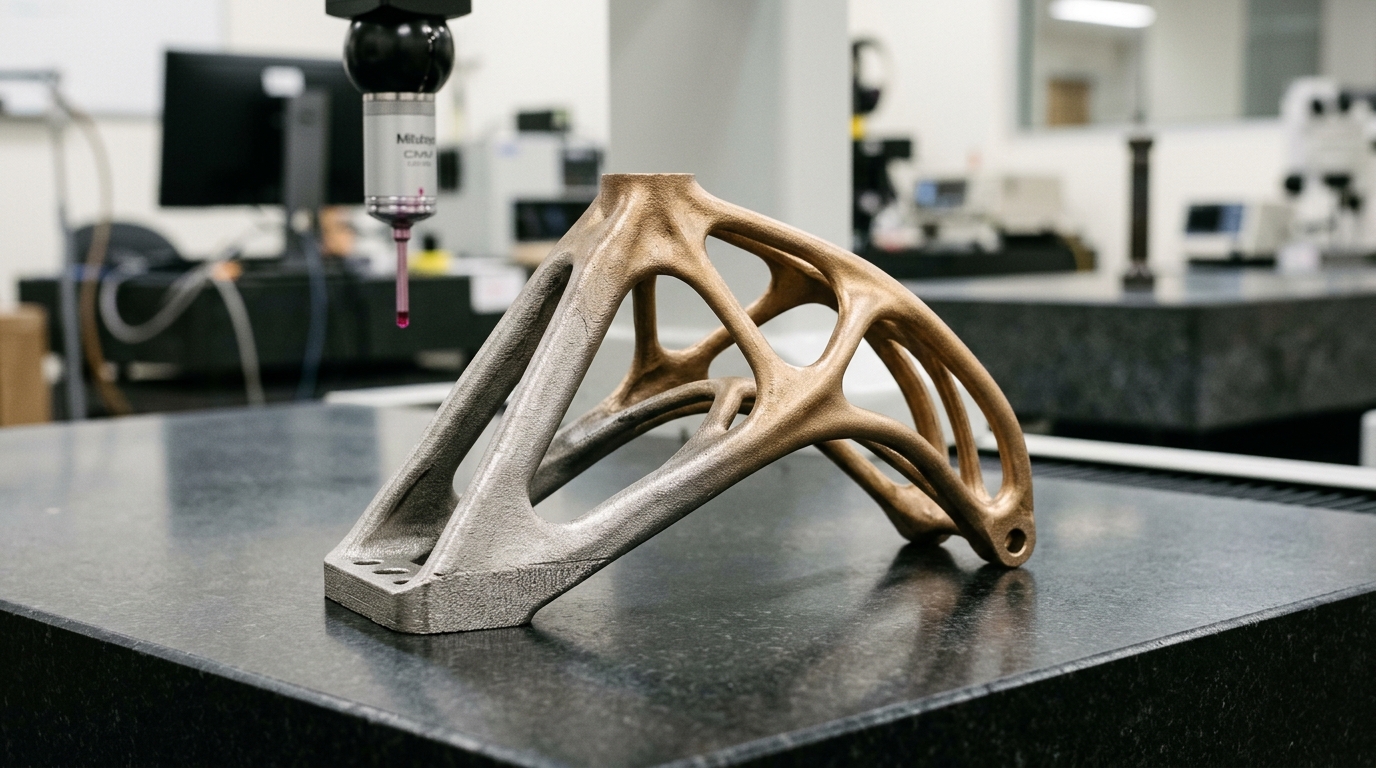
Developed as an advanced plugin for the Rhinoceros3D and Grasshopper parametric environment, Stag resolves a persistent methodological divide between conceptual architectural form-finding and quantitative structural engineering. In physical environments, structural components rarely endure isolated forces; instead, bodies routinely experience multiple load cases that act either concurrently or at different operational intervals. While single-material topology optimization has been extensively researched for decades, multi-material topology optimization incorporating multiple independent load cases remains strikingly understudied within density-based computational design, particularly using the Solid Isotropic Material with Penalisation framework. Furthermore, existing optimization software tailored to architectural workflows has historically lacked integrated structural evaluation capabilities, forcing designers to rely on visual approximations or external software suites that cannot exchange analysis-ready geometric data. By implementing a generalised material penalisation routine coupled with finite element solvers, the investigation provides the first comprehensive qualitative evaluation and quantitative structural assessment of multi-material topology optimization across multiple and additive loading configurations directly inside an architectural parametric workspace.
The underlying mathematical foundation of Stag builds upon density-based material penalisation, wherein continuous design variables assign local material densities across a discretized two-dimensional spatial domain. While classical single-material formulations distribute a single isotropic substance against empty voids, multi-material optimization must distribute two or more discrete materials with varying stiffness properties, alongside void space, to optimize global structural efficiency. The research team selected the generalised Solid Isotropic Material with Penalisation method due to its numerical stability, transparent interpretation of distinct material phases, and explicit control over interpolation schemes that govern transitions between different substance interfaces. Within Stag, handling multiple load cases involves tracking the unique displacement vector and strain energy distribution generated across the mesh by each independent loading state. Drawing inspiration from classical 99-line density formulations, Stag computes an objective function defined by the cumulative sum of strain energies across all applied load cases for every discrete element, guiding the continuous redistribution of multiple material phases within a single, unified optimization run.
To rigorously benchmark the computational mechanics of the new plugin against published scientific benchmarks, the researchers replicated the classical Messerschmitt-Bölkow-Blohm beam problem established by Shi and colleagues in their 2016 study on linear static multi-material optimization. The benchmark geometry was discretized into a fine two-dimensional finite element domain to assess how Stag’s algorithmic material allocation compared topologically and structurally to established academic outputs. A significant computational challenge arose because the original benchmark literature omitted the precise filter radius parameter used to regulate mesh-dependency and minimum feature sizes. Through systematic parametric exploration across one hundred iteration cycles at a convergence tolerance of 0.01, the researchers determined that an element filter radius of 12.5 within Stag yielded the closest morphological alignment. In single load case comparative runs, Stag exhibited stable numerical convergence and generated structural topologies featuring continuous trajectories of the stiffest material spanning directly from applied force vectors to boundary supports. Although Stag formed slightly more internal webbing than the benchmark literature, both optimization systems converged toward functionally congruent structural layouts, confirming that minor geometric discrepancies stemmed from filter radius variations rather than divergent optimization mechanics.
Bridging the historical gap between automated generative geometry and rigorous engineering verification required establishing a live analytical pipeline connecting Stag to Karamba3D, a specialised structural analysis environment embedded within Grasshopper. Existing architectural optimization utilities, such as TopOpt, typically produce non-parametric graphical rasters or unlinked wireframe contours that cannot be ingested directly by structural analysis solvers without extensive manual reconstruction. To overcome this limitation, the authors developed a systematic conversion workflow in which the optimized finite element grid is mapped directly into Rhinoceros3D polygonal mesh geometry. Within this translation layer, individual elements are categorised into primary material, secondary material, or void categories based on their calculated phase densities. These discrete mesh groupings undergo programmatic joining, welding, and boundary cleaning before conversion into two-dimensional structural shell elements assigned a nominal constant thickness of one millimetre and physical material properties matching published benchmarks. By incorporating Karamba3D’s load case combinator components and specialized vector result monitors, the researchers extracted element-level centroidal principal stresses, von Mises equivalent stresses, and nodal deformation amplitudes, enabling rigorous structural interrogation of complex multi-material layouts.
When subjected to a multi-load benchmark regime involving distinct, alternating point loads applied across the beam surface, Stag successfully generated an intricate structural topology that closely mirrored the benchmark literature. Finite element evaluation revealed nearly identical mechanical behavior between the benchmark design and Stag’s optimized configuration. In qualitative stress visualisations, the primary tensile stresses and maximum von Mises equivalents aligned closely between the two structures.
To evaluate whether the observed mechanical differences between the benchmark structure and Stag’s design were statistically meaningful, the research team conducted rigorous inferential statistical analyses across thousands of discrete element centroids and nodal deflection vectors. Prior to hypothesis testing, distributional parameters were verified using Levene’s tests for equality of variance alongside evaluations of skewness and kurtosis. For first principal stresses, which exhibited non-homogeneity of variance across a massive sample of 10,308 element centroids, a Welch’s t-test demonstrated no statistically significant difference between the benchmark mean of 2.60 and Stag’s mean of 2.53, with a test statistic of t(10,304.28) = 1.11 and a p-value of 0.269. Because secondary principal stresses violated standard assumptions of normality, exhibiting pronounced kurtosis values of 5.73 and 10.31, the researchers applied non-parametric Kruskal-Wallis testing. This test confirmed that compressive stress distributions did not differ significantly between the benchmark mean of negative 2.60 and Stag’s mean of negative 2.53, yielding H(1) = 1.78 and p = 0.182. In contrast, nodal displacement analysis revealed a statistically significant difference via Welch’s t-test, with the benchmark averaging 15.95 units compared to Stag’s 14.74 units, producing t(6536.62) = 11.14 and p < 0.001. However, calculated effect sizes remained practically small at d = 0.27, demonstrating that Stag achieves a modest 7.6 percent reduction in average structural deflection while preserving overall mechanical equivalence.
Alongside formal multiple load case optimization, the investigation explored an alternative additive design approach termed Additive Load Cases, evaluating whether simply superimposing independent single load case solutions could produce a viable multi-material structure. Under typical engineering circumstances, optimizing a structural geometry for independent loading conditions in separate runs and overlaying their discrete material densities violates physical feasibility boundaries, as local element densities would surpass the allowable zero-to-one bounds. To circumvent numerical bounds, the researchers devised a geometric rule-based post-processing protocol inspired by classical ground structure approaches and superposition theory. Under this non-numerical additive workflow, single load case results are overlaid, duplicate spatial elements are programmatically purged, and wherever two distinct materials occupy identical element coordinates, the stiffer material is retained while the weaker material is discarded. The authors hypothesized that while formal multiple load case optimization would closely respect targeted global volume fractions, this additive superposition technique would substantially exceed material limits while paradoxically exhibiting enhanced structural stiffness.
Experimental validation of the additive superposition workflow fully corroborated the researchers’ initial volume fraction hypothesis. Whereas both the single load case and formal multiple load case configurations successfully converged to their designated 16 percent target volume fraction per material phase, resulting in a balanced 32 percent overall structural density, the additive load case geometry yielded an unconstrained 24.5 percent volume fraction for each material. Consequently, the additive structure possessed an aggregate material volume fraction of 49 percent, representing a 1.5-fold increase over the original design specification. This structural mass accumulation occurred because distinct loading regimes require unique spatial load paths, causing non-overlapping material webs to proliferate across the design domain. While eliminating redundant overlapping mesh elements prevented geometric duplication, it preserved extraneous secondary webbing in low-stress zones that an integrated multiple load case algorithm would have automatically pruned or averaged out during iterative strain energy minimization.
Finite element comparative analysis of the additive load case geometry versus Stag’s integrated multiple load case design revealed dramatic shifts in internal load trajectories and structural rigidity. Because the additive structure integrated independent single load geometries, it featured dual material-one web corridors traversing the upper corners of the beam, allowing tensile and compressive stresses to distribute more evenly across both diagonal directions. Karamba3D stress mappings demonstrated that this increased geometric volume noticeably alleviated internal stress magnitudes. However, the simulation also revealed significant structural inefficiencies; localized web features inherited from isolated load cases registered negligible equivalent stresses and primary tensile values of zero kilonewtons per square centimetre. These inactive structural elements contributed nothing to global structural capacity, indicating that physical fabrication of unrefined additive geometries would unnecessarily consume material resources and increase embodied carbon footprints without delivering structural benefits.
Statistical evaluation confirmed pronounced mechanical divergences between the unified multiple load case topology and the additive superposition geometry. When analyzing first principal tensile stresses, normality assumptions were violated with skewness and kurtosis reaching 2.43 and 7.71 in the additive model. Kruskal-Wallis non-parametric testing demonstrated a highly significant difference across groups, yielding H(1) = 132.66, p < 0.001, and an effect size of eta-squared = 0.0102. The multiple load case design exhibited an average first principal stress of 2.53, representing a 32.8 percent higher tensile magnitude than the additive structure’s mean of 1.70. Similarly, secondary principal compressive stresses demonstrated a statistically significant difference under Kruskal-Wallis testing, registering H(1) = 42.88, p < 0.001, with average compressive magnitudes dropping from negative 2.53 in the multiple load model to negative 1.70 in the additive design, though with a practically negligible effect size of eta-squared = 0.0033. Nodal displacement underwent a pronounced shift: Welch’s t-test indicated that the multiple load case structure experienced a mean displacement of 14.74 compared to only 11.34 for the additive design, generating t(5250.43) = 40.24, p < 0.001, and a very large effect size of d = 0.95. This confirmed that the multiple load case structure had a 23 percent higher mean displacement, validating the second hypothesis that the additive design’s heightened mass substantially reduces elastic deformation.
Synthesizing these findings, the study establishes that while additive superposition produces a stiffer component with superior deflection resistance, it fails to achieve the refined material efficiency of true multiple load case optimization. A true multiple load case algorithm operates by establishing a mathematically balanced, compromised material distribution that simultaneously satisfies conflicting boundary forces within a single continuous design space, maintaining strict adherence to specified volumetric bounds. In contrast, additive superposition acts as an unconstrained geometric accumulation that requires manual geometric pruning to remove redundant, non-load-bearing elements.
Looking toward practical physical realization, the researchers emphasize that translating two-dimensional multi-material computational topologies into physical building components introduces complex manufacturing considerations. While digital finite element simulations assume idealized, perfect bonding across distinct material boundaries, physical components manufactured through additive manufacturing technologies frequently suffer from localized residual thermal stresses, pronounced surface roughness, and interfacial delamination risks. To prevent structural fatigue and premature interfacial debonding under cyclic dynamic operational loads, manufactured multi-material components necessitate advanced post-processing interventions, including thermal residual stress-relief treatments and surface smoothing protocols. Furthermore, the sharp, stepped boundaries characteristic of discrete finite element meshes can induce severe stress concentrations in manufactured parts.
Subject of Research: Two-dimensional multi-material topology optimization and structural analysis under multiple load cases in Grasshopper
Article Title: A qualitative evaluation and structural analysis of multiple and additive load cases for two-dimensional Multi-Material Topology Optimisation in Grasshopper using the Generalised SIMP method
Article References: Damtsas, E., Banh, T. T., & Herrmann, M. (2026). A qualitative evaluation and structural analysis of multiple and additive load cases for two-dimensional Multi-Material Topology Optimisation in Grasshopper using the Generalised SIMP method. Architectural Intelligence, 5(1), Article 5. https://doi.org/10.1007/s44223-026-00113-x
Image Credits: AI Generated
DOI: 10.1007/s44223-026-00113-x
Keywords: topology optimization, multi-material design, structural engineering, finite element analysis, Grasshopper plugin, SIMP method, computational design, additive load cases, qualitative, evaluation, structural, analysis
News Source: Reid Dalton. (November 6, 2026). Multi-Material Topology Optimization Tool Integrates Complex Load Cases and Structural Analysis. Scienmag.