• HOME
  • NEWS
  • EXPLORE
    • CAREER
      • Companies
      • Jobs
    • EVENTS
    • iGEM
      • News
      • Team
    • PHOTOS
    • VIDEO
    • WIKI
  • BLOG
  • COMMUNITY
    • FACEBOOK
    • INSTAGRAM
    • TWITTER
Friday, November 6, 2026
BIOENGINEER.ORG
No Result
View All Result
  • Login
  • HOME
  • NEWS
  • EXPLORE
    • CAREER
      • Companies
      • Jobs
        • Lecturer
        • PhD Studentship
        • Postdoc
        • Research Assistant
    • EVENTS
    • iGEM
      • News
      • Team
    • PHOTOS
    • VIDEO
    • WIKI
  • BLOG
  • COMMUNITY
    • FACEBOOK
    • INSTAGRAM
    • TWITTER
No Result
View All Result
Bioengineer.org
No Result
View All Result
Home NEWS Science News Biology

Wetland Degradation Alters Rhizosphere Fungal Diversity and Bacterial Strategies in Deyeuxia Angustifolia

by
November 6, 2026
in Biology
Reading Time: 2 mins read
0
Wetland Degradation Alters Rhizosphere Fungal Diversity and Bacterial Strategies in Deyeuxia Angustifolia

Wetland Degradation Alters Rhizosphere Fungal Diversity and Bacterial Strategies in Deyeuxia Angustifolia

Share on FacebookShare on TwitterShare on LinkedinShare on RedditShare on Telegram

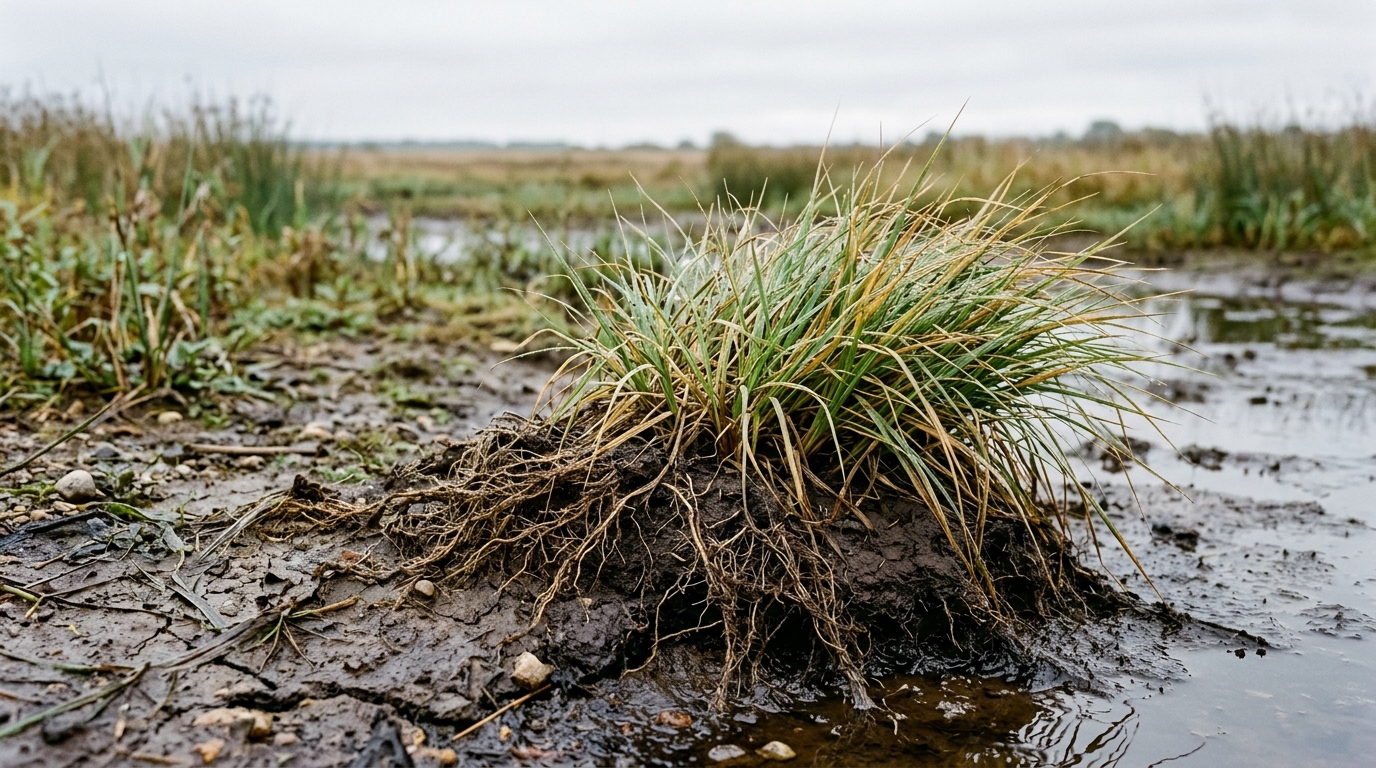
In an investigation of Deyeuxia angustifolia rhizosphere communities across four wetland habitats in the Sanjiang Plain, China, researchers observed that fungal diversity differed significantly across a degradation gradient, while bacterial life-history strategies demonstrated a significant, non-linear shift across degradation stages. The study examined marsh (ZZ), typical meadow (DC), slightly degraded (DN), and severely degraded (DS) wetland types to assess the effects of altered rhizosphere habitats and resource availability on microbial communities. The authors measured plant biomass and soil properties and analyzed microbial assemblages using 16S rRNA gene and ITS amplicon sequencing, life-history strategy indices, and partial least-squares path modeling (PLS-PM).

Microbial community composition for both bacteria and fungi differed significantly among the four wetland types (P ≤ 0.001 and P = 0.006, respectively). Bacterial alpha diversity showed no statistically significant differences across the gradient. In contrast, fungal Shannon and ACE indices were significantly lower in slightly degraded wetlands (DN) than in typical meadows (DC) (P < 0.05). Ascomycota dominated fungal communities overall. Taxonomically, the relative abundances of Acidobacteriota and Archaeorhizomyces increased with degradation, whereas the relative abundances of Pseudomonadota and Actinomycetota peaked in typical meadow soils (DC).

Bacterial life-history strategies shifted significantly among degradation stages, as evidenced by alterations in the relative dominance of oligotrophic and copiotrophic taxa. The bacterial oligotrophic-to-copiotrophic ratio was highest in marsh habitats (ZZ), followed by slightly degraded wetlands (DN), with both exhibiting significantly higher ratios than typical meadows (DC) and severely degraded wetlands (DS) (P < 0.05). In contrast, the fungal ectomycorrhizal-to-saprotrophic ratio showed no significant differences among the wetland types.

Partial least-squares path modeling indicated that wetland degradation was negatively associated with soil environmental conditions (P < 0.001). These soil conditions were positively associated with the bacterial oligotrophic-to-copiotrophic ratio (P < 0.05) and negatively associated with fungal alpha diversity (P < 0.05). The authors concluded that these community-level responses and life-history shifts provide insight into how wetland rhizosphere microbial communities respond to degradation and may inform wetland restoration.

Subject of Research: Rhizosphere microbial community responses to wetland degradation in Deyeuxia angustifolia

Article Title: Diversity and Life-History Strategies of Rhizosphere Microbial Communities Associated with Deyeuxia Angustifolia Along a Wetland Degradation Gradient

Article References: Li, W., Wang, M., Ma, Y., Wang, L., Zhang, R., Cao, H., Wang, J., Liang, J., Mu, L., & Liu, Y. (2026). Diversity and Life-History Strategies of Rhizosphere Microbial Communities Associated with Deyeuxia Angustifolia Along a Wetland Degradation Gradient. Microbial Ecology. https://doi.org/10.1007/s00248-026-02925-w

Image Credits: AI Generated

DOI: 10.1007/s00248-026-02925-w

Keywords: Wetland degradation, Rhizosphere microbiome, Deyeuxia angustifolia, Microbial ecology, Bacterial life-history strategies, Fungal diversity, Sanjiang Plain, Diversity, Life-History, Strategies, Rhizosphere, Microbial

News Source: Morgan Morrow. (November 6, 2026). Wetland Degradation Alters Rhizosphere Fungal Diversity and Bacterial Strategies in Deyeuxia Angustifolia. Scienmag.


Tags: Bacterial life-history strategiesDeyeuxia angustifoliadiversityfungal diversityLife historymicrobialMicrobial ecologyrhizosphererhizosphere microbiomeSanjiang PlainstrategiesWetland degradation
Share12Tweet7Share2ShareShareShare1

Related Posts

Marula Oil and Fulvic Acid Show Promise as Broiler Feed Additives

Marula Oil and Fulvic Acid Show Promise as Broiler Feed Additives

November 6, 2026
Viral RNAi Suppressor Unlocks Sterile Beetle Knockdowns and Resolves Axis Formation Debate

Viral RNAi Suppressor Unlocks Sterile Beetle Knockdowns and Resolves Axis Formation Debate

November 6, 2026

Frequent Wildfires Alter Forest Structure and Create Distinct Fire Behavior Patterns

November 6, 2026

Genital Mycoplasma Infections Linked to Repeat Breeding in Turkish Kangal Sheep

November 6, 2026

POPULAR NEWS

  • Surgical AI on a Clock: New Review Maps How Real-Time Operating Room Models Are Built

    Surgical AI on a Clock: New Review Maps How Real-Time Operating Room Models Are Built

    29 shares
    Share 12 Tweet 7
  • Multimodal IoT Framework Blends Gesture Control and Deep Learning for Adaptive Art

    29 shares
    Share 12 Tweet 7
  • Deep Learning Network Reconstructs Missing Geometry in Maize Leaf Point Clouds

    29 shares
    Share 12 Tweet 7
  • Frequent Wildfires Alter Forest Structure and Create Distinct Fire Behavior Patterns

    29 shares
    Share 12 Tweet 7

About

We bring you the latest biotechnology news from best research centers and universities around the world. Check our website.

Follow us

Recent News

Marula Oil and Fulvic Acid Show Promise as Broiler Feed Additives

Viral RNAi Suppressor Unlocks Sterile Beetle Knockdowns and Resolves Axis Formation Debate

Caregivers Report High Usability and Trust When Using Social Support Chatbot

Subscribe to Blog via Email

Enter your email address to subscribe to this blog and receive notifications of new posts by email.

Join 86 other subscribers
  • Contact Us

Bioengineer.org © Copyright 2023 All Rights Reserved.

Welcome Back!

Login to your account below

Forgotten Password?

Retrieve your password

Please enter your username or email address to reset your password.

Log In
No Result
View All Result
  • Homepages
    • Home Page 1
    • Home Page 2
  • News
  • National
  • Business
  • Health
  • Lifestyle
  • Science

Bioengineer.org © Copyright 2023 All Rights Reserved.