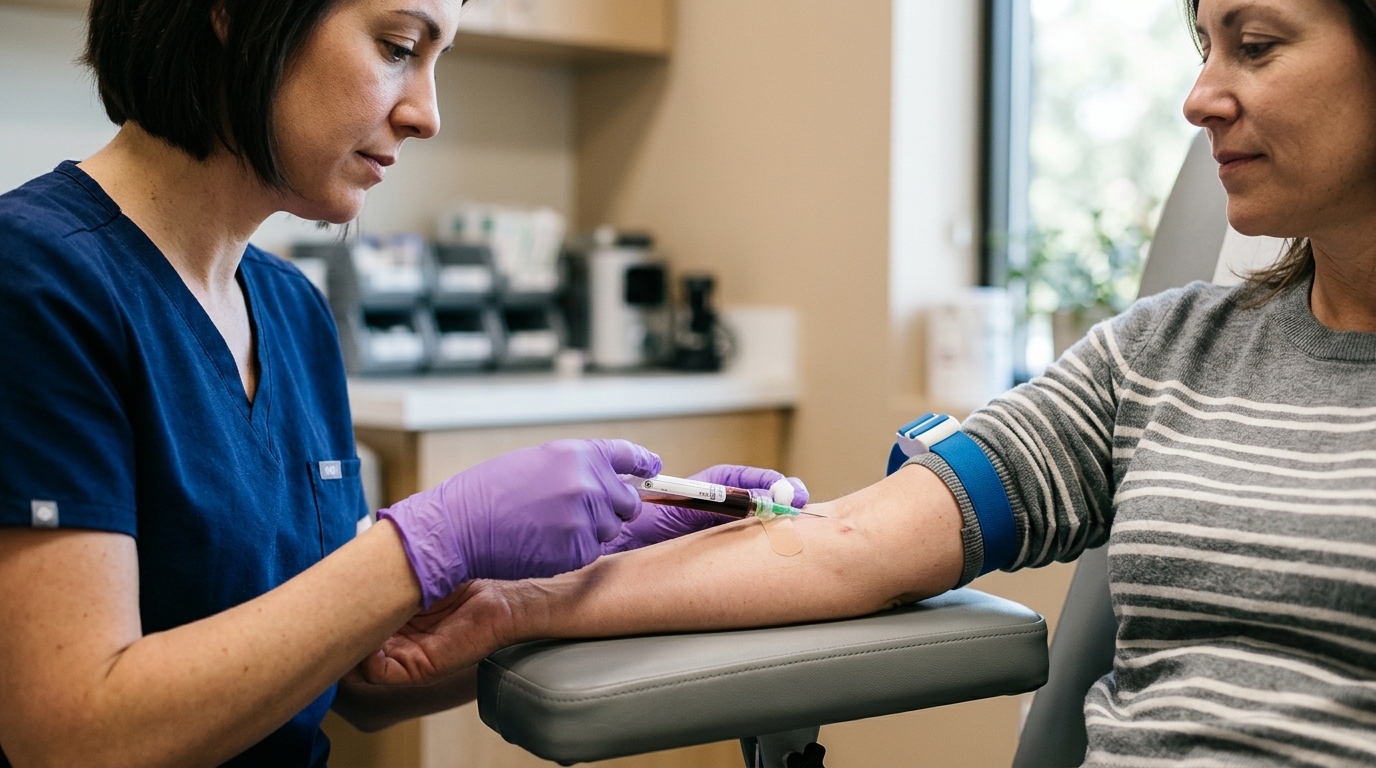
Routine blood tests may offer a low-cost window into the inflammatory and nutritional state of people hospitalized with acute schizophrenia, according to a case–control study published in the journal Schizophrenia. Researchers compared eight composite indices calculated from standard complete blood count and biochemistry results in 146 patients admitted during an acute phase of the illness and 146 age- and sex-matched healthy controls. After correction for multiple comparisons, six of the indices were higher in the patient group, while two were lower, suggesting a coordinated shift in peripheral inflammation and nutritional status that is visible in ordinary laboratory data.
The eight indices combine basic blood components into ratios that are already available in routine care.
In the comparison between patients and controls, the neutrophil-to-lymphocyte ratio, monocyte-to-lymphocyte ratio, platelet-to-lymphocyte ratio, systemic immune-inflammation index, neutrophil percentage-to-albumin ratio and platelet-to-albumin ratio were all significantly higher in schizophrenia after false discovery rate correction. The prognostic nutritional index and the albumin-to-alkaline phosphatase ratio were significantly lower. Among the individual indices, the monocyte-to-lymphocyte ratio showed the strongest single-index discrimination between cases and controls, with an area under the receiver operating characteristic curve of 0.797.
The team then screened all 84 possible two- and three-index combinations to see whether pairs or trios could improve discrimination. The best-performing panel combined the monocyte-to-lymphocyte ratio with the prognostic nutritional index and the albumin-to-alkaline phosphatase ratio, reaching an apparent area under the curve of 0.854. Because selecting the best model from many candidates can inflate apparent performance, the researchers used a selection-aware bootstrap procedure. This yielded an optimism-corrected area under the curve of 0.839, and the same three-index panel was re-selected in 49.7 percent of the bootstrap resamples, indicating moderate stability of the choice.
A sensitivity analysis tested whether the derived ratios added anything beyond their raw ingredients. A model using the four underlying laboratory variables directly—monocyte count, lymphocyte count, albumin and alkaline phosphatase—achieved a slightly higher apparent area under the curve of 0.867. The authors concluded that the derived ratios offered no discrimination advantage over their components, meaning that the information captured by the composite indices is already contained in standard laboratory measurements.
The study also followed 93 of the patients with repeat blood testing after clinical improvement during routine antipsychotic treatment. During follow-up, the systemic immune-inflammation index, the platelet-to-albumin ratio and the neutrophil-to-lymphocyte ratio decreased, whereas the prognostic nutritional index and the albumin-to-alkaline phosphatase ratio did not change significantly. This pattern suggests that some inflammation-linked indices move with clinical state, while the nutrition-related measures remained comparatively stable over the observation period.
Exploratory analyses of medication effects found no false-discovery-rate-significant difference in biomarker change between patients on monotherapy and those on combination treatment. The standardized final antipsychotic dose ratio was also not associated with biomarker change. Because all patients received routine treatment and there was no untreated comparison group, the researchers interpreted the longitudinal findings as changes observed during follow-up rather than as direct treatment effects.
The authors emphasize that these indices may add low-cost information to routine blood tests but are not diagnostic tools. The study was conducted in hospitalized patients during acute phases of illness, and the case–control design cannot establish causality. The early-release version of the article is citable and carries a permanent digital object identifier, with a final version of record to follow.
The findings add to a growing body of work linking schizophrenia with peripheral inflammatory and metabolic changes, while highlighting that the relative value of routine blood-derived composite indices had remained uncertain. By systematically comparing individual indices, multi-index panels and their underlying components in the same cohort, the study provides a benchmark for how far ordinary laboratory data can discriminate patients from matched controls and how selected indices behave over the course of routine clinical follow-up.
Subject of Research: Inflammatory and nutritional blood indices in acute schizophrenia
Article Title: Routine inflammatory–nutritional indices in acute schizophrenia: case–control profiles and longitudinal changes during clinical follow-up
Article References: Chen, L., Zheng, C., Wang, X., & Chen, X. (2026). Routine inflammatory–nutritional indices in acute schizophrenia: case–control profiles and longitudinal changes during clinical follow-up. Schizophrenia. https://doi.org/10.1038/s41537-026-00818-y
Image Credits: AI Generated
DOI: 10.1038/s41537-026-00818-y
Keywords: schizophrenia, inflammation, nutrition, blood indices, NLR, MLR, SII, albumin, case-control study, biomarkers, antipsychotic treatment, follow-up
News Source: Daisy Hatcher. (November 6, 2026). Routine blood indices track inflammation and nutrition in acute schizophrenia. Scienmag.