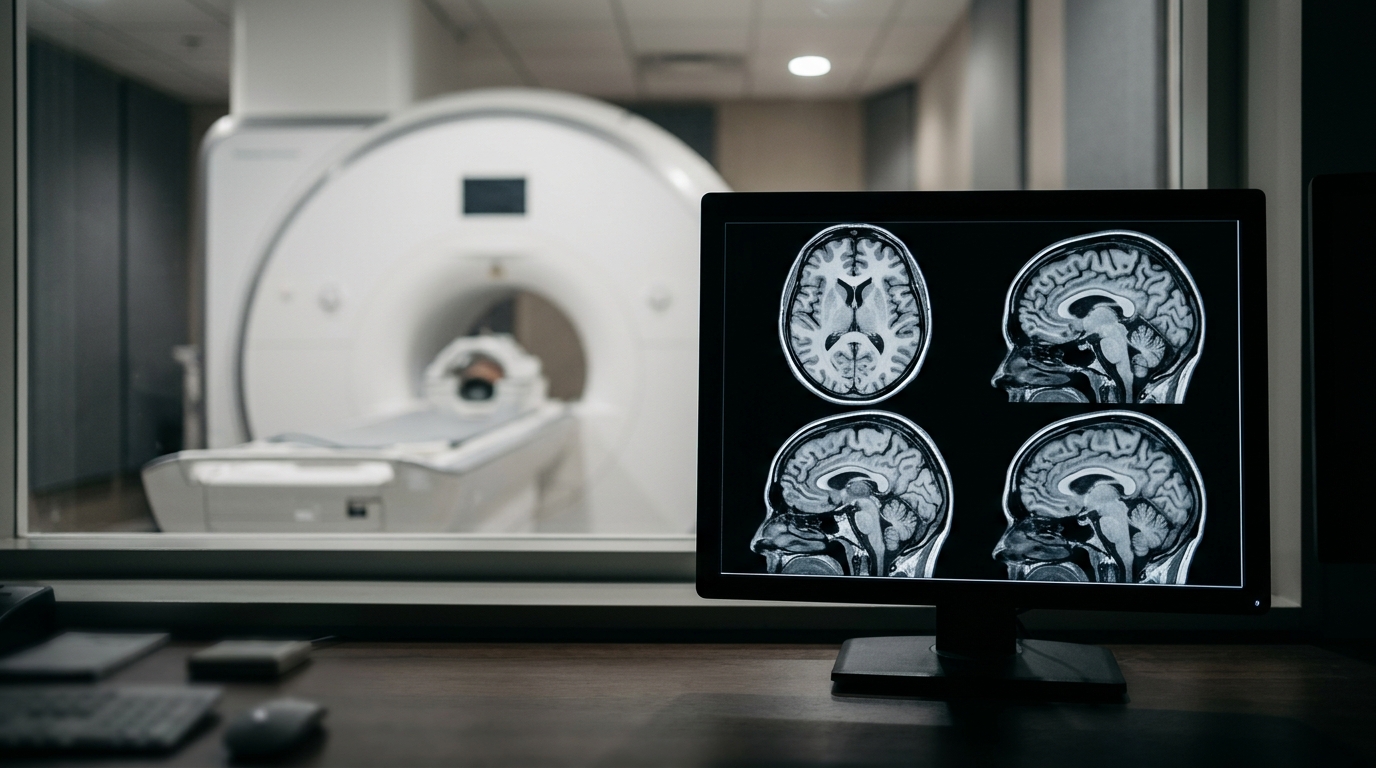
Decades of brain imaging have produced an impressive catalogue of biological abnormalities in psychosis spectrum disorders, yet almost none of it has translated into precision therapeutics, according to an editorial published in the journal Schizophrenia on 31 October 2026. The editorial, written by Alan Anticevic and Kun Yang as an introduction to a Nature Portfolio Special Collection titled “Neuroimaging Biomarkers in Psychotic Disorders,” argues that the field’s central obstacle is not a shortage of findings but the absence of reproducible mappings between brain measures and clinically meaningful variation in patients. The authors formalize this missing link as neuro-phenotype geometry, or NPG, and lay out a research agenda they believe could finally move neuroimaging from biological characterization toward mechanism-based treatment development.
The achievements the editorial catalogues are substantial. Positron emission tomography established robust evidence for striatal dopamine dysfunction in psychosis, with findings of altered D2 receptor availability, dopamine occupancy, elevated presynaptic dopamine synthesis, and increased synaptic dopamine in associative striatal regions. Magnetic resonance spectroscopy identified glutamatergic abnormalities that may be especially salient early in the course of illness. Structural MRI helped establish cortical thinning as a reproducible anatomical signature of schizophrenia, particularly across frontal, anterior cingulate, insular, and temporal cortex, while diffusion MRI identified widespread white matter microstructural differences across major fasciculi. Task-based functional MRI, especially during working memory and cognitive control demands, revealed impaired fronto-parietal recruitment, and resting-state fMRI highlighted large-scale disruptions in thalamo-cortical organization.
Despite this progress, the authors contend, therapeutic translation has remained limited. The problem, they stress, is not that neuroimaging has failed to detect robust case-control differences; the field now has a substantial catalogue of abnormalities spanning neurotransmitter systems, cortical structure, white matter microstructure, task-evoked recruitment, and distributed network organization. The deeper challenge is that these findings have not consistently yielded reproducible mappings between variation in neural measures and clinically meaningful variation across individual patients and over time. Neuroimaging has been highly productive at identifying biological differences associated with psychosis, the editorial notes, but far less successful at explaining why one patient presents with one symptom profile, another with a different cognitive impairment, and a third with a distinct illness trajectory.
This translational gap matters because precision therapeutics cannot be built from case-control contrasts alone. The authors argue that the central question is no longer simply whether patients differ from controls in dopamine signaling, glutamatergic tone, fronto-parietal recruitment, or thalamo-cortical connectivity. Rather, the critical question is whether variation in those neural signals maps reproducibly onto phenotypic variation that matters for treatment development. If the first era of psychiatric neuroimaging was about charting where the biology of psychosis resides, they write, the next must determine how that biology covaries with the phenotypes clinicians and trialists hope to change.
Neuro-phenotype geometry is the editorial’s name for that missing statistical object. The authors define NPG as the reproducible structure of associations between inter-individual variation in neural systems and clinically meaningful variation in symptoms, cognition, function, and illness trajectory, both across patients and longitudinally. The clinical value of a neural measure, they argue, does not reside solely in showing that patients differ from controls on average, because case-control comparisons by construction omit the inter-individual variation that may contain critical information for patient stratification. A finding that patients show lower cortical thickness, altered thalamo-cortical connectivity, or elevated striatal dopamine relative to healthy volunteers may be biologically informative but remains translationally incomplete. Therapeutic development requires a different level of inference: not whether a neural abnormality exists, but whether its variation tracks clinically meaningful variation across individuals and within patients over time.
Practically, the editorial positions NPG as the operational bridge between discovery and the clinic. Patient stratification depends on it, because one cannot enrich a clinical trial using neural signals without knowing which neural signals map onto which clinically relevant dimensions. Endpoint optimization depends on it as well, because one cannot refine an outcome measure without knowing whether the neural signal is reproducibly linked to the symptom variation it is meant to capture. Without a stable NPG for psychosis spectrum disorders, imaging findings remain difficult to interpret in terms of whom to treat and what to measure. With a reproducible NPG, the authors argue, neuroimaging can begin to support the core decisions that precision therapeutics requires: patient selection, endpoint alignment, and mechanistic anchoring to the underlying treatment target.
Even a reproducible brain-behavior map has limited translational value unless it connects to endpoints usable across the drug development pipeline, the editorial warns. At present, that path remains narrow. For psychosis symptoms, the regulatory anchor mainly remains the Positive and Negative Syndrome Scale, including total score, factor scores, and PANSS-derived worsening or response criteria. For cognition, the corresponding path has been largely shaped by the MATRICS initiative and the MATRICS Consensus Cognitive Battery, developed to support clinical trials of cognition-enhancing interventions in schizophrenia. If an imaging-derived signature cannot forecast, enrich, or mechanistically contextualize variance in PANSS-linked symptom dimensions or MATRICS-linked cognitive outcomes, its practical value for clinical development is diminished in the current landscape. The scarcity of validated and regulatorily actionable endpoints is therefore rate-limiting for biomarker translation, the authors conclude, and NPG must be framed not only as a scientific object but also as a regulatory one.
The editorial also argues that psychosis neurobiology is not static, so any NPG that ignores longitudinal variation risks capturing a snapshot of a neurobiologically moving target. Clinical expression emerges against ongoing brain maturation, and neurobiology continues to evolve as illness unfolds across the prodromal period, the early illness phase encompassing first episode and the years immediately following, and the chronic phase characterized by cumulative circuit adaptation, treatment exposure, and functional decline. Mapping NPG is therefore not a single estimation problem but a time-indexed one. A neural signature that predicts negative-symptom burden in early illness may lose predictive validity in chronic stages, not necessarily because the original association was spurious, but because generative circuit dynamics have shifted. Only repeated-measures studies can distinguish trait-like neural features from state-dependent fluctuations, characterize trajectories while reducing cross-sectional confounding, and locate windows of maximal therapeutic opportunity. The Accelerating Medicines Partnership Schizophrenia initiative, which is assembling longitudinal, multimodal, harmonized data across the early psychosis risk trajectory at unprecedented scale, is cited as an ambitious investment toward this goal.
Reproducible NPG alone would not establish mechanism, the editorial cautions. A stable association between thalamo-cortical dysconnectivity and symptom burden may support patient selection and endpoint alignment, yet leave unresolved whether the circuit disruption is causally upstream of the symptom, downstream of it, or an epiphenomenon of a shared upstream process. The authors distinguish descriptive biomarkers, which identify neural features that covary with a phenotype, from mechanistic markers, which embed that covariance within a generative model specifying how perturbations at molecular, synaptic, or circuit levels propagate to produce observed large-scale signals and clinical phenotypes. Biophysically informed models of cortical microcircuitry, for example, can link alterations in excitatory-inhibitory balance to measurable changes in working memory dynamics or fMRI signal properties. Mechanistic markers could clarify target engagement by testing whether a drug’s action on a receptor shifts a defined circuit parameter in the expected direction and magnitude, illuminate heterogeneity by showing how two patients with similar symptoms arrive there through different circuit-level routes, and inform candidate disease-modifying effects. Neuroimaging alone cannot resolve this inference stack, the authors acknowledge, noting it also requires genetics, molecular biology, animal models, and clinical pharmacology, but it is essential because it links molecular-level perturbation to systems-level observation in living human patients.
On the question of how to make actionable progress, the editorial suggests that conventional human-engineered biomarker approaches are unlikely to be sufficient on their own. For decades, investigators have selected a modality, defined a feature based on prior literature or theory, extracted it in a clinical sample, and tested its association with a phenotypic measure, a paradigm that imposes a low-dimensional projection on a high-dimensional association space before estimation begins. The authors argue that AI-enabled discovery, combined with expert-defined neural and clinical features, could serve as a discovery engine for navigating that dimensionality, testing which aspects of the neural signal maximize NPG reproducibility. They are careful to temper the promise: models trained on biased or confounded data will learn biased representations, predictive performance in silico does not guarantee clinical utility, and latent features are only translationally useful if they can be mapped back onto identifiable neural systems, actionable mechanisms, and clinically defensible endpoints. The field must pair AI-enabled discovery with rigorous cross-site validation, transparent reporting, prospective replication, careful deconfounding, and mechanistic interpretability. None of the agenda’s elements alone is sufficient, the authors conclude, but together they define a research agenda that could move neuroimaging from biological characterization toward mechanism-based precision therapeutics in psychotic disorders and neuropsychiatry more broadly.
Subject of Research: Neuroimaging biomarkers and precision therapeutics in psychosis spectrum disorders
Article Title: Can neuroimaging unlock precision therapeutics in psychosis spectrum disorders?
Article References: Anticevic, A., & Yang, K. (2026). Can neuroimaging unlock precision therapeutics in psychosis spectrum disorders?. Schizophrenia, 12(1), Article 83. https://doi.org/10.1038/s41537-026-00826-y
Image Credits: AI Generated
DOI: 10.1038/s41537-026-00826-y
Keywords: psychosis, schizophrenia, neuroimaging, precision medicine, biomarkers, fMRI, PET, dopamine, clinical trials, machine learning, NPG, regulatory endpoints
News Source: Colin Clarke. (November 5, 2026). Neuroimaging has mapped psychosis biology but still cannot guide treatment. Scienmag.