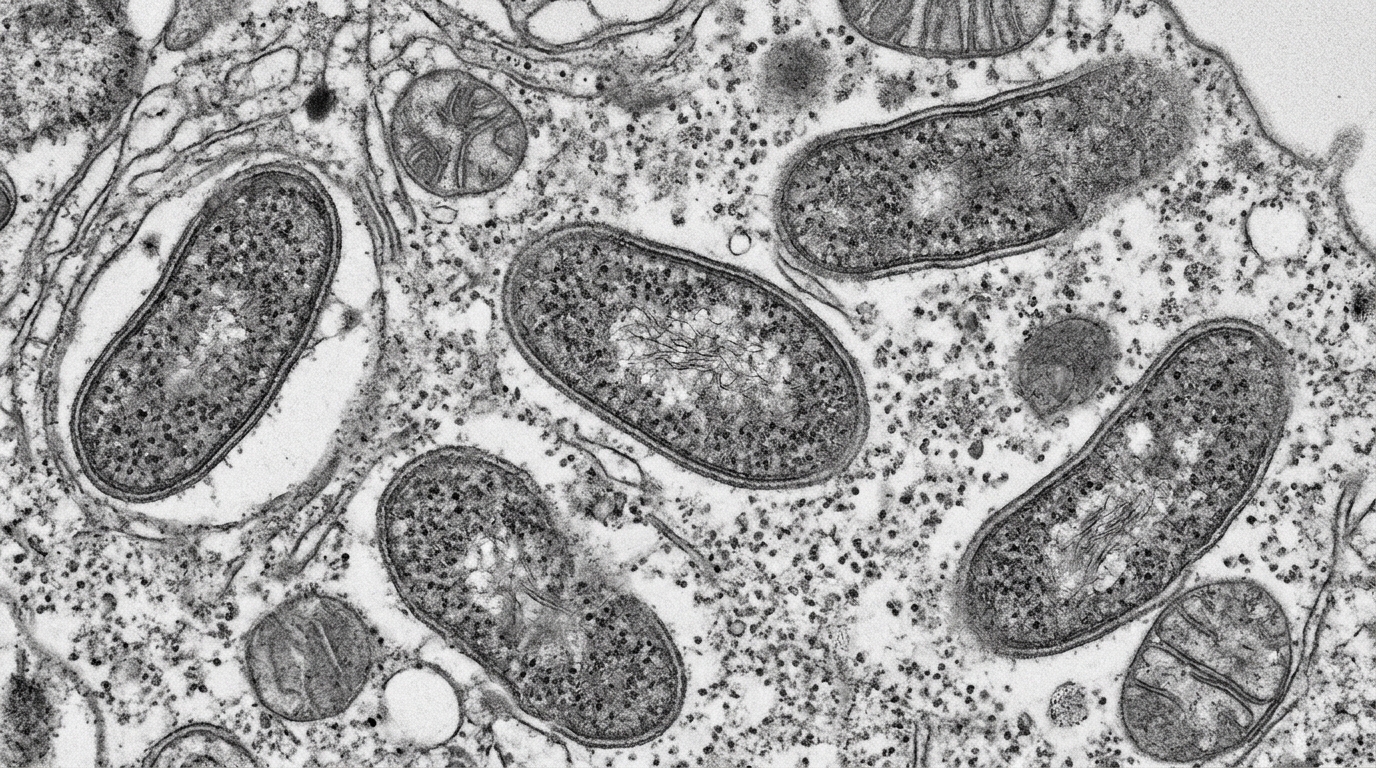
Epidemic typhus, caused by the bacterium Rickettsia prowazekii, remains a re-emerging public health concern in resource-limited and conflict-affected regions, and researchers have now taken an early step toward a new diagnostic approach built on a gene that has long served a different purpose. The citrate synthase gene, known as GltA, is widely used as a molecular marker to detect Rickettsia prowazekii in laboratory tests, but it had not previously been explored as an immunological marker. A team led by Massrehaw Assnakew Abebe and colleagues, publishing in BMC Biotechnology, set out to exploit this gap by designing recombinant antigens that harbor multiple epitopes or immunodominant regions of the GltA protein.
As proof of concept, the researchers employed an integrated immunoinformatics and molecular engineering strategy to design, produce, and evaluate recombinant GltA-derived immunogens. Two constructs, designated MA3 and MA4, were designed and computationally characterized for antigenicity, immunogenicity, physicochemical properties, structural features, and heterologous expression potential. This in silico phase allowed the team to predict which of the two engineered proteins would be most likely to trigger a useful immune response and to be produced successfully in a bacterial expression system before any laboratory work began.
The computational screening identified MA3 as the construct with the most favourable predicted profile. The team then moved from prediction to practice: MA3 was successfully expressed and purified in Escherichia coli, the standard workhorse of recombinant protein production. This step confirmed that the engineered antigen could be manufactured in the laboratory, a prerequisite for any future diagnostic or immunological application. The expression result also validated the heterologous expression predictions that had been generated during the design phase.
To test whether the predicted immunogenicity held up in a living system, the researchers immunized mice with MA3. The immunization elicited robust MA3-specific antibody responses, providing experimental support for the immunogenicity that the computational models had forecast. This animal experiment demonstrated that the engineered antigen could actively engage the immune system and drive the production of antibodies that recognize it, a key property for any antigen intended for use in serological testing.
The most consequential result came from a preliminary evaluation using human sera. The team found that MA3 showed stronger reactivity with Rickettsia prowazekii-positive samples than with negative controls. This differential reactivity indicates that the GltA-derived recombinant antigen has potential as a candidate antigen for serodiagnostic assay development. In practical terms, a protein that binds antibodies from infected individuals but not from uninfected ones could form the basis of a test that distinguishes past or current typhus infection from its absence.
These findings establish a proof of concept for GltA-derived recombinant antigens as immunodiagnostic targets and identify MA3 as a promising candidate for further development. The work links a molecular diagnostic marker that laboratories already rely on to a new immunological role, potentially expanding the toolkit available for detecting epidemic typhus in settings where the disease persists.
The authors are careful to frame the scope of what has been achieved. Larger, clinically characterized serum panels, systematic assessment of cross-reactivity with related Rickettsia species, and rigorous assay optimization and validation are required to determine the diagnostic accuracy and clinical applicability of MA3. Cross-reactivity is a particular concern in rickettsial serology because antibodies raised against one Rickettsia species can sometimes recognize proteins from closely related species, and distinguishing epidemic typhus from other rickettsial infections would be essential for a clinically useful test.
The study is published as open access research in BMC Biotechnology, with the article released on 07 September 2026 under a citable, permanently archived DOI as an accepted version subject to further edits before the final Version of Record. The research represents an early-stage translational effort: from computational design through bacterial expression and animal immunization to a first look at human antibody recognition, all within a single proof-of-concept framework.
For epidemic typhus, which continues to re-emerge in regions affected by conflict and limited health infrastructure, improved diagnostic tools remain a pressing need. The MA3 antigen now joins the pipeline of candidate immunodiagnostic targets, with its next steps defined by the larger serum panels and validation studies that the authors identify as necessary before any claim of diagnostic accuracy can be made.
Subject of Research: Immunoinformatic design and preliminary serological evaluation of recombinant Rickettsia prowazekii GltA-derived antigens for typhus serodiagnosis
Article Title: Recombinant antigens derived from Rickettsia prowazekii GltA: from in silico design to preliminary serological evaluation
Article References: Abebe, M. A., Sisay, D. M., Fekadu, A., Bika, A. T., Tessema, T. S., & Mogus, A. T. (2026). Recombinant antigens derived from Rickettsia prowazekii GltA: from in silico design to preliminary serological evaluation. BMC Biotechnology. https://doi.org/10.1186/s12896-026-01220-3
Image Credits: AI Generated
DOI: 10.1186/s12896-026-01220-3
Keywords: Rickettsia prowazekii, epidemic typhus, GltA, recombinant antigens, immunoinformatics, serodiagnosis, MA3, BMC Biotechnology, epitope design, Escherichia coli expression, mouse immunization, diagnostic markers
News Source: Ophelia Keating. (November 5, 2026). Citrate synthase protein shows promise as typhus diagnostic target. Scienmag.