Researchers at Chhatrapati Shahu Ji Maharaj University in Kanpur, India, have built an antibiotic-free topical formulation that combines lignin nanoparticles derived from wheat straw with postbiotic metabolites from the bacterium Lactiplantibacillus plantarum. In broth assays, the combined formulation inhibited the growth of the acne-associated bacterium Cutibacterium acnes by 95.5 percent, according to the study published in Frontiers in Materials. That figure exceeded the 63.6 percent inhibition achieved by the postbiotic cell-free supernatant alone and the 35.9 percent inhibition recorded for the conventional antibiotic azithromycin under the same test conditions.
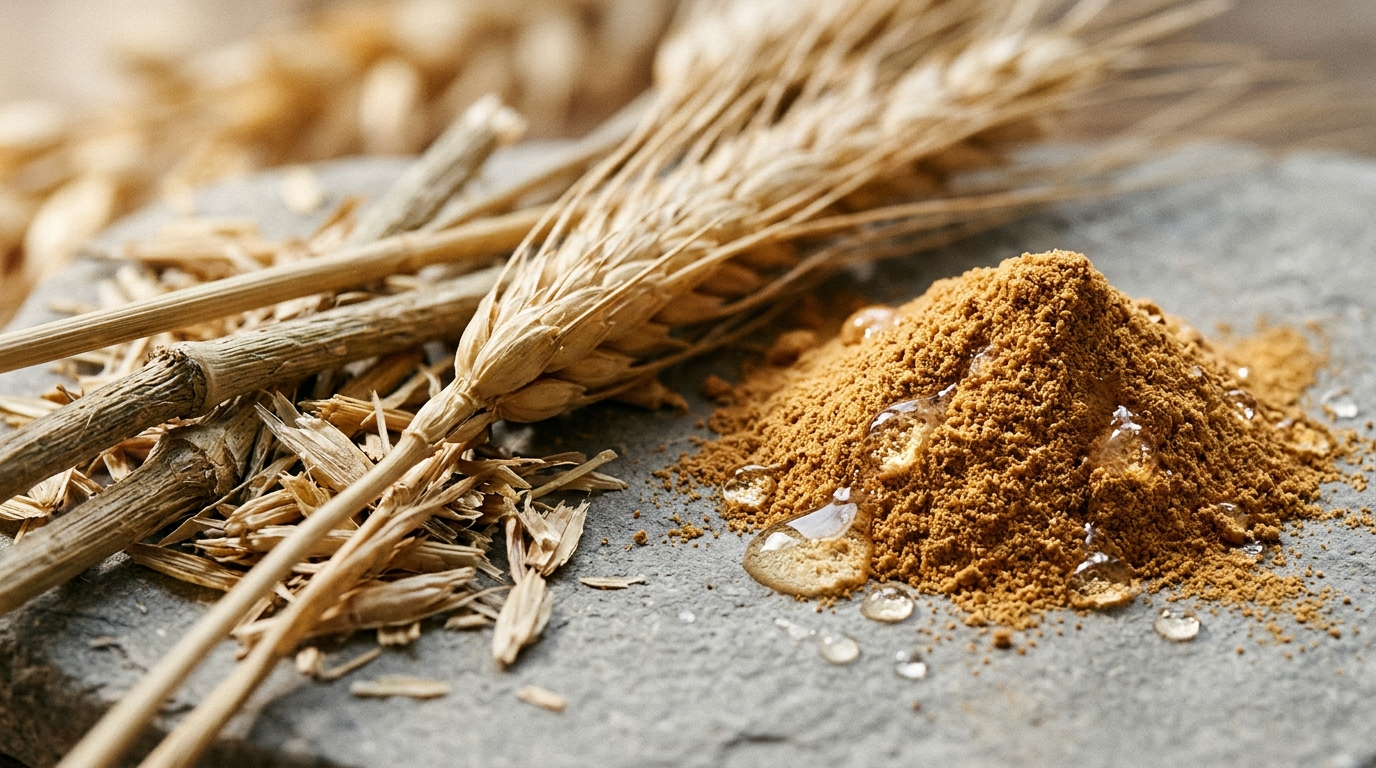
Lignin from wheat straw was extracted and used for the preparation of nanoparticles. Characterization using UV-visible spectroscopy, scanning electron microscopy, and Fourier transform infrared spectroscopy showed that the particles were spherical to subspherical in shape, with mean diameters ranging from 53 to 107 nanometers.
To create the antimicrobial system, the engineered lignin nanoparticles were mixed with cell-free supernatant from L. plantarum. The mixture was then incorporated into an Aloe vera gel base to form a topical nanocomposite intended for dermatological use against C. acnes.
All the combinations were checked for growth and biofilm inhibition of the pathogen. Quantitative fluorescence microscopy showed that the nanoparticle-postbiotic formulation reduced bacteria associated with the biofilm to 47.5 percent relative fluorescence, compared with 58.0 percent for azithromycin. Lower relative fluorescence corresponded to a greater decrease in the amount of bacteria associated with the biofilm, meaning the formulation outperformed the antibiotic on this measure.
Beyond its antimicrobial performance, the nanocomposite gel displayed antioxidant and photoprotective properties. The formulated nanocomposite gel also demonstrated strong DPPH free radical scavenging activity. The gel also achieved an in vitro sun protection factor of 10.0, while the plain Aloe vera base gel registered an SPF of only 0.53.
The authors state that the improved antimicrobial and antibiofilm activity indicates a combined interaction between the wheat straw-derived lignin nanoparticles and the L. plantarum postbiotic metabolites, leading to greater C. acnes inhibition than the individual components and the tested azithromycin control.
The study demonstrates that wheat straw lignin can be processed into a nanocomposite gel with measurable antimicrobial, antibiofilm, antioxidant, and photoprotective performance in controlled laboratory conditions. The authors note that further investigation may be required to assess the formulation's physicochemical stability, skin compatibility, permeation, and in vivo therapeutic efficacy.
Subject of Research: Plant-derived lignin nanoparticles combined with bacterial postbiotics for antibiotic-free topical acne treatment
Article Title: Wheat straw-derived lignin nanoparticles combined with postbiotics for antimicrobial, antibiofilm, and antioxidant applications in topical formulations
Article References: Pandey, S., Kushwaha, B., Shukla, P., & Sharma, R. K. (2026). Wheat straw-derived lignin nanoparticles combined with postbiotics for antimicrobial, antibiofilm, and antioxidant applications in topical formulations. Frontiers in Materials, 13, Article 1962211. https://doi.org/10.3389/fmats.2026.1962211
Image Credits: AI Generated
DOI: 10.3389/fmats.2026.1962211
Keywords: lignin nanoparticles, wheat straw, postbiotics, Cutibacterium acnes, acne, green nanotechnology, Lactiplantibacillus plantarum, antibiofilm, antioxidant, sun protection factor, Aloe vera gel, antibiotic-free
News Source: Alan Morgan. (November 5, 2026). Wheat Straw Lignin Nanoparticles Paired with Postbiotics Outperform Azithromycin Against Acne Bacteria in Lab Tests. Scienmag.