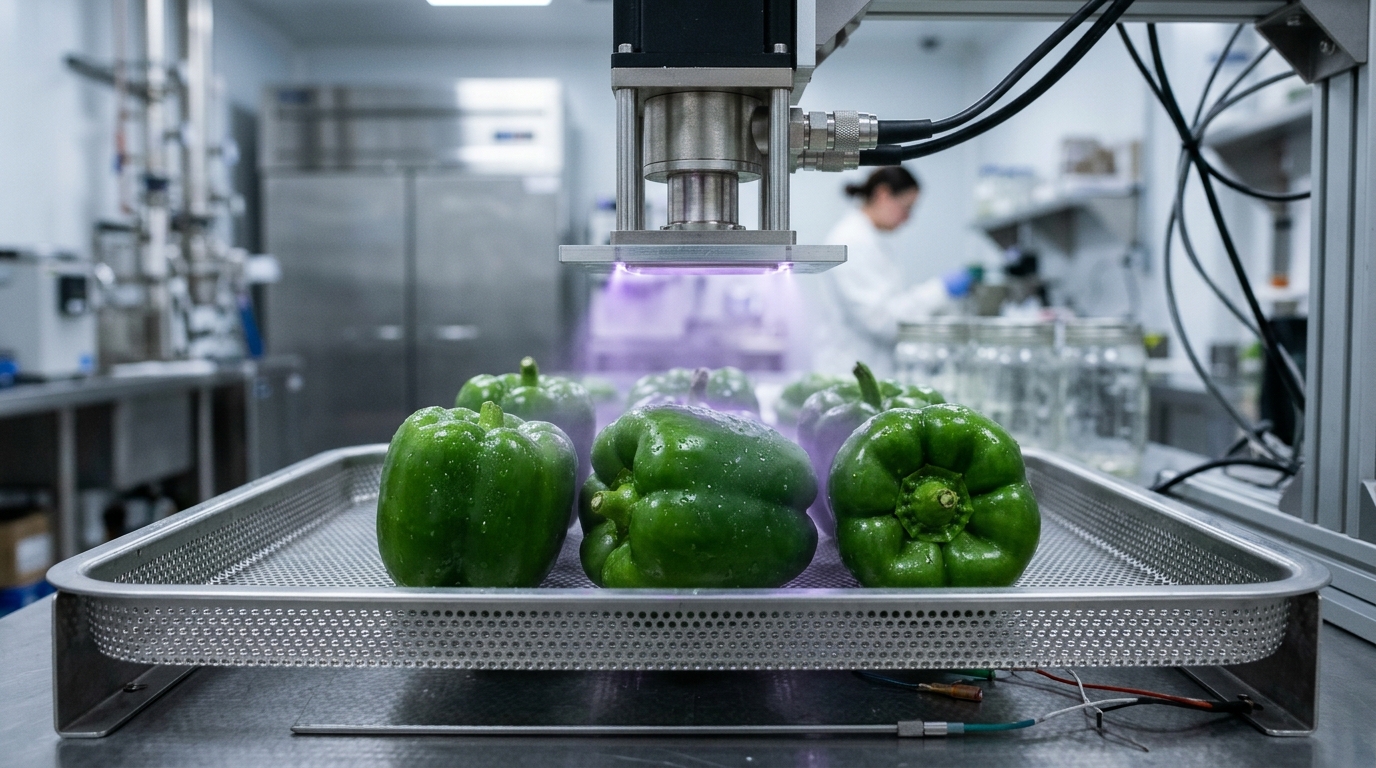
Green peppers stored at 4 °C often develop chilling injury, a disorder that ruins texture, color, and overall quality without any freezing damage. A new study reports that a brief burst of high-voltage cold plasma, applied before storage, sharply reduced this deterioration. The treatment that worked best, 50 kilovolts for 60 seconds, lowered the chilling injury index by 94.74 percent and cut weight loss by 73.54 percent compared with untreated fruit over 12 days of cold storage.
The research, published in npj Science of Food, treated green pepper fruits with high-voltage cold plasma for durations between 30 and 150 seconds and then stored them at 4 °C for 12 days. The team, led by Bowen Jia and Guogang Chen, examined how the treatment changed the fruit’s physiology at the molecular level. Beyond the headline numbers, the treated peppers held on to their texture, color, and chlorophyll content for longer, delaying the visible decline that normally accompanies refrigeration at this temperature.
Cold plasma is a non-thermal technology, meaning it does not rely on heat to produce its effects. Generating ionized gas at high voltage produces reactive species that can interact with biological tissue in controlled, transient ways. In this study, the treatment triggered an early, temporary, and reversible rise in reactive oxygen species inside the fruit. On day 2 of storage, hydrogen peroxide content had increased by 15.59 percent and superoxide anion content by 89.82 percent relative to untreated controls.
That transient reactive oxygen signal appears to be the key to the treatment’s benefit. Rather than harming the peppers, the moderate spike acted as a trigger, activating the fruit’s own antioxidant defenses. The researchers found that the antioxidant enzyme system and the ascorbate-glutathione cycle were upregulated at the transcriptional level, meaning the genes encoding these protective components were expressed more strongly in treated fruit.
The second half of the protective mechanism involves membrane lipids. Chilling injury in many fruits is closely tied to the breakdown of cell membranes, which depends on enzymes that degrade phospholipids and on the oxidation of polyunsaturated fatty acids. The study found that high-voltage cold plasma inhibited the key enzymes involved in membrane lipid degradation, reducing phospholipid breakdown and limiting the oxidation of polyunsaturated fatty acids.
As a result, treated peppers maintained better membrane integrity throughout storage. By the end of the 12-day period, the ratio of unsaturated to saturated fatty acids, a measure of membrane fluidity and resilience, had increased by 22.17 percent in the treated fruit. Higher unsaturation generally helps membranes stay functional at low temperatures, which aligns with the reduced chilling injury observed.
To confirm that these molecular changes were connected to the physical improvement, the researchers used correlation analysis and principal component analysis. Both approaches supported the conclusion that the treatment enhanced chilling tolerance by coordinately regulating antioxidant defense and membrane lipid homeostasis, rather than acting through a single pathway.
The findings position high-voltage cold plasma as a potential green, non-thermal preservation technology for postharvest handling of green peppers. Because the treatment is brief, applied in seconds rather than hours, and does not require chemical additives, it could fit into existing cold-chain workflows where chilling injury limits storage life. The study focused on green pepper, a crop particularly prone to chilling injury at 4 °C, and the reported effects are specific to that fruit and those treatment conditions.
The work was published as an open-access article, with the version shared early to provide faster access to peer-reviewed, accepted research. As with any single-crop study, extending these results to other produce would require further testing, but the dual mechanism described here, pairing a controlled oxidative signal with protection of membrane lipids, offers a clear physiological account of why a 60-second plasma treatment could keep peppers fresher for nearly two weeks in the cold.
Subject of Research: High-voltage cold plasma treatment to alleviate chilling injury in stored green peppers
Article Title: High-voltage cold plasma alleviates chilling injury in green pepper by synergistically regulating antioxidant and membrane lipid metabolism
Article References: Jia, B., Yang, W., Cao, J., Cheng, S., & Chen, G. (2026). High-voltage cold plasma alleviates chilling injury in green pepper by synergistically regulating antioxidant and membrane lipid metabolism. npj Science of Food. https://doi.org/10.1038/s41538-026-01220-9
Image Credits: AI Generated
DOI: 10.1038/s41538-026-01220-9
Keywords: green pepper, chilling injury, cold plasma, postharvest, antioxidant defense, membrane lipids, reactive oxygen species, cold storage, food preservation, Capsicum annuum, High-voltage, cold
News Source: Alan Morgan. (November 5, 2026). Cold plasma treatment cuts chilling injury in stored green peppers. Scienmag.