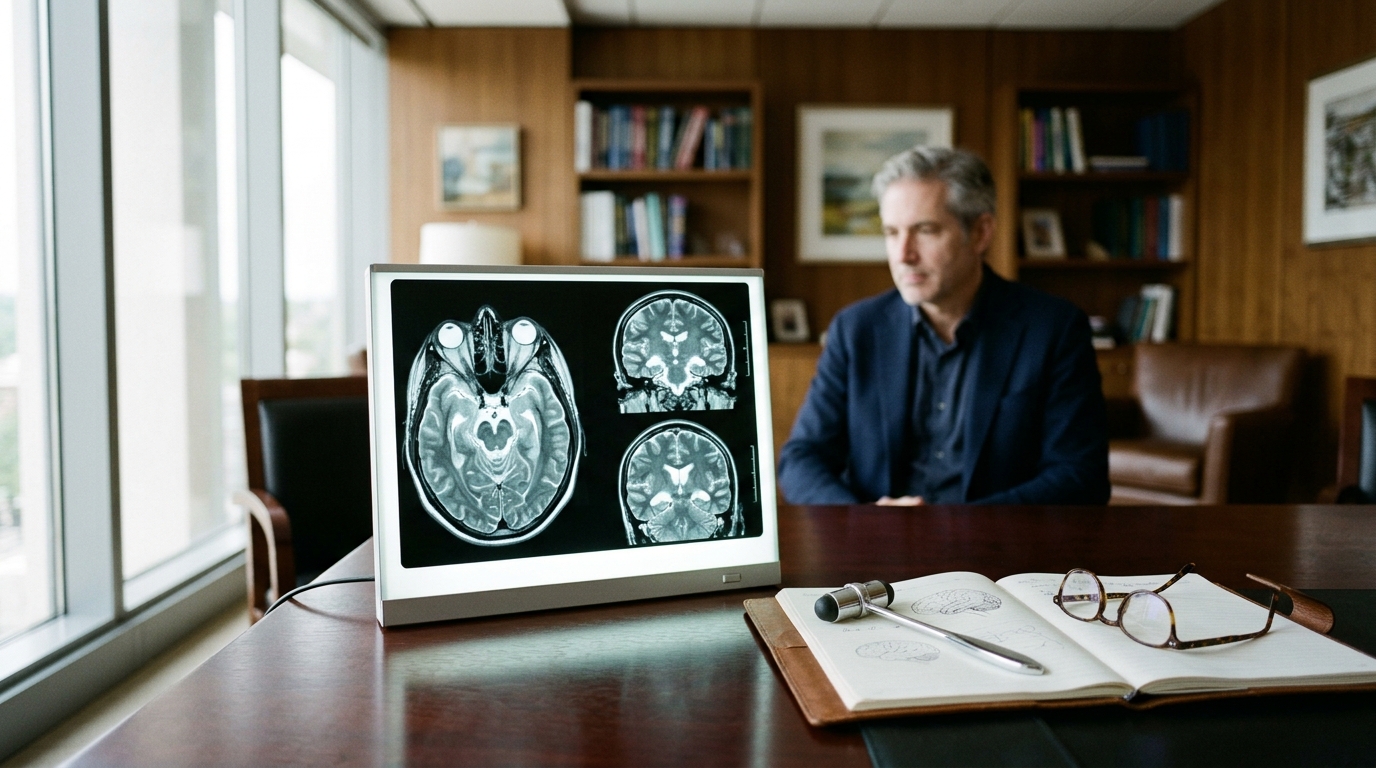
Encephalitis patients who previously suffered from herpes simplex virus type 1 (HSV-1) encephalitis display long-term episodic memory deficits and focal brain changes an average of 6.5 years after infection, according to a retrospective study published in Alzheimer’s Research & Therapy. Compared with cognitively unimpaired individuals, patients who had survived herpes simplex encephalitis (HSE) demonstrated significantly impaired delayed recall and lower global cognition, performing at levels comparable to individuals with mild cognitive impairment but less severe than those with Alzheimer’s disease dementia.
The investigation evaluated 11 retrospectively identified HSE patients (mean age 49 years, 55% female) alongside control cohorts from the Swedish BioFINDER-2 study. These controls comprised 44 cognitively unimpaired individuals, 44 participants with mild cognitive impairment, and 22 patients with Alzheimer’s disease dementia, with groups stratified by amyloid-beta status using cerebrospinal fluid Aβ42/Aβ40 ratios. While the HSE cohort was age-matched to the amyloid-negative cognitively unimpaired group, it was younger than the other study groups. Participants underwent neuropsychological testing as well as 3T or 7T magnetic resonance imaging, which included visual evaluation of lesions and automated segmentation of medial temporal lobe subregions.
Neuroimaging in the encephalitis cohort revealed substantial variation, ranging from marked unilateral medial temporal lobe atrophy to no visible structural alterations. Within the encephalitis group, episodic memory impairment was significantly associated with visually assessed medial temporal lobe atrophy (p = 0.0185). In brain hemispheres that lacked gross atrophy, medial temporal lobe subregional volumes were similar to those observed in cognitively unimpaired participants and those with mild cognitive impairment, while remaining larger than volumes measured in patients with Alzheimer’s disease dementia. Poorer delayed recall was also associated with a longer elapsed time since the initial infection.
Immunoassay analysis of plasma biomarkers revealed that phosphorylated tau at position 217 (p-tau217) and glial fibrillary acidic protein (GFAP) were elevated across the full HSE group compared with amyloid-negative cognitively unimpaired and mild cognitive impairment controls, though both markers remained lower than levels detected in Alzheimer’s disease dementia. However, plasma p-tau217 did not differ significantly when comparing amyloid-negative HSE patients specifically against amyloid-negative cognitively unimpaired controls, and levels of p-tau181 and neurofilament light (NfL) were similar to cognitively unimpaired individuals. Additionally, the association between GFAP and cognitive performance was no longer significant after excluding two HSE patients with Fazekas grade 3 white matter lesions. The authors concluded that long-term cognitive outcomes reflect structural injury and focal medial temporal lobe atrophy, noting that only a minority of HSE patients exhibited signs of Alzheimer’s disease pathology by cerebrospinal fluid biomarkers, and emphasized that larger longitudinal studies are necessary to clarify cognitive trajectories and mechanisms.
Subject of Research: Long-term cognitive, structural, and biomarker outcomes following herpes simplex virus type 1 encephalitis
Article Title: Cognitive impairment, medial temporal lobe changes, and fluid biomarkers of Alzheimer’s disease and neurodegeneration following herpes simplex virus type 1 encephalitis
Article References: Gertje, E. C., Nääs, A., van Westen, D., Wuestefeld, A., Janelidze, S., Stomrud, E., Schliamser, S., Wisse, L. E. M., Torisson, G., Palmqvist, S., Hansson, O., Westman, G., & Mattsson-Carlgren, N. (2026). Cognitive impairment, medial temporal lobe changes, and fluid biomarkers of Alzheimer’s disease and neurodegeneration following herpes simplex virus type 1 encephalitis. Alzheimer's Research & Therapy. https://doi.org/10.1186/s13195-026-02245-8
Image Credits: AI Generated
DOI: 10.1186/s13195-026-02245-8
Keywords: Herpes Simplex Encephalitis, HSV-1, Cognitive Impairment, Episodic Memory, Medial Temporal Lobe, p-tau217, GFAP, Neurodegeneration, Cognitive, impairment, medial, temporal
News Source: Cassandra Pierce. (November 5, 2026). Prior Herpes Simplex Encephalitis Linked to Lasting Memory Deficits and Brain Changes. Scienmag.