Across West Africa, HIV, mpox, stigma and health-system barriers may interact in ways that compound clinical and social harms, and a new commentary argues that disease-specific models of care are poorly equipped to respond. Writing in Harm Reduction Journal, a team of researchers from Sierra Leone and Nigeria proposes a practical, tripartite harm-reduction framework for integrated, person-centred syndemic management. The proposal is designed not only to reduce morbidity associated with HIV and mpox, but also to reduce harms arising from stigma, criminalization, inadvertent disclosure and discriminatory health services. The authors describe their contribution as a testable approach, not a proven intervention, and they call on national health ministries, regional bodies and global health partners to support the co-design, resourcing and rigorous evaluation of pilot programmes in appropriate settings.
The commentary builds on syndemic theory, a lens for understanding public health challenges in which two or more epidemics interact synergistically within a context of social and structural inequity, producing an excess burden of disease. The authors note that this model moves beyond a simple biomedical approach by explicitly acknowledging how adverse social conditions, such as poverty and stigma, exacerbate disease clustering and outcomes. They emphasize that across West Africa, HIV, mpox, stigma and health-system barriers intersect in ways that may vary across countries, populations and health-system contexts. West Africa continues to carry a substantial burden of HIV, although the magnitude and distribution of that burden vary across countries and populations. Concurrently, the 2022 global mpox outbreak disproportionately affected some populations, including men who have sex with men, while severe disease was particularly reported among people with advanced or untreated HIV.
Stigma associated with both conditions may contribute to care avoidance, complicate engagement with contact-tracing activities and create additional barriers to effective public health responses, the authors write. Despite calls for integrated, locally led action to address the intersection of mpox and HIV in Africa, health systems across the region remain substantially organized around vertical, disease-specific programmes. These siloed approaches, the commentary argues, may be less able to address the interconnected biological, social and health-system factors that characterize a syndemic. The paper’s central claim is that the distinctive contribution is not the individual components themselves, but their deliberate integration around a shared objective of reducing both disease-related and response-related harms.
The biological interaction between the two infections sits at the heart of the proposed framework. According to the commentary, immunosuppression, particularly in individuals with advanced or untreated HIV characterized by low CD4 counts or unsuppressed viral loads, can significantly alter the clinical course of mpox. Evidence indicates that these patients are at a markedly higher risk for severe and protracted disease, including the development of widespread, necrotic skin lesions, secondary bacterial infections and systemic involvement. This altered clinical course can complicate management and is associated with poorer outcomes, including higher mortality among people with advanced or untreated HIV. Conversely, mpox illness and associated stigma may disrupt continuity of HIV care, including attendance at appointments and access to antiretroviral therapy, with potential consequences for treatment continuity and viral suppression.
The authors are careful to frame the syndemic mechanism as operating across biological and social pathways rather than through a single causal chain. Advanced or untreated HIV may increase vulnerability to severe mpox, while mpox illness may disrupt continuity of HIV care. At the same time, stigma, discrimination, concerns about disclosure and barriers within health services may discourage timely care-seeking or continued engagement with services. These processes can interact: poorer health or prolonged illness may increase contact with health and social systems, while anticipated or experienced stigma may make such engagement more difficult. The resulting accumulation of clinical, social and health-system barriers may compound individual and population-level health needs. The framework therefore conceptualizes the syndemic as an interaction between biological vulnerability and social and structural conditions, rather than as a simple one-directional pathway.
A solely biomedical account is insufficient, the commentary argues, because the burden of HIV and mpox is shaped not only by biological and epidemiological processes but also by stigma, discrimination, criminalization and barriers within health and social systems. The stigma associated with both HIV and mpox is complex, rooted in fears of contagion, associations with sexual transmission and, in many contexts, moral judgment and criminalisation toward key populations. Stigma can function as an important social determinant of health by contributing to barriers to service access at multiple levels: internalised stigma may contribute to symptom concealment; fear of ostracization may discourage disclosure and care-seeking; and discriminatory experiences within healthcare settings may reduce engagement with services. Internally, individuals may experience shame and self-blame, leading them to hide symptoms. At the community level, fear of gossip, social ostracization and violence can be overwhelming. Structurally, healthcare providers may hold discriminatory attitudes, and policies may lack inclusivity.
These barriers may contribute to delayed or avoided care-seeking. The authors give concrete examples: concerns about HIV disclosure, stigma or being associated with a stigmatized group may discourage some individuals with symptoms suggestive of mpox from seeking timely care, and stigma or concerns about disclosure may affect continuity of HIV care among people diagnosed with mpox. Delayed or avoided care may contribute to poorer individual outcomes and can create additional challenges for timely diagnosis, treatment and public health response. Taken together, these pathways suggest a syndemic pattern in which biological vulnerability, disease burden, stigma and social and structural inequities may interact to compound health needs, while fragmented disease-specific services may leave some of these intersecting needs insufficiently addressed.
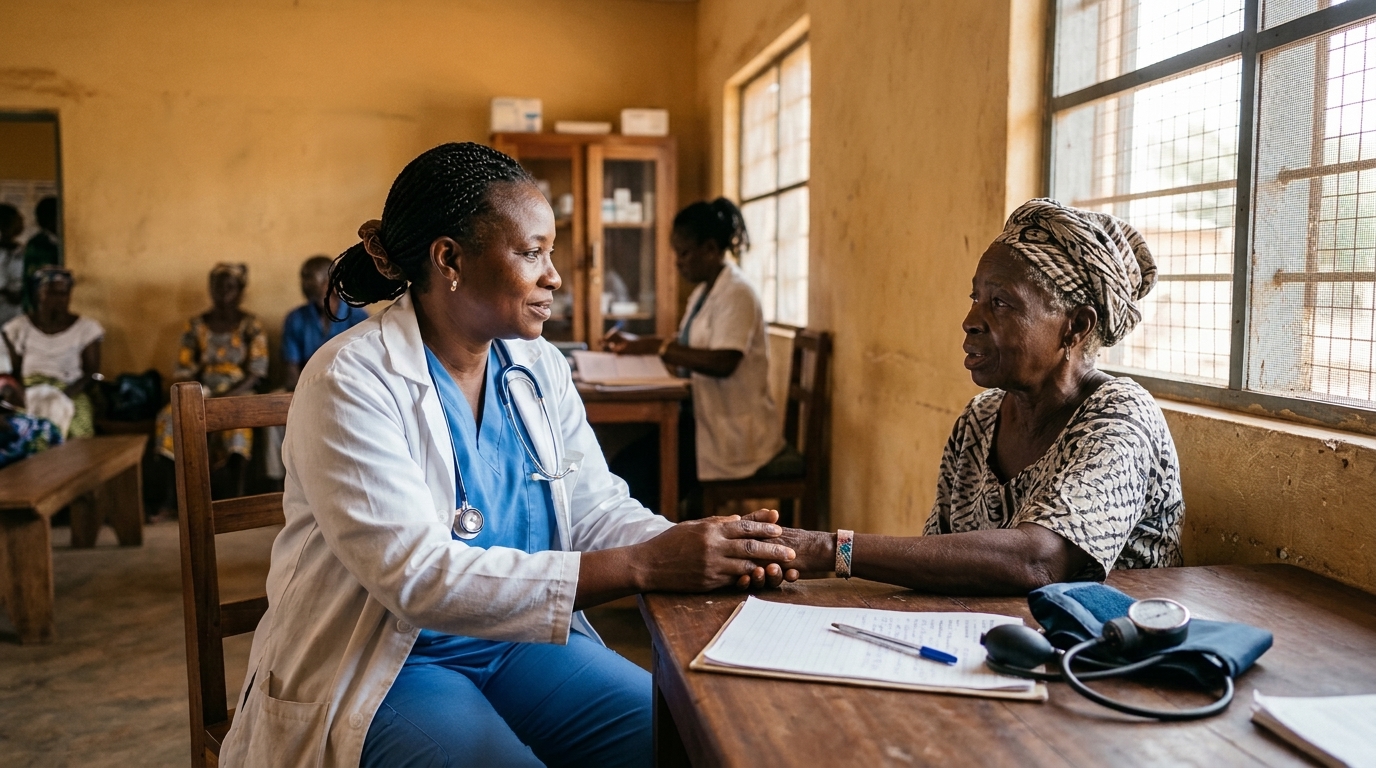
The operational framework is organized around three interdependent pillars. The first translates the harm-reduction principle into clinical practice by reconfiguring the response around people’s needs rather than administrative disease categories. The authors propose one-stop syndemic clinics, integrated within trusted primary health facilities or HIV treatment centres, that would co-locate three critical streams of care: comprehensive HIV services with routine testing and seamless antiretroviral therapy initiation and continuity; streamlined mpox management with accessible PCR diagnosis, facilitated access to antivirals, especially for severe or advanced HIV cases, and supportive care per World Health Organization guidelines; and integrated mental health support with basic triage, psychological first aid and referral pathways to address the compounded psychological toll. Given the psychological burden associated with HIV, mpox and stigma, mental health support should extend beyond initial triage to include routine assessment of psychological distress and stigma-related psychosocial needs, brief supportive interventions and referral pathways for people requiring more specialized care. Operationalizing this model requires simplified clinical algorithms for co-management and strategic task-sharing, empowering nurses and community health workers under supervision. The inclusion of paid peer navigators from affected communities can support patient navigation and help strengthen trust between affected communities and the formal health system. The authors draw lessons from the 2014 to 2016 West African Ebola outbreak, during which community engagement, trusted local leadership and community-based health workers were important for building trust, addressing misinformation, improving service uptake and strengthening links between affected communities and formal health systems, while recognizing that peer navigator roles should be adapted to the specific social and epidemiological context of HIV and mpox.
Integration, the authors stress, should not require every service to be delivered in a single visibly designated clinic. Where co-location could increase the risk of inadvertent disclosure or stigma, programmes should offer discreet referral pathways, primary-care integration or community-based options according to patient preference and local feasibility. The choice of service pathway should remain voluntary and confidential, with infection-prevention and control measures maintained across all models. Patients should be offered a meaningful choice among these models where feasible, with the preferred pathway determined jointly with the patient rather than assumed by the programme or provider. Programme design should also avoid visibly identifying facilities, waiting areas, appointment systems or patient records in ways that could reveal HIV or mpox status to other patients, community members or unauthorized personnel. Where legal or criminalization risks exist, programmes should establish clear safeguards governing access to patient information by law-enforcement or other non-clinical authorities, consistent with applicable law, confidentiality obligations and patients’ rights. The second pillar addresses surveillance: current parallel systems, such as Integrated Disease Surveillance and Response for mpox and separate HIV registries, may limit the ability to examine intersecting patterns of disease and care. The authors propose carefully governed linkage of the minimum data necessary from relevant surveillance, HIV, laboratory and clinical systems, with de-identification or pseudonymisation applied according to the intended use, subject to defined access controls, data-security procedures, retention limits and safeguards against re-identification or unauthorized disclosure. Community representatives should participate in decisions about which data are collected and linked, how they are interpreted and shared, and what safeguards govern their use, with pilot participation extending to oversight of data governance, interpretation of findings, evaluation and decisions about adaptation or scale-up. Implementation should proceed incrementally, beginning with identification of the minimum variables required for syndemic monitoring and assessment of their availability across existing systems, considering fragmented data systems, digital infrastructure, interoperability, data quality, workforce capacity and governance requirements.
The third pillar makes stigma mitigation a core, funded and measurable component of syndemic management programmes, with dedicated resources for interventions that improve access, protect confidentiality and reduce exclusion from care. Critically, the authors argue, these interventions cannot be designed in a top-down manner; to be effective and sustainable, they must be community-led, leveraging the expertise and trust of affected populations. This requires direct, flexible funding and capacity-strengthening support for trusted civil society and community-based organizations, which are best positioned to design and deliver contextually appropriate solutions. Key interventions the authors identify include targeted social and behaviour change communication that directly addresses and counters the specific misinformation, fear and moral blame surrounding HIV and mpox transmission within local contexts; peer navigation programmes that formalize the training, deployment and fair compensation of individuals from affected communities, such as people living with HIV and mpox survivors, to provide practical, logistical and emotional support; and advocacy for legal and policy reform to protect people from discrimination in healthcare and other essential services, strengthen confidentiality protections, reduce unnecessary disclosure and address legal and structural barriers, including criminalization that may deter people from seeking or continuing care. Community participation should extend beyond delivery to shared decision-making, with affected communities holding defined roles in programme design, priority-setting, implementation oversight, interpretation of monitoring data, evaluation and decisions about adaptation and scale-up, and where feasible formal roles in programme governance or advisory structures. Effects should be evaluated using mixed-methods approaches combining validated quantitative measures of stigma and discrimination with qualitative assessment of lived experiences, implementation processes and unintended harms, integrating scales measuring experienced, internalized and anticipated stigma into routine monitoring and evaluation frameworks. The commentary pairs the framework with a pragmatic research and policy agenda embedded in pilot projects, including prospective or quasi-experimental operational research comparing integrated care models with existing service arrangements on outcomes such as time to mpox diagnosis, continuity of HIV treatment, patient-reported access barriers and stigma-related harms; implementation research on barriers and facilitators to task-sharing and sustainable funding of community-led stigma reduction; and health economics and governance studies including cost-effectiveness and budget impact analyses and research on data sovereignty and locally owned governance frameworks. A robust monitoring, evaluation, accountability and learning framework should be co-developed with communities and embedded within all pilot initiatives. The authors encourage national ministries of health in West Africa, regional bodies such as the West African Health Organization, and global health partners and funders to support context-specific co-design, piloting and evaluation, arguing that with local leadership, meaningful power-sharing with communities and continued generation and use of local evidence, such approaches can be adapted and evaluated to inform more equitable and resilient health-system responses.
Subject of Research: An integrated person-centred syndemic management framework for HIV, mpox and stigma in West Africa
Article Title: HIV, mpox, and stigma in West Africa – a case for integrated person-centred syndemic management
Article References: Bai-Sesay, A. U., Samura, F. S., Musa, J., Kanu, C. S., Conteh, Y. S., Nicol, R. A., & Onyeaghala, C. A. (2026). HIV, mpox, and stigma in West Africa – a case for integrated person-centred syndemic management. Harm Reduction Journal, 23(1), Article 161. https://doi.org/10.1186/s12954-026-01559-y
Image Credits: AI Generated
DOI: 10.1186/s12954-026-01559-y
Keywords: HIV, mpox, syndemic, West Africa, stigma, harm reduction, integrated care, health systems, data linkage, community-led interventions, peer navigators, criminalization
News Source: Glenn Wilkins. (November 5, 2026). HIV, mpox and stigma collide in West Africa: scientists propose integrated syndemic care framework. Scienmag.