Peripheral blood immune cells from patients with severe asthma release markedly lower amounts of antiviral interferons and inflammatory cytokines when exposed to rhinovirus RV-A16 in laboratory cultures than cells from healthy non-smokers, according to a study published in the Journal of Cellular and Molecular Medicine. After subtracting the baseline secretion measured in uninfected cultures, the induced responses of IFNα, IL-1β, TNFα, IL-6, IL-8, CCL5 and IFNγ were all reduced in the asthma group, with the magnitude of the deficit depending on the virus dose and the length of incubation. Only the chemokine CCL2 escaped this pattern, rising to comparable or even higher concentrations in the asthma cultures.
The findings address a long-standing gap in asthma research. Viral respiratory infections are the leading cause of asthma exacerbations, and human rhinovirus was detected in 83 percent of patients experiencing such exacerbations in one cited study. Asthma patients are also more susceptible to rhinovirus infections than healthy people, which implies defects in the immune response to the virus. While previous work had suggested hyperactivation of local immune cells in the airways alongside a suppressed cytokine output from circulating cells in mild-to-moderate asthma, the systemic response in severe disease had been largely neglected. The Bochum team hypothesized that activation of circulating immune cells in response to rhinovirus is impaired in severe asthma and influenced by type-2 inflammation, the allergic immune axis that includes Th2 cells, type-2 innate lymphoid cells, IgE-producing B cells and eosinophils.
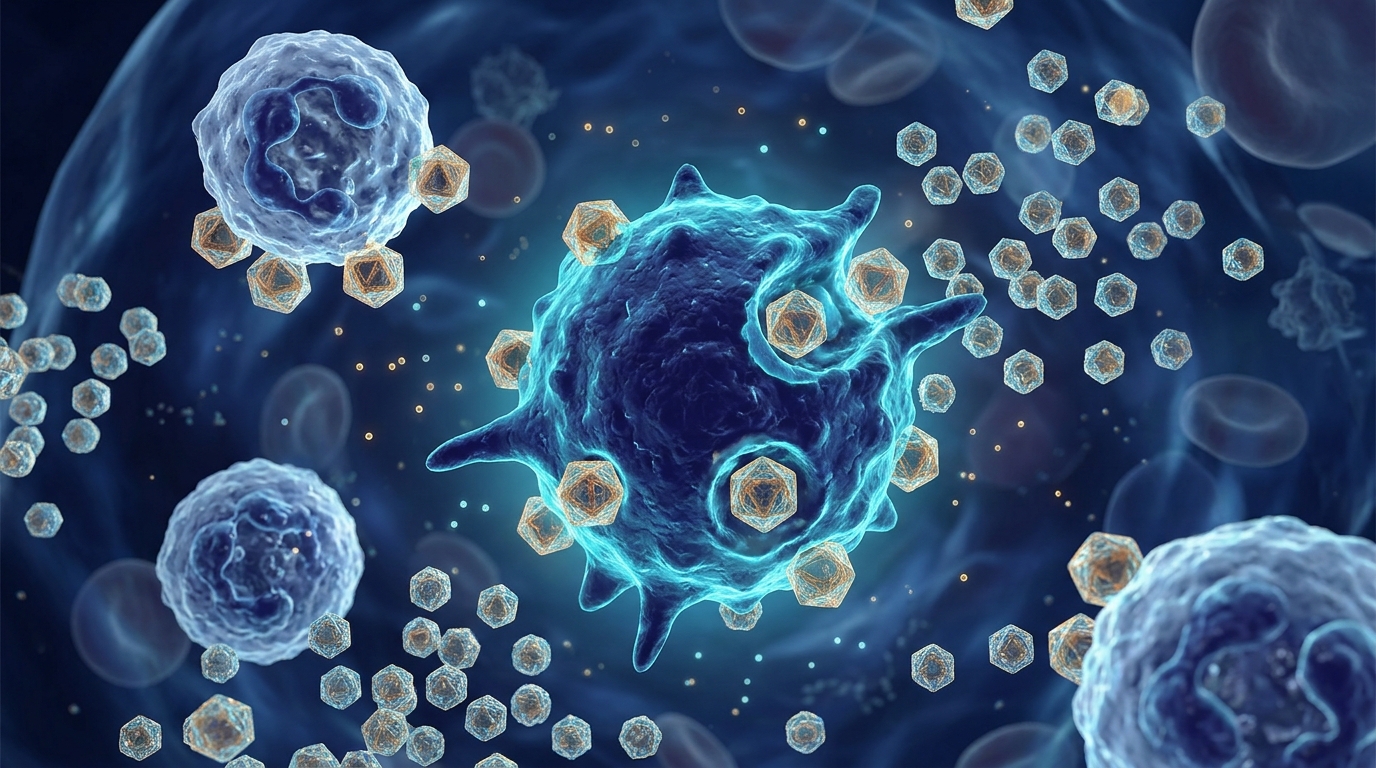
PBMCs contain most of the blood immune cells that are recruited to draining lymph nodes and infection sites during viral respiratory illness: monocytes, dendritic cells and natural killer cells on the innate side, and T and B lymphocytes on the adaptive side. Cells were isolated by Ficoll gradient sedimentation, seeded at half a million cells per culture and infected directly with RV-A16 at multiplicities of infection of 0.1 and 1.0. Cytokine concentrations were measured at two time points chosen to reflect different arms of the response: 24 hours after infection, which primarily captures innate cell activity, and 7 days later, which additionally considers putative T-cell contributions. The study was approved by the Ethics Committee of Ruhr University Bochum, and patients were excluded if they had smoked recently, had lung diseases other than asthma, or suffered systemic inflammatory or autoimmune conditions. Eleven asthma patients were on continuous oral corticosteroids at the time of sampling.
The two study groups were matched for age and sex, with mean ages of roughly 55 years in both, but differed sharply in the expected directions. Severe asthma patients had reduced lung function, with a mean forced expiratory volume in one second of 74.93 percent of predicted versus 107.2 percent in healthy controls, and a lower FEV1/FVC ratio. Their white blood cell differentials showed higher proportions of monocytes and eosinophils and lower lymphocyte fractions. Biomarker measurements confirmed a type-2 skewed population: mean blood eosinophils of 369.8 cells per microlitre, serum total IgE of 923.2 IE per millilitre, FeNO of 51.47 parts per billion, and detectable periostin, TSLP and IL-33. The authors note that because all subjects reported no infection symptoms in the preceding two weeks, the asthma PBMCs may have mirrored a baseline inflammatory status while the healthy cells should have been quiescent.
Even before infection, the cultures diverged. Baseline release of TNFα, IL-6, IL-8 and IFNγ was lower in the asthma PBMCs at 24 hours or 7 days of cultivation, whereas IL-1β was increased and IFNα, CCL2 and CCL5 showed no significant differences. The authors interpret this cautiously. Prior studies have reported elevated TNFα, IL-6 and IL-8 in the serum of severe asthma patients, associations linked to increased circulating neutrophils, which are absent from PBMC cultures. Since TNFα and IL-8 are produced particularly by monocytes, and monocytes were increased in the asthma group, the data suggest that circulating mononuclear cells may not drive the systemic elevation of these cytokines in severe asthma, and that neutrophilic activity may instead dominate. The elevated baseline IL-1β is notable because IL-1β is a key mediator in type-2-low neutrophilic asthma phenotypes and appears to play a role in virus-induced exacerbations.
Upon infection, the gap widened dramatically. In healthy cultures, RV-A16 induced IFNα, IL-1β, TNFα, IL-6, IL-8, CCL2, CCL5 and IFNγ in a dose- and time-dependent manner. In the asthma cultures, the virus induced all of these except IL-1β, but the responses were reduced relative to healthy controls for every cytokine except CCL2. The absolute differences were substantial: at a multiplicity of infection of 1.0 after 24 hours, median IFNα reached 102.2 picograms per millilitre in healthy cultures versus 28.06 in asthma cultures, and the baseline-subtracted induction was 76.42 versus 0.15. TNFα induction at that dose and time point was 236.8 in healthy cells against 4.355 in asthma cells, and IL-6 induction was 713.5 versus 10.27. At 7 days, IFNγ induction at the higher dose was 346.5 in healthy cultures versus 69.10 in asthma cultures. TNFα was suppressed by RV-A16 at the high dose after 7 days in both groups without significant between-group differences, and the virus did not induce GM-CSF, IL-4, IL-5, IL-13 or IL-17 under these conditions.
The researchers then asked whether active viral replication drives these responses. Using RT-qPCR on culture supernatants from eight healthy donors, they detected RV-A16 copy numbers above the input after both 24 hours and 7 days with replication-competent virus, but not with UV-inactivated virus, confirming productive replication in PBMCs. Replication-competent virus induced every cytokine investigated except CCL2 more strongly than UV-inactivated particles, leading the authors to conclude that cytokine release primarily depends on active replication. CCL2, by contrast, appears to be triggered by direct recognition of viral particles or sensing of incoming viral RNA after endocytosis, since inactivated particles still provoked it. The rhinovirus entry receptor ICAM-1 is expressed primarily on monocytes within the PBMC fraction, but also on dendritic cells and at low levels on T, B and NK cells, which is consistent with the observed permissiveness.
Correlating the baseline-subtracted responses with asthma biomarkers produced a pattern the authors interpret as phenotype-specific vulnerability. The IFNα response to RV-A16 correlated positively with serum total IgE but negatively with FeNO, and the CCL5 and IL-6 responses also correlated negatively with FeNO, while IL-1β responses correlated positively with FeNO. The IFNγ response after 7 days correlated positively with blood eosinophils and with serum IL-33. Because FeNO marks active type-2 airway inflammation and IgE marks allergic asthma, the authors carefully speculate that defence against RV-A16 may be more weakened in type-2-high non-allergic than in type-2-high allergic asthma, and that immune cell recruitment may be particularly impaired in type-2-high phenotypes, whereas macrophage-activating cytokine production may be especially impaired in type-2-low disease. They stress, however, that most correlations were weak and should be viewed with caution. No correlations were found with serum periostin or TSLP.
The study has limitations the authors acknowledge. The PBMC approach cannot attribute the reduced response to specific cell types or cell-cell interactions. Rhinovirus replicates most robustly at 33 to 35 degrees Celsius in the nasal epithelium, but PBMCs cannot be cultured at those temperatures without compromising viability, so the experiments ran at 37 degrees Celsius, conditions that may be suboptimal for the virus yet still supported replication and cytokine induction. The data also do not reveal why the cells respond poorly; possible explanations include differences in viral attachment, entry or replication efficiency in specific PBMC subsets, or reduced activity of pattern-recognition receptor pathways due to exhaustion caused by the abnormal inflammatory background of severe asthma. Finally, HRV-C has recently been recognized as the major exacerbation trigger in adults and children, although the authors note that in adults, disease severity, clinical characteristics and systemic steroid use may not differ between HRV-C-positive and other HRV species infections, supporting clinical relevance of their RV-A16 data.
Overall, the authors conclude that defects in circulating immune cells likely contribute to the reduced cytokine response to RV-A16 in severe asthma and may help explain the increased susceptibility to rhinovirus infections and exacerbations in this population. Because the affected molecules, including IFNα, TNFα, IL-6, IL-8, CCL5 and IFNγ, are involved in activating innate and adaptive immune responses, such systemic defects could impair local antiviral defence and delay viral clearance. The team suggests that circulating immune cells might be considered as drug targets to reduce exacerbation rates in severe asthma, adding a systemic dimension to a research field that has focused mainly on airway epithelial cells and local macrophages, where reduced type-I interferon synthesis in rhinovirus-infected asthmatic epithelium had already been reported.
Subject of Research: Reduced cytokine response of circulating immune cells to rhinovirus RV-A16 in severe asthma
Article Title: The Cytokine Response of Circulating Immune Cells to Rhinovirus (RV‐A16) is Reduced in Severe Asthma
Article References: Jamal Jameel, K., Yanik, S. D., Pfeifer, K. R., Weidinger, D., Rohde, S., Struck, B., Bülthoff, E., Bürger, P., Kronsbein, J., Tenbusch, M., & Knobloch, J. (2026). The Cytokine Response of Circulating Immune Cells to Rhinovirus (RV‐A16) is Reduced in Severe Asthma. Journal of Cellular and Molecular Medicine, 30(21), Article e71410. https://doi.org/10.1111/jcmm.71410
Image Credits: AI Generated
DOI: 10.1111/jcmm.71410
Keywords: severe asthma, rhinovirus RV-A16, peripheral blood mononuclear cells, cytokines, interferon, immune response, asthma exacerbations, type-2 inflammation, FeNO, viral replication, ex vivo culture, biomarkers
News Source: Kristina Jarvis. (November 4, 2026). Severe Asthma Weakens the Antiviral Cytokine Response of Blood Immune Cells to Rhinovirus. Scienmag.