Getting RNA drugs past the defenses of the central nervous system has long frustrated researchers, because the barriers that shield the brain from harmful molecules also block potentially therapeutic ones. A team reporting in Nature Nanotechnology now describes a way around this obstacle. The researchers analyzed the pharmaceutical profiles of more than 100 drugs that act on the central nervous system and identified hydroxyzine, an antihistamine known to reach the brain, as a promising molecular scaffold for designing ionizable lipids with improved brain-targeting properties.
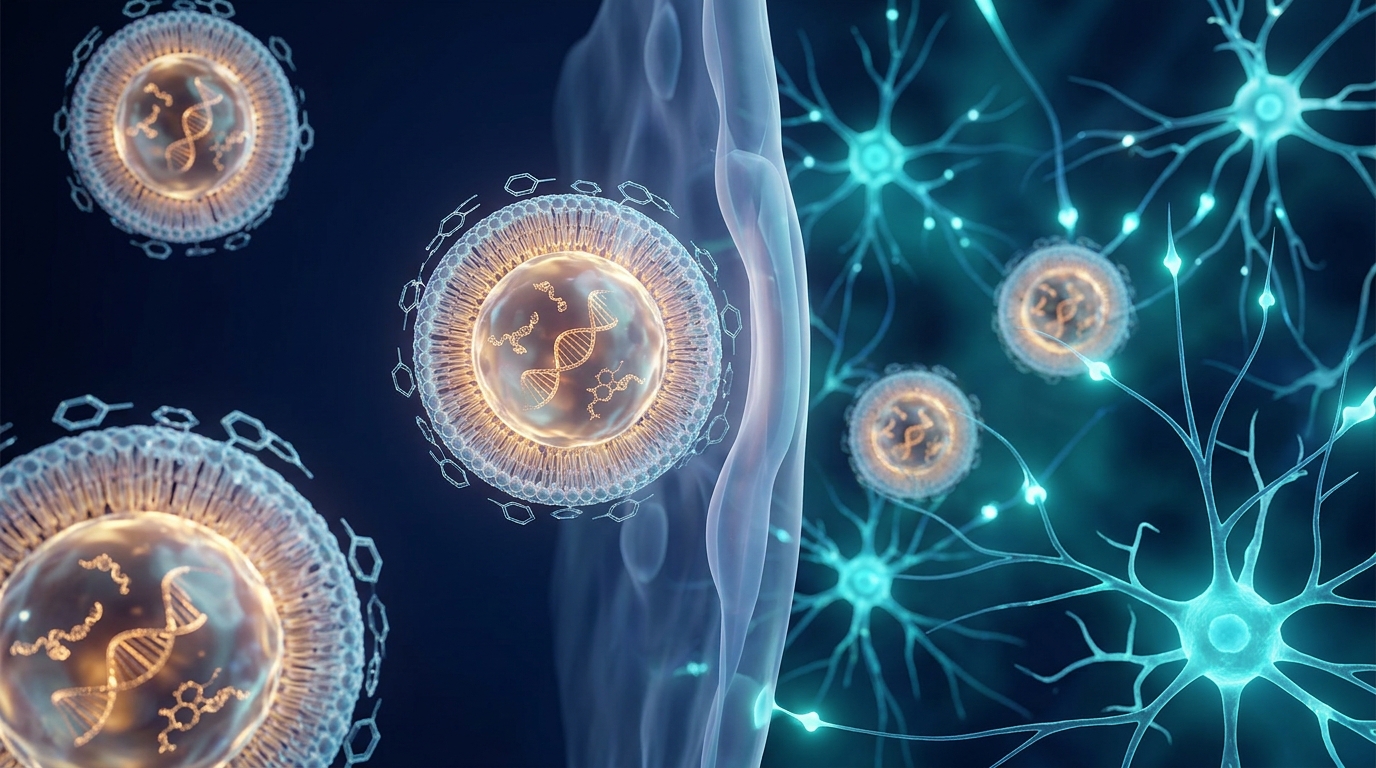
Ionizable lipids are the key components of lipid nanoparticles, the delivery vehicles made famous by mRNA vaccines. By borrowing the chemical architecture of hydroxyzine, the team engineered a lipid designated HX1 and built lipid nanoparticles around it. In animal studies, these HX1 nanoparticles achieved robust delivery of messenger RNA to the brain, moving their cargo across central nervous system barriers through multiple trafficking pathways rather than a single route.
The platform’s versatility emerged in a series of experiments documented in the study. In one, the nanoparticles carried cre mRNA into mouse brains, demonstrating functional delivery of an mRNA payload. In another, they co-delivered CRISPR-Cas9 mRNA together with a guide RNA, which enabled efficient gene editing directly in mouse brains. This co-delivery capability matters because genome editing requires two components to arrive in the same cells: the instructions for making the Cas9 enzyme and the RNA guide that tells it where to cut.
The researchers also extended their work beyond rodents. When HX1 nanoparticles loaded with luciferase mRNA, a common reporter molecule that produces a detectable light signal, were administered to a non-human primate, the mRNA was effectively delivered to the animal’s brain.
A further experiment pointed toward a potential therapeutic application. The team loaded HX1 nanoparticles with mRNA encoding Il10, an interleukin protein involved in regulating inflammation, and administered them to mice before radiation exposure. This preventive treatment mitigated radiation-induced brain injury in the animals.
The study’s authors, including Meng Tian, Leiming Wang and Yizhou Dong, with co-authors spanning institutions and including researchers working with non-human primates, framed the work as establishing HX1 lipid nanoparticles as a promising translational platform for delivering therapeutic mRNAs and genome-editing components to the brain. Their figure set traces the logical arc of the project: from the rational analysis of more than 100 central nervous system medications, through evaluations of the hydroxyzine-derived nanoparticles for brain mRNA delivery, to gene editing, primate studies and radioprotection experiments.
Several caveats accompany these findings. All of the reported results come from animal models: mice for the mRNA delivery, gene editing and radioprotection experiments, and a single non-human primate for the luciferase mRNA study. The abstract describes the Il10 result as mitigation of injury in a preventive setting, not as a demonstrated treatment after injury has occurred. Whether HX1 nanoparticles can safely and effectively deliver therapeutic payloads in humans, at what doses, and with what immune consequences remain questions for future research.
Even so, the study adds a concrete example to a growing effort to extend the reach of RNA therapeutics beyond tissues that are easy to access.
Subject of Research: Design of hydroxyzine-derived lipid nanoparticles for delivering mRNA and gene-editing components across central nervous system barriers in animal models
Article Title: Rational design of lipid nanoparticles for brain delivery of RNA therapeutics
Article References: Tian, M., Wang, L., Liu, Z., Cao, D., Yu, C., Bennett, J. L., Bliss-Moreau, E., Wang, C., Kang, D. D., Xue, Y., Zhong, Y., Wang, S., Li, H., Hou, X., Deng, B., & Dong, Y. (2026). Rational design of lipid nanoparticles for brain delivery of RNA therapeutics. Nature Nanotechnology. https://doi.org/10.1038/s41565-026-02326-7
Image Credits: AI Generated
DOI: 10.1038/s41565-026-02326-7
Keywords: lipid nanoparticles, mRNA delivery, brain delivery, hydroxyzine, ionizable lipids, CRISPR gene editing, blood-brain barrier, non-human primate, radiation-induced brain injury, RNA therapeutics, central nervous system, Il10 mRNA
News Source: Juliet Wilcox. (November 3, 2026). Antihistamine-inspired lipid nanoparticles ferry mRNA and gene-editing tools into the brain. Scienmag.