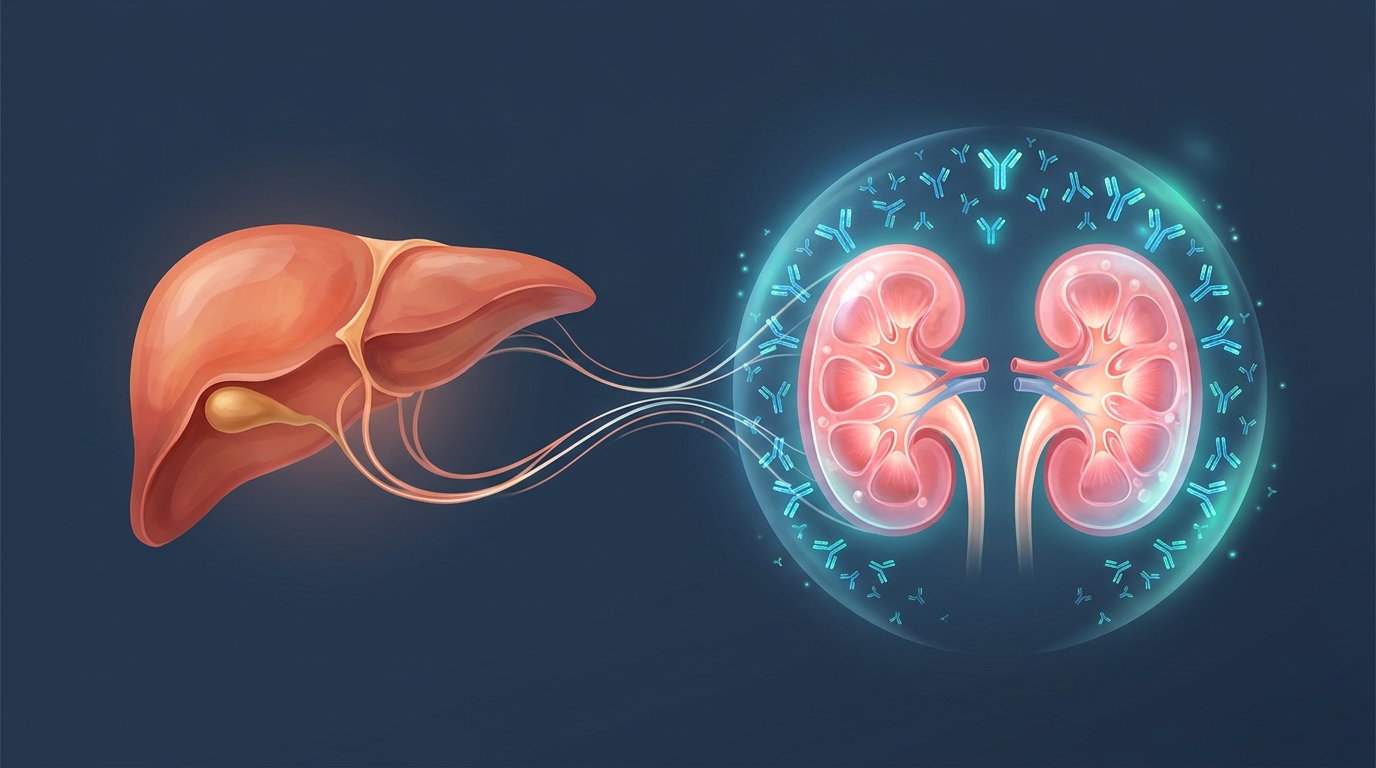
Adult liver transplant recipients with impaired kidney function before surgery showed early and sustained improvement in renal function when they received basiliximab induction, according to a retrospective multicentre cohort study conducted at two Australian transplant centres between 2018 and 2022. The findings, drawn from 405 deceased donor liver transplant recipients, suggest that delaying calcineurin inhibitor initiation with basiliximab may support renal recovery in patients at high risk of post-transplant kidney injury, without increasing rejection or graft loss.
Basiliximab, an interleukin-2 receptor antagonist, is used as a renal-sparing strategy to delay the initiation of calcineurin inhibitors in liver transplant recipients who have pre-transplant renal impairment and are at risk of post-transplant acute kidney injury and progression to chronic kidney disease. However, data on long-term renal outcomes in high-risk recipients have remained limited. In the study, basiliximab was administered at clinician discretion based on pre-transplant renal function and anticipated acute kidney injury risk, and longitudinal changes in serum creatinine from baseline to day 1 peak and at 3, 6, 12 and 24 months were compared between groups.
Of the 405 recipients, 232, or 57 percent, received basiliximab. These patients represented a higher-risk cohort, with a significantly higher baseline serum creatinine and Model for End-Stage Liver Disease score, and greater prevalence of hepatorenal syndrome-acute kidney injury, pre-transplant terlipressin use, vasopressor support and renal replacement therapy. Despite this higher baseline risk, basiliximab recipients showed early and sustained improvement in adjusted serum creatinine from 3 months post-transplantation onwards, while adjusted serum creatinine remained unchanged in the non-basiliximab group.
The basiliximab group was also independently more likely to achieve renal dysfunction resolution at 12 and 24 months. Secondary outcomes included renal dysfunction resolution, post-transplant renal replacement therapy, biopsy-proven rejection, graft survival and patient survival. There were no differences between groups in post-transplant renal replacement therapy, biopsy-proven rejection, graft survival or patient survival, indicating that the renal-sparing approach did not come at the cost of immunological or graft-related complications in this cohort.
The study was retrospective in design, and basiliximab use was assigned at clinician discretion rather than randomly, so the treated group’s better renal trajectories may partly reflect differences in patient characteristics or clinical decision-making beyond the risk factors adjusted for in the analysis. The authors report adjusted analyses, but unmeasured confounding cannot be excluded in observational comparisons of this kind. The findings are specific to adult deceased donor liver transplant recipients at two Australian centres during the study period and should not be generalised to living donor transplantation or to centres with different immunosuppression protocols.
By enabling a renal-sparing immunosuppression strategy, basiliximab induction facilitated sustained renal recovery post-transplant without increased rejection or graft loss in high-risk recipients, the authors conclude. The results add to the limited long-term evidence on basiliximab induction in this population and may inform future prospective evaluation of calcineurin inhibitor delay in recipients with pre-transplant renal impairment.
Subject of Research: Renal outcomes of basiliximab induction in high-risk adult liver transplant recipients
Article Title: Basiliximab induction and renal recovery after liver transplantation in high-risk recipients
Article References: Liu, D., Chan, A., Tan, K., Wigg, A. J., Ramachandran, J., Majumdar, A., Sinclair, M., & Testro, A. (2026). Basiliximab induction and renal recovery after liver transplantation in high-risk recipients. Frontiers in Transplantation, 5, Article 1970957. https://doi.org/10.3389/frtra.2026.1970957
Image Credits: AI Generated
DOI: 10.3389/frtra.2026.1970957
Keywords: liver transplantation, basiliximab, renal recovery, acute kidney injury, serum creatinine, calcineurin inhibitors, immunosuppression, graft survival, hepatorenal syndrome, retrospective cohort study, induction, renal
News Source: Ophelia Keating. (November 3, 2026). Basiliximab induction linked to sustained renal recovery after liver transplantation in high-risk recipients. Scienmag.