• HOME
  • NEWS
  • EXPLORE
    • CAREER
      • Companies
      • Jobs
    • EVENTS
    • iGEM
      • News
      • Team
    • PHOTOS
    • VIDEO
    • WIKI
  • BLOG
  • COMMUNITY
    • FACEBOOK
    • INSTAGRAM
    • TWITTER
Saturday, February 7, 2026
BIOENGINEER.ORG
No Result
View All Result
  • Login
  • HOME
  • NEWS
  • EXPLORE
    • CAREER
      • Companies
      • Jobs
        • Lecturer
        • PhD Studentship
        • Postdoc
        • Research Assistant
    • EVENTS
    • iGEM
      • News
      • Team
    • PHOTOS
    • VIDEO
    • WIKI
  • BLOG
  • COMMUNITY
    • FACEBOOK
    • INSTAGRAM
    • TWITTER
  • HOME
  • NEWS
  • EXPLORE
    • CAREER
      • Companies
      • Jobs
        • Lecturer
        • PhD Studentship
        • Postdoc
        • Research Assistant
    • EVENTS
    • iGEM
      • News
      • Team
    • PHOTOS
    • VIDEO
    • WIKI
  • BLOG
  • COMMUNITY
    • FACEBOOK
    • INSTAGRAM
    • TWITTER
No Result
View All Result
Bioengineer.org
No Result
View All Result
Home NEWS Science News

New technique reduces side-effects, improves delivery of chemotherapy nanodrugs

Bioengineer by Bioengineer
November 28, 2017
in Science News
Reading Time: 2 mins read
0
Share on FacebookShare on TwitterShare on LinkedinShare on RedditShare on Telegram
IMAGE

Credit: Carnegie Mellon University

Carnegie Mellon University researchers have developed a new method for delivering chemotherapy nanodrugs that increases the drugs' bioavailability and reduces side-effects.

Their study, published online in Scientific Reports, shows that administering an FDA-approved nutrition source prior to chemotherapy can reduce the amount of the toxic drugs that settle in the spleen, liver and kidneys.

Nanodrugs, drugs attached to tiny biocompatible particles, show great promise in treatment of a number of diseases, including cancer. Delivery of these drugs, however, is not very efficient — only about 0.7 percent of chemotherapy nanodrugs reach their target tumor cells. The remainder are absorbed by other cells, including those in the liver, spleen and kidneys. When the drugs build up in these organs, they cause toxicity and side-effects that negatively impact a patient's quality of life.

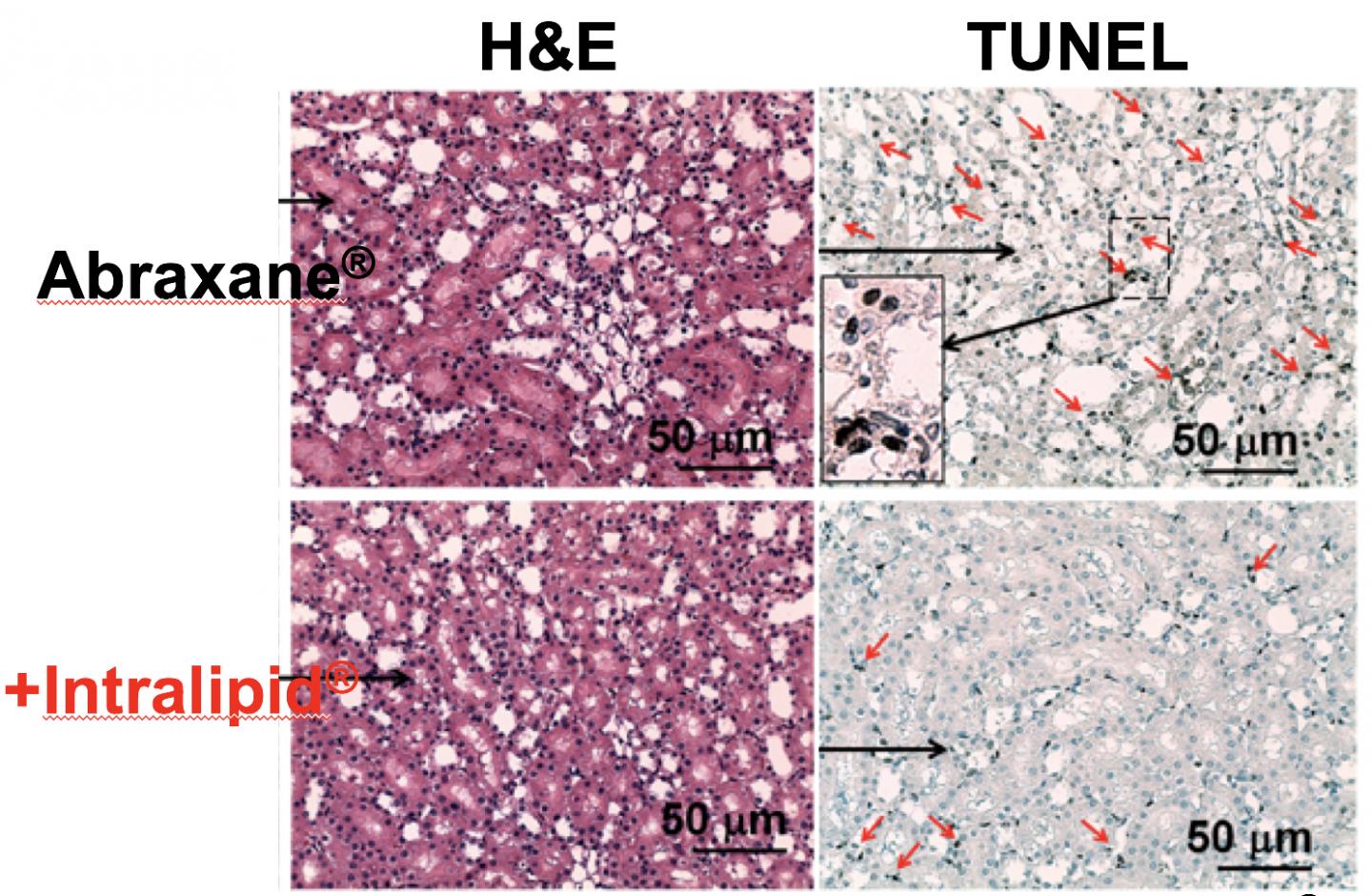
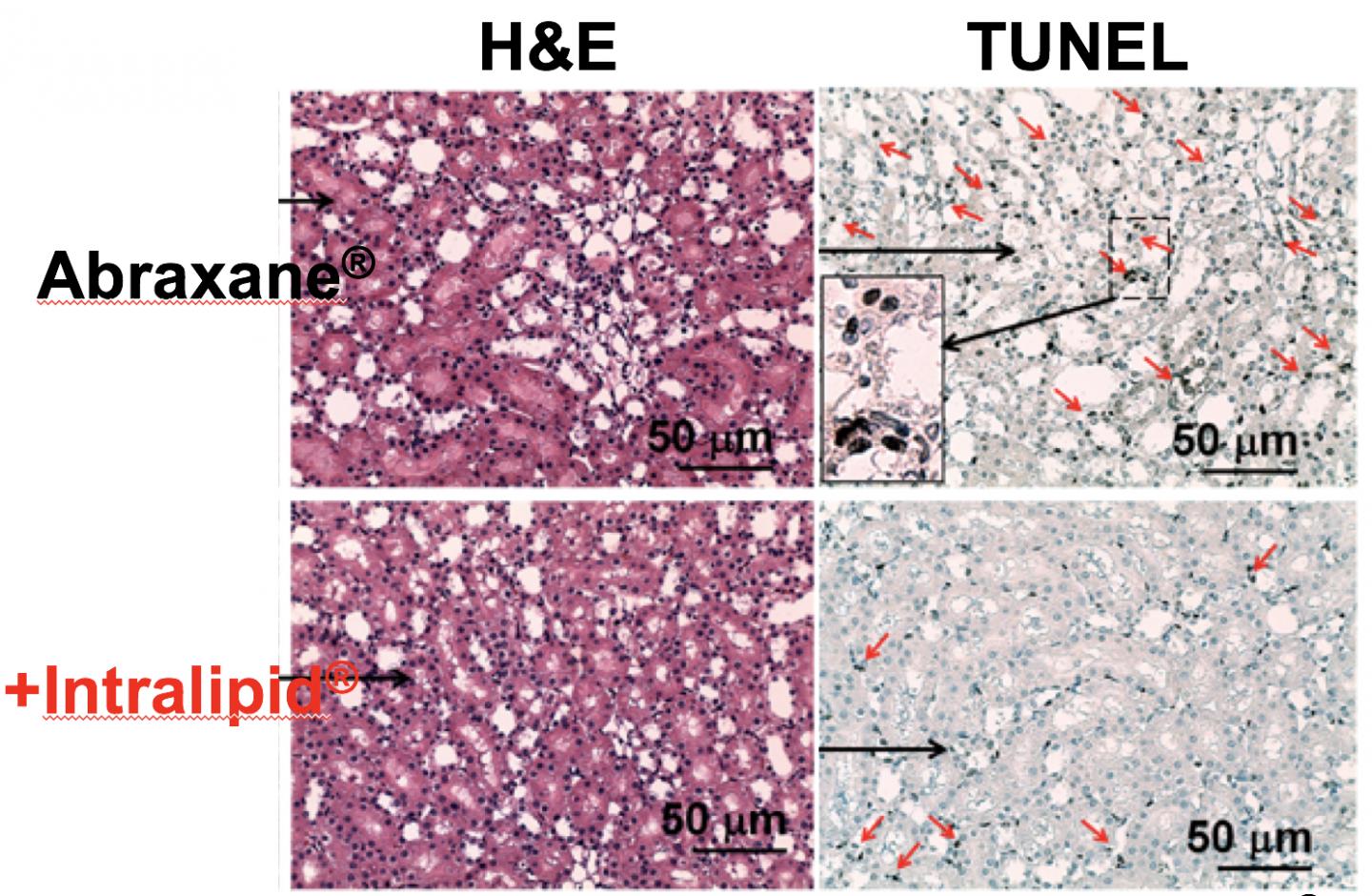
Chien Ho, professor of biological sciences at Carnegie Mellon University, and his colleagues have developed a novel way to improve delivery of chemotherapy nanodrugs by using Intralipid®, an FDA-approved nutrition source to temporarily blunt the reticuloendothelial system — a network of cells and tissues found throughout the body, including in the blood, lymph nodes, spleen and liver, that play an important role in the immune system.

Ho and colleagues tested their technique in a rat model of cancer using three FDA-approved chemotherapy nanodrugs, Abraxane®, Marqibo® and Onivyde®, and one experimental platinum-based anti-cancer nanodrug. In the study, they administered Intralipid one hour before giving the animal a chemotherapy nanodrug. They found that their method reduced the amount of the drug that was found in the liver, spleen and kidneys and reduced the drugs' toxic side-effects. They also found that more of the drug was available to attack tumor cells. Additionally, the Intralipid treatment had no harmful impact on tumor growth or drug efficacy.

The researchers believe that their drug delivery methodology can be applied to a variety of nanodrugs without any modifications to the drugs.

"This methodology could have a major impact in the delivery of nanodrugs not only for patients undergoing chemotherapy for cancer treatment but also to those being treated with nanodrugs for other conditions," said Ho.

###

Media Contact

Jocelyn Duffy
[email protected]
412-268-9982
@CMUScience

http://www.cmu.edu

Original Source

https://www.cmu.edu/mcs/news-events/2017/1128_intralipid-chemo.html

Share13Tweet8Share2ShareShareShare2

Related Posts

Evaluating Pediatric Emergency Care Quality in Ethiopia

February 7, 2026

TPMT Expression Predictions Linked to Azathioprine Side Effects

February 7, 2026

Improving Dementia Care with Enhanced Activity Kits

February 7, 2026

Decoding Prostate Cancer Origins via snFLARE-seq, mxFRIZNGRND

February 7, 2026
Please login to join discussion

POPULAR NEWS

  • Robotic Ureteral Reconstruction: A Novel Approach

    Robotic Ureteral Reconstruction: A Novel Approach

    82 shares
    Share 33 Tweet 21
  • Digital Privacy: Health Data Control in Incarceration

    63 shares
    Share 25 Tweet 16
  • Study Reveals Lipid Accumulation in ME/CFS Cells

    57 shares
    Share 23 Tweet 14
  • Breakthrough in RNA Research Accelerates Medical Innovations Timeline

    53 shares
    Share 21 Tweet 13

About

We bring you the latest biotechnology news from best research centers and universities around the world. Check our website.

Follow us

Recent News

Evaluating Pediatric Emergency Care Quality in Ethiopia

TPMT Expression Predictions Linked to Azathioprine Side Effects

Improving Dementia Care with Enhanced Activity Kits

Subscribe to Blog via Email

Success! An email was just sent to confirm your subscription. Please find the email now and click 'Confirm' to start subscribing.

Join 73 other subscribers
  • Contact Us

Bioengineer.org © Copyright 2023 All Rights Reserved.

Welcome Back!

Login to your account below

Forgotten Password?

Retrieve your password

Please enter your username or email address to reset your password.

Log In
No Result
View All Result
  • Homepages
    • Home Page 1
    • Home Page 2
  • News
  • National
  • Business
  • Health
  • Lifestyle
  • Science

Bioengineer.org © Copyright 2023 All Rights Reserved.