• HOME
  • NEWS
  • EXPLORE
    • CAREER
      • Companies
      • Jobs
    • EVENTS
    • iGEM
      • News
      • Team
    • PHOTOS
    • VIDEO
    • WIKI
  • BLOG
  • COMMUNITY
    • FACEBOOK
    • INSTAGRAM
    • TWITTER
Saturday, July 18, 2026
BIOENGINEER.ORG
No Result
View All Result
  • Login
  • HOME
  • NEWS
  • EXPLORE
    • CAREER
      • Companies
      • Jobs
        • Lecturer
        • PhD Studentship
        • Postdoc
        • Research Assistant
    • EVENTS
    • iGEM
      • News
      • Team
    • PHOTOS
    • VIDEO
    • WIKI
  • BLOG
  • COMMUNITY
    • FACEBOOK
    • INSTAGRAM
    • TWITTER
  • HOME
  • NEWS
  • EXPLORE
    • CAREER
      • Companies
      • Jobs
        • Lecturer
        • PhD Studentship
        • Postdoc
        • Research Assistant
    • EVENTS
    • iGEM
      • News
      • Team
    • PHOTOS
    • VIDEO
    • WIKI
  • BLOG
  • COMMUNITY
    • FACEBOOK
    • INSTAGRAM
    • TWITTER
No Result
View All Result
Bioengineer.org
No Result
View All Result
Home NEWS Science News

New technique reduces side-effects, improves delivery of chemotherapy nanodrugs

Bioengineer by Bioengineer
November 28, 2017
in Science News
Reading Time: 2 mins read
0
Share on FacebookShare on TwitterShare on LinkedinShare on RedditShare on Telegram
IMAGE

Credit: Carnegie Mellon University

Carnegie Mellon University researchers have developed a new method for delivering chemotherapy nanodrugs that increases the drugs' bioavailability and reduces side-effects.

Their study, published online in Scientific Reports, shows that administering an FDA-approved nutrition source prior to chemotherapy can reduce the amount of the toxic drugs that settle in the spleen, liver and kidneys.

Nanodrugs, drugs attached to tiny biocompatible particles, show great promise in treatment of a number of diseases, including cancer. Delivery of these drugs, however, is not very efficient — only about 0.7 percent of chemotherapy nanodrugs reach their target tumor cells. The remainder are absorbed by other cells, including those in the liver, spleen and kidneys. When the drugs build up in these organs, they cause toxicity and side-effects that negatively impact a patient's quality of life.

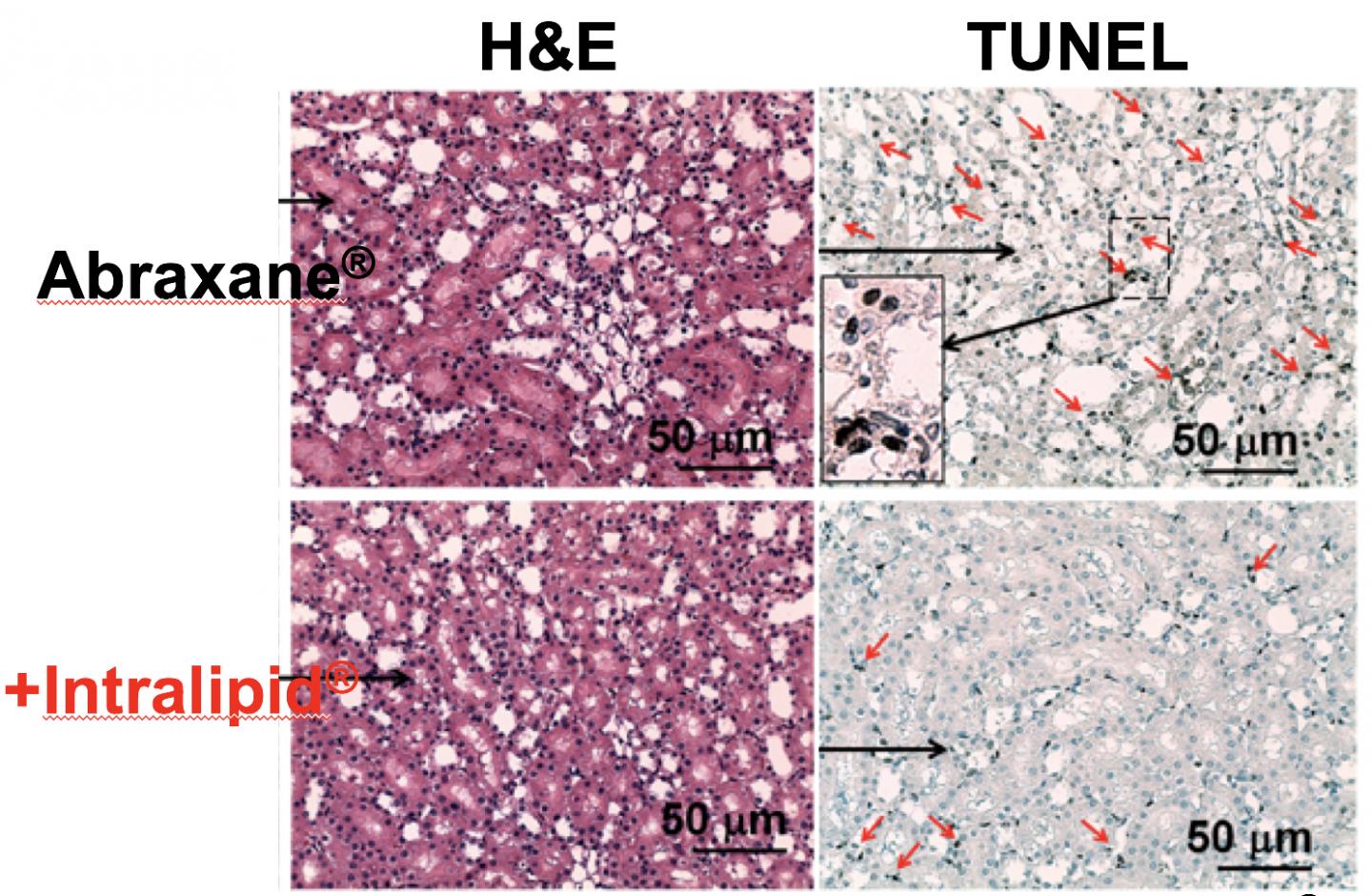
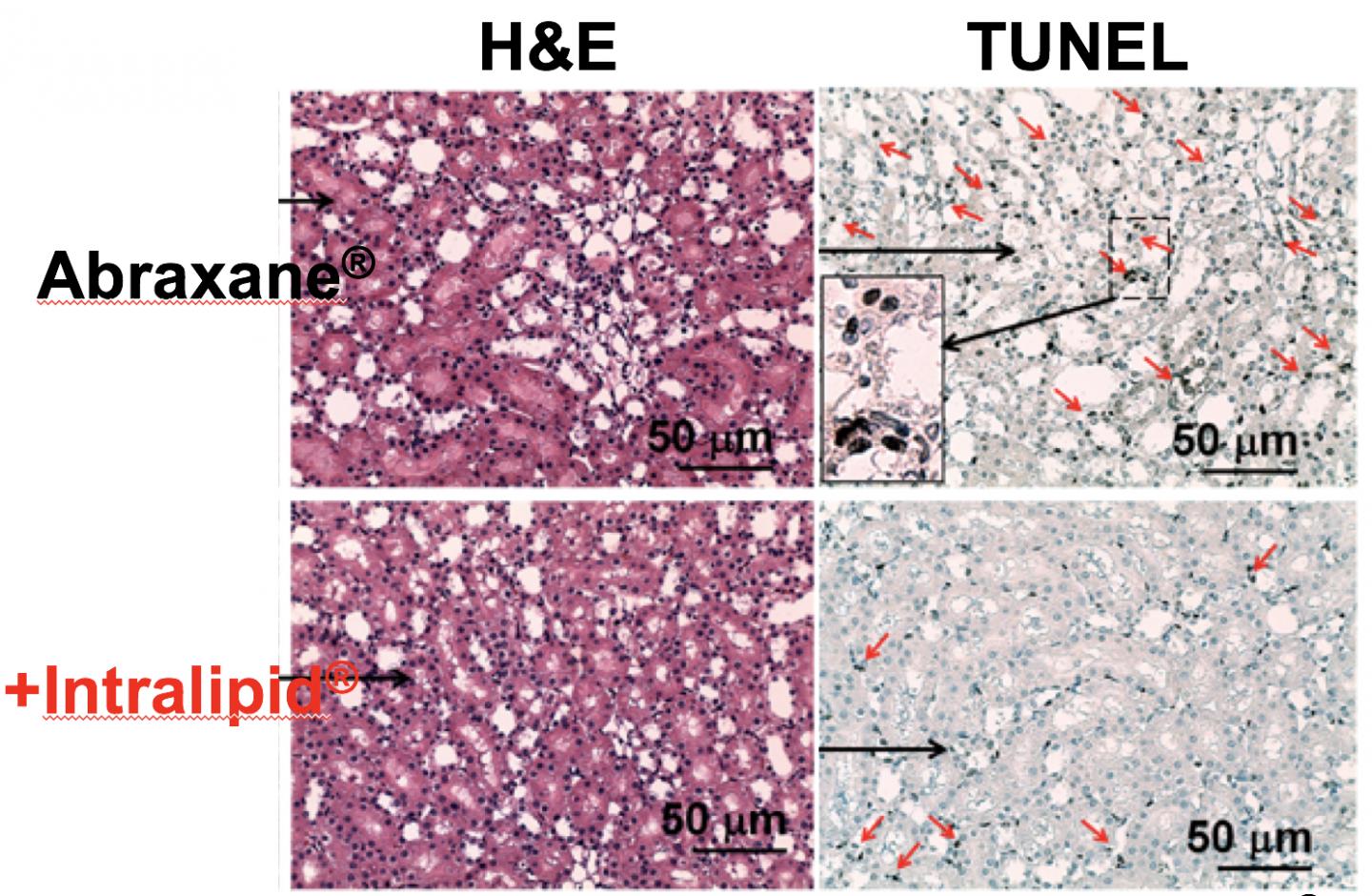
Chien Ho, professor of biological sciences at Carnegie Mellon University, and his colleagues have developed a novel way to improve delivery of chemotherapy nanodrugs by using Intralipid®, an FDA-approved nutrition source to temporarily blunt the reticuloendothelial system — a network of cells and tissues found throughout the body, including in the blood, lymph nodes, spleen and liver, that play an important role in the immune system.

Ho and colleagues tested their technique in a rat model of cancer using three FDA-approved chemotherapy nanodrugs, Abraxane®, Marqibo® and Onivyde®, and one experimental platinum-based anti-cancer nanodrug. In the study, they administered Intralipid one hour before giving the animal a chemotherapy nanodrug. They found that their method reduced the amount of the drug that was found in the liver, spleen and kidneys and reduced the drugs' toxic side-effects. They also found that more of the drug was available to attack tumor cells. Additionally, the Intralipid treatment had no harmful impact on tumor growth or drug efficacy.

The researchers believe that their drug delivery methodology can be applied to a variety of nanodrugs without any modifications to the drugs.

"This methodology could have a major impact in the delivery of nanodrugs not only for patients undergoing chemotherapy for cancer treatment but also to those being treated with nanodrugs for other conditions," said Ho.

###

Media Contact

Jocelyn Duffy
[email protected]
412-268-9982
@CMUScience

http://www.cmu.edu

Original Source

https://www.cmu.edu/mcs/news-events/2017/1128_intralipid-chemo.html

Share13Tweet8Share2ShareShareShare2

Related Posts

Factors Behind Life Satisfaction in China’s Older Adults, Study of 1,578

July 18, 2026
Delayed vs Early Cord Clamping in Preterm Twins: Echocardiography Study

Delayed vs Early Cord Clamping in Preterm Twins: Echocardiography Study

July 18, 2026

Omics and AI in Pediatric Environmental Health: Tools, Challenges, Cohort Insights

July 18, 2026

Randomized Phase II Trial Tests Nivolumab Then Nivolumab-Ipilimumab or Docetaxel

July 18, 2026
Please login to join discussion

POPULAR NEWS

  • A painless adhesive

    49 shares
    Share 20 Tweet 12
  • Groundbreaking Discovery: New Shark Species Identified for the First Time

    34 shares
    Share 14 Tweet 9
  • 研究人员开发认知工具包,实现阿尔茨海默症早期检测

    50 shares
    Share 20 Tweet 13
  • A varied menu

    51 shares
    Share 22 Tweet 12

About

We bring you the latest biotechnology news from best research centers and universities around the world. Check our website.

Follow us

Recent News

Factors Behind Life Satisfaction in China’s Older Adults, Study of 1,578

Delayed vs Early Cord Clamping in Preterm Twins: Echocardiography Study

Omics and AI in Pediatric Environmental Health: Tools, Challenges, Cohort Insights

Subscribe to Blog via Email

Enter your email address to subscribe to this blog and receive notifications of new posts by email.

Join 85 other subscribers
  • Contact Us

Bioengineer.org © Copyright 2023 All Rights Reserved.

Welcome Back!

Login to your account below

Forgotten Password?

Retrieve your password

Please enter your username or email address to reset your password.

Log In
No Result
View All Result
  • Homepages
    • Home Page 1
    • Home Page 2
  • News
  • National
  • Business
  • Health
  • Lifestyle
  • Science

Bioengineer.org © Copyright 2023 All Rights Reserved.