


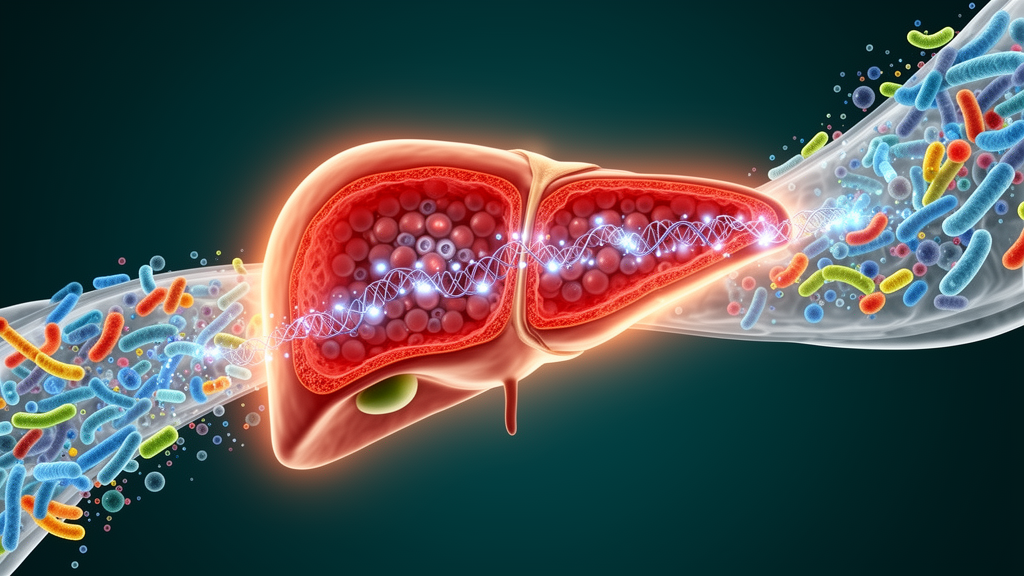
A new mouse study published in Cell Biology and Toxicology reports that the gut microbiota acts as a critical mediator of methamphetamine-induced hepatotoxicity, linking intestinal microbial disruption to cholestatic liver injury through the PPARα/NF-κB signaling axis.
The research team, led by Li-Jian Chen and Qi Wang, exposed mice to methamphetamine (METH) and tracked changes in both the gut microbial community and liver health. METH exposure significantly disrupted the composition of the gut microbiome, a disturbance captured by an elevated microbial dysbiosis index (MDI) and marked by the opportunistic expansion of bacteria from the Lactobacillaceae family.
That microbial shift did not stay confined to the gut.
The mechanistic core of the study lies in two transcriptional regulators. METH exposure suppressed hepatic PPARα while simultaneously activating the NF-κB pathway, evidenced by increased NF-κB phosphorylation. This combination removed a brake on inflammatory signaling in the liver at the same time that gut-derived LPS was arriving to fuel it.
To test whether the microbiome was genuinely causal rather than a bystander, the researchers ran two complementary experiments. Pretreating mice with broad-spectrum antibiotics, which deplete the gut microbiota, attenuated both hepatic damage and inflammatory signaling after METH exposure. Conversely, fecal microbiota transplantation (FMT) from METH-treated donors into naive, untreated recipients recapitulated the liver injury phenotype, confirming that the transplanted dysbiotic community was sufficient to transmit the damage.
The team also explored potential interventions. Transplanting fecal material from healthy donors restored a more balanced microbial composition, and pharmacological activation of PPARα with the agonist WY14643 effectively restored PPARα expression, suppressed NF-κB activation, and alleviated liver injury. Both healthy FMT and PPARα agonism therefore emerged as preventive strategies in the mouse model.
Together, the findings establish a gut microbiota–PPARα/NF-κB axis as a central driver of METH-induced hepatotoxicity. The authors suggest that preemptive microbiota modulation could be a promising intervention strategy against METH-associated complications, though the work so far is confined to animal models and pretreatment paradigms rather than established human therapy.
Several caveats frame the results. The study was conducted in mice, and the published version is an early-release, peer-reviewed accepted manuscript that remains subject to further editorial edits before the final Version of Record. Whether antibiotic pretreatment, fecal transplantation, or PPARα agonists could safely prevent liver injury in people who use methamphetamine remains untested, and translating microbiota-targeted interventions from rodents to humans carries well-known uncertainties.
Subject of Research: Gut microbiota mediation of methamphetamine-induced liver injury via the PPARα/NF-κB pathway in mice
Article Title: The gut microbiota mediates METH-induced hepatotoxicity via the PPARα/NF-κB pathway
Article References: Chen, L.-J., Zhao, W., Chen, Z.-J., Liu, J.-F., Wei, Q.-J., Zhang, K.-K., Tao, S.-H., & Wang, Q. (2026). The gut microbiota mediates METH-induced hepatotoxicity via the PPARα/NF-κB pathway. Cell Biology and Toxicology. https://doi.org/10.1007/s10565-026-10281-1
Image Credits: AI Generated
DOI: 10.1007/s10565-026-10281-1
Keywords: methamphetamine, gut microbiota, hepatotoxicity, PPARα, NF-κB, gut-liver axis, LPS translocation, fecal microbiota transplantation, cholestasis, intestinal permeability, WY14643, mouse study
News Source: Morgan Morrow. (October 30, 2026). Gut Microbes Drive Methamphetamine Liver Damage Through PPARα/NF-κB Pathway. Scienmag.



