


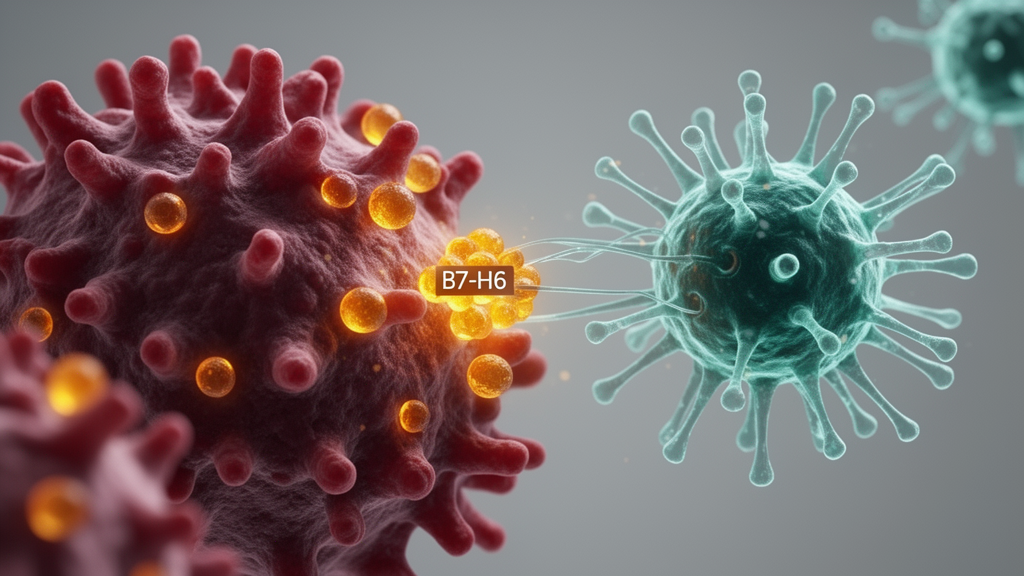
A protein better known for its role in alerting the immune system to tumors may also be pulling hidden levers inside cancer cells. New research published in Diagnostic Pathology reports that B7-H6, an immune checkpoint protein, is expressed on tumor cells and on tumor-infiltrating leukocytes in metastatic clear cell renal cell carcinoma, and that its presence is linked to more aggressive disease and shorter survival in patients with this cancer.
The new study, led by Esther Rey-Iborra, Maite Emaldi and colleagues including senior author Caroline E. Nunes-Xavier, focused on B7-H6, also known as NCR3LG1. This protein belongs to the B7 family of immunomodulatory proteins and serves as a ligand for NKp30, a receptor found on natural killer cells that helps trigger their anti-tumor activity.
B7-H6's structure extends beyond its immune-related role. Beyond the extracellular domain that engages NKp30, the transmembrane protein carries a putative immunoreceptor tyrosine-based inhibitory motif, or ITIM, as well as SH2- and SH3-binding motifs within its cytoplasmic domain. These intracellular features suggested to the researchers that B7-H6 might not simply sit on the cell surface as a passive ligand, but could actively participate in signaling inside the cancer cell itself.
To investigate, the team examined the expression and functional impact of B7-H6 in metastatic clear cell renal cell carcinoma. They detected the protein on tumor cells as well as on tumor-infiltrating leukocytes. When they correlated this expression with clinical features, a consistent pattern emerged: B7-H6 expression on both tumor cells and tumor-infiltrating leukocytes in the primary tumor was associated with synchronous metastasis, with p values of 0.003 and 0.005 respectively, and with lymph node metastasis, with p values of 0.015 and 0.001 respectively.
Survival analysis reinforced the clinical significance of these findings. Kaplan-Meier analysis revealed that B7-H6 expression on tumor cells was associated with reduced overall survival in metastatic clear cell renal cell carcinoma, with a p value of 0.016. In other words, patients whose tumors carried detectable B7-H6 on the malignant cells themselves tended to fare worse, positioning the protein as a potential marker of aggressive disease.
Association alone does not establish function, so the researchers turned to laboratory experiments to test whether B7-H6 actively contributes to cancer cell behavior. Using RNA interference to silence B7-H6 in renal cancer cell lines, they observed a decrease in cell viability in both two-dimensional and three-dimensional culture models.
The team then took the opposite approach, ectopically overexpressing full-length B7-H6 protein in cells. This enhanced the transcriptional activity of three signaling programs: AP-1, or Activating Protein-1; G-CSF, Granulocyte-Colony Stimulating Factor; and NF-κB, Nuclear Factor Kappa-light-chain-enhancer of activated B cells.
Crucially, the experiments also pinpointed where in the protein these effects arise. When the researchers truncated the intracellular domain of B7-H6, the enhancement of AP-1, G-CSF and NF-κB transcriptional activity was diminished. This indicates that the cytoplasmic tail, with its ITIM motif and SH2- and SH3-binding motifs, is the part of the protein that modulates intracellular signaling, supporting the idea that B7-H6 acts from within the cell as well as at its surface.
Taken together, the results suggest a dual identity for B7-H6 in metastatic kidney cancer. Externally, it interacts with the NKp30 receptor on natural killer cells as part of the immune dialogue between tumor and host. Internally, its cytoplasmic domain appears to feed oncogenic signaling pathways that promote cancer cell survival and transcriptional programs linked to progression. The study’s authors conclude that these findings provide novel insights into the role of B7-H6 in cancer progression and suggest that targeting the protein may represent a promising therapeutic strategy to complement current anticancer treatments.
As with any early-stage study, the findings come with caveats. The article was shared early as a peer-reviewed, accepted manuscript that remains subject to further edits before the final version of record. Even so, the convergence of clinical correlation, loss-of-function and gain-of-function evidence makes B7-H6 a protein worth watching, both as a biomarker of aggressive metastatic kidney cancer and as a candidate target for future therapies aimed at stripping tumors of one of their signaling advantages.
Subject of Research: The role of the immune checkpoint protein B7-H6 in oncogenic signaling and metastatic clear cell renal cell carcinoma
Article Title: B7-H6 orchestrates oncogenic signaling and represents a therapeutic vulnerability in metastatic clear cell renal cell carcinoma
Article References: Rey-Iborra, E., Emaldi, M., Mosteiro, L., Lecumberri, D., López, J. I., Pulido, R., & Nunes-Xavier, C. E. (2026). B7-H6 orchestrates oncogenic signaling and represents a therapeutic vulnerability in metastatic clear cell renal cell carcinoma. Diagnostic Pathology. https://doi.org/10.1186/s13000-026-01853-0
Image Credits: AI Generated
DOI: 10.1186/s13000-026-01853-0
Keywords: B7-H6, clear cell renal cell carcinoma, kidney cancer, immune checkpoint, NKp30, natural killer cells, metastasis, AP-1, NF-κB, G-CSF, tumor-infiltrating leukocytes, overall survival
News Source: Nathaniel Bowman. (October 30, 2026). Immune checkpoint protein B7-H6 emerges as a driver and vulnerability in metastatic kidney cancer. Scienmag.



