


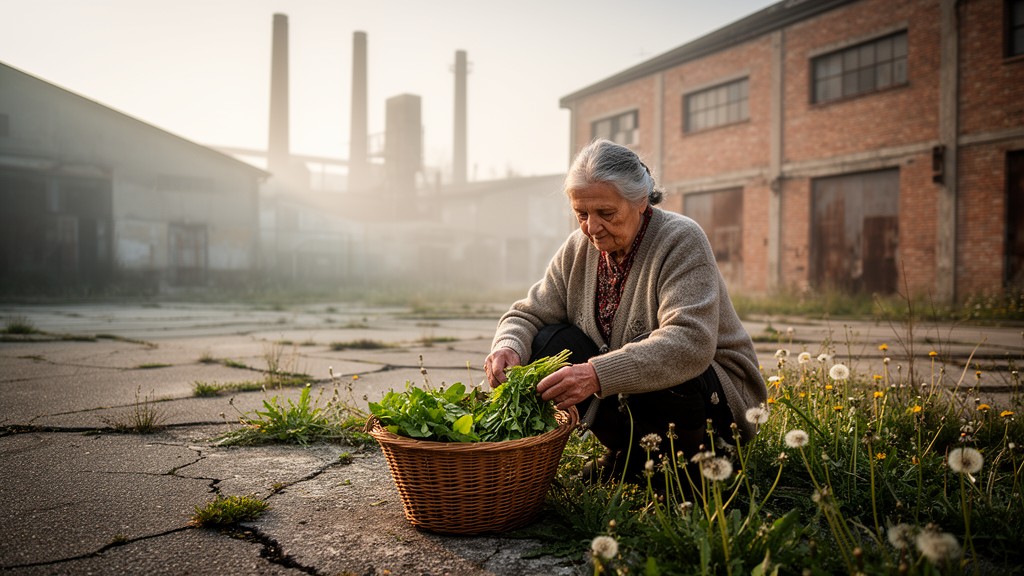
In the pre-Alpine province of Biella, in northwestern Italy, wild plant foraging has not faded away as decades of industrialization and economic upheaval swept through the region. A new ethnobotanical study, published in the journal Botanical Studies, documents 82 botanical species still used for food and herbal teas today, compared with 93 species recorded in a 1970 survey of the same area. The researchers describe this unexpected persistence as the “Biella paradox,” and their comparison across roughly five decades offers a detailed portrait of how traditional ecological knowledge can survive, and even adapt, amid profound social change.
The study was led by researchers including Mousaab Alrhmoun, Naji Sulaiman, Sofia Villa, Michele Filippo Fontefrancesco, and Andrea Pieroni, who conducted fieldwork between December 2024 and February 2025 across municipalities chosen to reflect the province’s varied ecological and cultural landscapes. Their sites ranged from lowland towns such as Biella, Cossato, and Pettinengo to mid-mountain settlements like Mosso and Camandona, and extended to high-altitude and Walser-rooted villages including Rassa, Rimella, and Campiglia Cervo. The work builds directly on a historical baseline: in the 1970s, a local scholar, Professor Ezio Sella, carried out a detailed ethnobotanical prospection of wild food plants in the Biella area, with the results published in 1992 as Flora Popolare Biellese.
The contemporary fieldwork relied on a qualitative ethnobotanical approach. Fifteen participants, eleven women and four men aged between 30 and 85, were interviewed using semi-structured, open-ended conversations conducted in Italian. Thirteen participants were long-term residents of rural or mountainous areas, while two urban dwellers maintained strong familial links to foraging traditions. Informants were selected through snowball sampling, beginning with people known for their foraging or subsistence knowledge. Most older informants, born before 1960, recalled periods of rural hardship or post-war subsistence and included retired farmers, shepherds, and housewives. A few younger informants, aged 30 to 50, showed a revivalist interest in wild plants, motivated by personal hobbies, ecological activism, or membership in local botanical and cultural associations. Interviews were complemented by participant observation, with informants leading foraging walks that offered direct insight into plant identification and gathering habits in situ.
The botanical results reveal striking continuity. Across 39 botanical families, the study documented 101 botanical species in total, of which 93 had already been reported in the 1970 study. Eight species were newly observed in the present 2025 survey for gastronomic uses: Reynoutria japonica, Equisetum arvense, Robinia pseudoacacia, Rosa canina, Salvia pratensis, Tanacetum parthenium, Trifolium pratense, and Valeriana locusta. Of the 101 species, 82 continued to be used for gastronomic purposes, while 19 species previously employed for food or drink in 1970 were no longer used that way. The most represented families were Asteraceae, Rosaceae, Polygonaceae, Brassicaceae, Lamiaceae, Boraginaceae, Apiaceae, and Campanulaceae, mirroring the dominance of Asteraceae, Polygonaceae, and Rosaceae in the historical record.
A quantitative measure reinforced the impression of stability. The Shannon Index, which quantifies diversity, was 2.04 for the 1970 study and 2.09 for the present study, a small increase suggesting that the diversity of foraged species and wild food plant knowledge has remained relatively stable over the past four to five decades. A comparative analysis found that 66 of the genera recorded were common to both studies, a substantial overlap. However, the researchers also noted a general decrease in the number of recorded families and species per family in 2025, particularly within Brassicaceae and Rosaceae, a shift they suggest could reflect environmental or socio-cultural changes affecting the availability or desirability of certain taxa.
The culinary traditions themselves show both persistence and reinvention. In the 1970s, wild plants were woven into local gastronomy through traditional liqueurs, digestive infusions, aromatic herbs in frittatas and mixed soups, herbal teas, leaves eaten raw in salads, pesto served with tomatoes or local cheeses like tomini, and blanched, pickled shoots stored for later use. Distinctive dishes included “Friday steaks” of breaded fried herbs, herbal soups with potatoes and rice, and fillings for vegetarian meatballs. Today, liqueurs such as Nocino and herbal infusions persist, alongside wild plants in pesto, soups, salads, and battered fried flowers, wild jams made from rosehips and wild rhubarb, and dishes like “barbabuc” in béchamel sauce and wild herb risottos. Wildflowers such as Viola tricolor now flavor aromatic teas and liqueurs, and species not previously eaten, such as Salvia pratensis, have gained culinary relevance, a shift the authors link to the revival of wild food trends, gastronomic innovation, and local food movements.
The study also mapped species across ecological categories and elevation zones. Thirty-one urban and ruderal species, including Artemisia indica and Bellis perennis, thrive mainly between 0 and 800 meters where human disturbance is prevalent. Thirty-three moist and wetland species, such as Allium ursinum, Caltha palustris, and Nasturtium officinale, occupy a broader range from 0 to 1500 meters. Sixteen dry and calcareous species, including Artemisia absinthium, Juniperus communis, and Vaccinium myrtillus, span 200 to 1800 meters, while nineteen mountain, alpine, and subalpine plants, such as Achillea millefolium, Arnica montana, and Gentiana acaulis, are found between 1000 and 3000 meters. In the present study’s citation-frequency classification, 25 species were frequent, including Allium ursinum, Equisetum arvense, Juniperus communis, Mentha spp., and Nasturtium officinale; 25 were of average recognition; and 31 were rare and potentially fading from local memory.
Why has Biella resisted the erosion of foraging knowledge documented elsewhere in Europe? The researchers attribute the resilience to a combination of factors. The area’s geographic marginality, on the periphery of Piedmont’s industrial and agricultural hubs, has historically insulated it from the full impact of modernization and intensive agriculture. The collapse of the textile industry that once dominated Biella’s economy may have contributed to a revitalization of foraging, as economically stressed households turned back to the land for supplementary resources. Shared traditions with the neighboring Canavese area, which became a center of the modern foraging movement in the 1980s through initiatives such as the Associazione Club Amici Valchiusella, likely influenced local engagement. Home gardening remains common, and communal land institutions support and regulate sustainable foraging, keeping the practice culturally and institutionally rooted. Revitalization of traditional food knowledge in nearby valleys such as Valsesia and Ossola has also shaped local attitudes.
The study identifies three main patterns in the transformation of local knowledge. First, certain traditionally foraged plants have disappeared not because they are ecologically absent but largely because of socio-economic changes, including the decline of pastoralism and the loss of daily interaction with mountain environments. Second, new foraging practices have emerged involving species that grow near settlements, linked to evolving lifestyles and land use; the appearance of the invasive Reynoutria japonica aligns with its rapid expansion across Europe. Third, traditional ecological knowledge has been relatively well preserved compared with other Alpine areas, where studies in French and Spanish valleys and the Balkans have documented significant declines in plant foraging and knowledge transmission during the second half of the twentieth century.
The authors are candid about the study’s limitations. It relies on historical ethnobotanical data from a single prior source, which may have underrepresented some uses or taxa, and the non-systematic sampling and limited timeframe restricted the diversity of voices and seasonal variation captured. The 1970 dataset lacks citation frequencies, limiting direct comparison, and detailed culinary knowledge, particularly specific recipes, was only minimally documented. Legal restrictions may also affect some species, since plants such as Caltha palustris grow in protected wetlands and others may occur in areas where foraging is restricted. Even so, the overall conclusion stands: wild plant foraging remains a living tradition in Biella, marked by both persistence and adaptation, and the case underscores that the most significant drivers of change in foraging practices are social transformations rather than ecological ones, with implications for sustainability, food security, and the preservation of cultural heritage in changing rural landscapes.
Subject of Research: Continuity and change in wild plant foraging knowledge in a post-industrial pre-Alpine area of northern Italy
Article Title: The Biella paradox: the resilience of plant foraging in a post-industrial pre-alpine area of Northern Italy
Article References: Alrhmoun, M., Sulaiman, N., Villa, S., Fontefrancesco, M. F., & Pieroni, A. (2025). The Biella paradox: the resilience of plant foraging in a post-industrial pre-alpine area of Northern Italy. Botanical Studies, 66(1), Article 38. https://doi.org/10.1186/s40529-025-00486-8
Image Credits: AI Generated
DOI: 10.1186/s40529-025-00486-8
Keywords: ethnobotany, wild food plants, traditional ecological knowledge, Biella, Italy, foraging, Alps, Shannon Index, biocultural heritage, post-industrial landscapes, food security, cultural heritage
News Source: Margaret Porter. (October 30, 2026). Wild Plant Foraging Endures in Post-Industrial Northern Italy, Study Finds. Scienmag.



