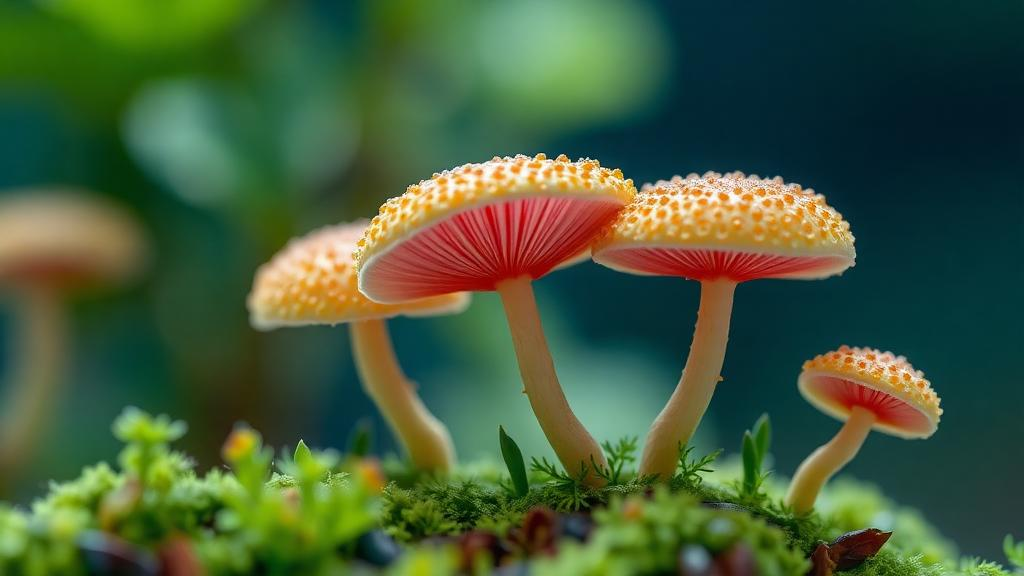
A bacterium living inside the fruiting bodies of a medicinal fungus can dramatically boost production of one of its most valuable compounds, according to a new study published in Bioresources and Bioprocessing. Researchers isolated endophytic actinomycetes from Shiraia fruiting bodies, the bamboo-parasitizing fungus known in traditional Chinese medicine as Zhu Huang, and found that one strain, Streptomyces pseudogriseolus A6, nearly tripled the yield of hypocrellin A, a perylenequinone photosensitizer with applications in photodynamic therapy, antimicrobial treatment, and agriculture.
The team, led by Wen Hao Shen, Li Ping Zheng, Jian Qin Zhou, and Jian Wen Wang, combined culture-dependent isolation with high-throughput 16S rRNA amplicon sequencing to characterize the actinomycete community within Shiraia fruiting bodies collected from Tianmu Mountain in Zhejiang Province, China. From thirty surface-sterilized fruiting bodies, they recovered 28 actinomycete isolates representing two orders, four families, four genera, and eleven species. Streptomyces dominated the culturable community with 18 isolates, or 64.29 percent, followed by Pseudonocardia with 8 isolates at 28.57 percent, while Brevibacterium and Rhodococcus each contributed a single isolate.
Amplicon sequencing of the same tissue painted a broader picture. After quality filtering, 483 high-quality actinomycete reads clustered into 54 operational taxonomic units, assigned to 5 classes, 8 orders, 24 families, and 28 genera. At the genus level, the uncultured community was dominated by Candidatus Microthrix at 24.43 percent, followed by Propionibacterium, Rhodococcus, Bifidobacterium, Corynebacterium, Aeromicrobium, Mycobacterium, and Pseudonocardia. Notably, Streptomyces accounted for only 0.41 percent of sequenced reads despite dominating the cultures, a striking discrepancy the authors attribute to selective cultivation bias and viable but non-culturable organisms. Both methods consistently detected Pseudonocardia and Rhodococcus, supporting their status as stable members of the fruiting-body microbiome.
To test whether these bacteria could influence fungal metabolism, the researchers confronted each isolate with Shiraia sp. S9, the hypocrellin-producing host strain, in dual-culture assays. Several strains, including A6, A8, A11, and A23, promoted secretion of the red pigments in which hypocrellin A is the main component, while isolates A4, A13, A19, and A31 significantly suppressed production. Strain A6 showed the strongest effect: in co-culture on PDA plates, hypocrellin A content reached 0.5 mg per plate, roughly a twofold increase, and in submerged mycelial cultures it reached 14.7 mg per gram dry weight, a 2.3-fold rise over controls.
Whole-genome sequencing of strain A6, identified as S. pseudogriseolus based on a 1,075-base-pair 16S rRNA sequence sharing 99.86 percent identity with a reference strain, revealed a 7,343,207-base-pair genome with 72.9 percent GC content and 6,644 predicted protein-coding genes. The genome encodes 410 carbohydrate-active enzyme genes, including 141 glycoside hydrolases and eight putative chitinase genes from the GH18 and GH19 families, suggesting a capacity to modify fungal cell walls. Genome mining with antiSMASH predicted 27 secondary metabolite biosynthetic gene clusters, twelve of which share 50 to 100 percent similarity with known clusters such as those for antimycin, naphthyridinomycin, and carotenoids, while the remaining 15 show less than 50 percent similarity, indicating considerable biosynthetic novelty.
Co-cultivation experiments in liquid fermentation clarified the physiological effects. Although fungal colony expansion and mycelial pellet diameter were significantly reduced in the presence of live A6, fungal biomass in submerged culture remained comparable to controls, and asexual reproduction was stimulated: conidial concentration rose from 2.29 × 10⁸ to 4.31 × 10⁸ spores per milliliter. Both intracellular and extracellular hypocrellin A accumulated significantly. On day 8, intracellular hypocrellin A reached 13.4 mg per gram dry weight, a 2.4-fold increase, extracellular accumulation rose twofold, and total production climbed to 205.1 mg per liter, approximately 2.4 times the monoculture control.
Quantitative real-time PCR revealed the molecular mechanism behind this boost. Co-cultivation significantly upregulated all examined genes of the fungal hypocrellin biosynthetic cluster. The polyketide synthase gene PKS, which builds the aromatic backbone of the pigment, showed the strongest response at an 8.1-fold increase. The monooxygenase gene rose 4.6-fold, the major facilitator superfamily transporter 5.2-fold, the ABC transporter 3.6-fold, multicopper oxidase 2.4-fold, FAD-dependent oxidoreductase 2.3-fold, the zinc finger transcription factor 1.9-fold, and the O-methyltransferase 1.1-fold. The authors interpret this coordinated induction of biosynthetic, regulatory, and transporter genes as evidence that the elicitor activates the complete pathway rather than causing intermediates to pile up, with the transporter upregulation explaining the simultaneous rise in secreted pigment.
Optimizing the interaction proved critical. When A6 was added early in the fermentation, at days 0 to 3, both fungal biomass and hypocrellin production were significantly inhibited. Inoculation at day 5, the late exponential phase, enhanced accumulation instead. Testing inoculum concentrations from 1.0 to 6.0 × 10⁶ CFU per milliliter showed that fungal biomass stayed essentially unchanged across the range while pigment production peaked at 4.0 × 10⁶ CFU per milliliter. Under these optimized conditions, with A6 added on day 5 at that concentration, total hypocrellin A production reached 296.0 mg per liter on day 8, an approximately threefold increase over the control, the highest yield reported for this co-cultivation strategy.
The study places these results in context of earlier work from the same group. Previous investigations isolated 34 endophytic fungi and 31 endophytic bacteria from Shiraia fruiting bodies; the fungus Fusarium sp. SF12 raised total hypocrellin production to about 209.4 mg per liter, and the bacterium Pseudomonas fulva SB1 enhanced production roughly 2.4-fold. The actinomycete A6 outperformed both, which the authors suggest reflects the species-specific metabolic communication that evolves between endophytes and hosts that have coexisted through tissue development. They caution, however, that the pairwise co-culture is a simplified model, and that in vitro interactions may not fully reflect relationships within natural fruiting bodies.
Hypocrellin A is prized for its high singlet oxygen quantum yield, photochemical stability, and low dark toxicity, properties that have driven interest in its use as a non-porphyrin photosensitizer against cancers, infectious diseases, and dermatological disorders, as well as a photoactivated fungicide for crop protection. Yet liquid fermentation of Shiraia typically yields only 10 to 40 mg per liter, and wild fruiting bodies remain the main commercial source. By demonstrating that a naturally associated actinomycete can push fermentation yields toward 296 mg per liter without specialized equipment, the study offers a practical route toward sustainable biotechnological production, though the specific bacterial signaling molecules responsible for the elicitation remain unidentified and await future transcriptomic, metabolomic, and functional genetic investigation.
Subject of Research: Endophytic actinomycetes from Shiraia fruiting bodies that enhance fungal hypocrellin A biosynthesis
Article Title: Exploring endophytic actinomycetes from Shiraia fruiting bodies to enhance fungal hypocrellin A biosynthesis
Article References: Shen, W. H., Zheng, L. P., Zhou, J. Q., & Wang, J. W. (2026). Exploring endophytic actinomycetes from Shiraia fruiting bodies to enhance fungal hypocrellin A biosynthesis. Bioresources and Bioprocessing, 13(1), Article 161. https://doi.org/10.1186/s40643-026-01154-w
Image Credits: AI Generated
DOI: 10.1186/s40643-026-01154-w
Keywords: Shiraia, endophytic actinomycetes, Streptomyces pseudogriseolus, hypocrellin A, co-cultivation, secondary metabolism, biosynthetic gene clusters, 16S rRNA amplicon sequencing, submerged fermentation, photosensitizer, perylenequinone, microbiome
News Source: Roger Howard. (October 29, 2026). Endophytic actinomycete from Shiraia fungus triples hypocrellin A yield in co-culture. Scienmag.