


Antimicrobial resistance in veterinary medicine is sustained by the dependence of animal production on antibiotics for disease treatment, prophylaxis and, in many production systems, growth promotion. A new critical narrative review, published open access in the journal Discover Animals, examines eight categories of non-antibiotic interventions and asks a question that earlier reviews largely avoided: which strategies are mature enough for deployment on farms today, and which still rest on evidence too preliminary for routine use? The authors’ answer is unambiguous. Vaccination and biosecurity are the only two strategies with strong, field-scale evidence, while bacteriophage therapy, antimicrobial peptides, microbiome-based approaches and selective breeding remain at earlier stages of translational maturity.
The review’s comparative framework is the authors’ own qualitative classification, explicitly not derived from GRADE, PRISMA or any external grading system. Each strategy was assigned an evidence tier of strong, moderate, emerging or mixed, based on the volume, consistency and study design of the literature identified through targeted searches of PubMed, Scopus and Google Scholar, supplemented by citation tracking. Because no fixed date range or systematic screening protocol was applied, the authors caution that their synthesis is purposive rather than exhaustive or reproducible, and readers should treat the comparative claims as an informed synthesis rather than a quantitative meta-analytic estimate. The evidence considered spans laboratory and in vitro studies, controlled field trials, observational farm-level studies and international surveillance or policy reports, drawn predominantly from poultry, swine, cattle and aquaculture systems, with more limited coverage of companion animals.
A central conceptual contribution of the review is its insistence on distinguishing three outcomes that are frequently conflated in this literature: reduced pathogen burden, reduced antimicrobial use and reduced antimicrobial resistance. An intervention that lowers antibiotic consumption does not automatically demonstrate an AMR-related benefit unless resistance itself, or a resistance-relevant proxy, was actually measured. Most intervention studies reviewed measure antimicrobial use without directly demonstrating a downstream resistance benefit, a gap the authors argue must be closed by integrated surveillance rather than assumed away.
The strongest field-scale evidence comes from national and regional intervention programs rather than single farm trials. A 61-herd Flemish intervention study, in which optimizing herd management, biosecurity status, vaccination strategy, anthelmintic therapy and prudent-use advice were bundled together, reduced antimicrobial treatment incidence by 52 percent in finishing pigs and 32 percent in breeding animals, without loss of production performance. The review is careful to note that this reduction is attributable to the bundled intervention, not to biosecurity in isolation, and that the two figures differ by production stage; reporting it as a flat range attributable to biosecurity alone, as some secondary literature does, overstates what a single component achieved. Comparable farmer-education and biosecurity-training programs in the Netherlands and Sweden have reported sustained antibiotic-consumption reductions without productivity losses, and in aquaculture, water filtration and quarantine systems have reduced both bacterial disease and chemotherapeutic use.
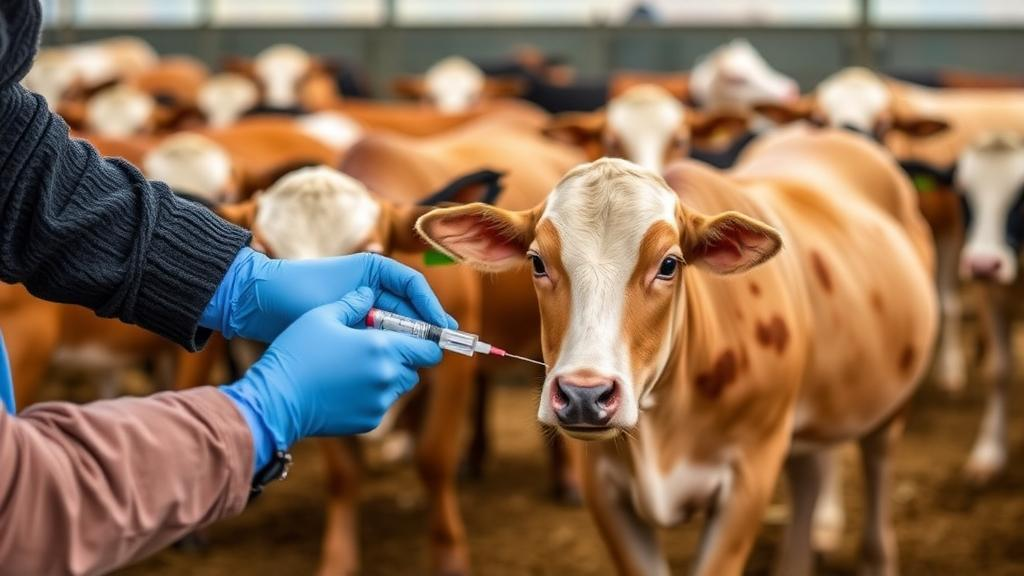
Vaccination complements biosecurity by preventing the primary infections and secondary bacterial complications that would otherwise be treated with antibiotics. Introduction of vaccines against Salmonella enterica and Escherichia coli in poultry, and porcine reproductive and respiratory syndrome virus vaccination in swine, have both been associated with reduced antimicrobial consumption for secondary bacterial infections. Immunization against Aeromonas hydrophila and Vibrio species has improved survival and reduced antibiotic use in aquaculture. A recent analysis of veterinary vaccination as an antimicrobial-resistance mitigation tool concludes that expanding the coverage and diversity of licensed livestock vaccines is one of the more underused levers available, precisely because vaccination, unlike most alternatives, already has an established regulatory pathway. Uptake nonetheless remains constrained by cost, cold-chain logistics and strain-specific limitations, particularly where antigenic variation outpaces vaccine updates.
Bacteriophage therapy shows genuine biological efficacy but an incomplete translational record. Oral phage cocktails targeting Salmonella have reduced intestinal colonization in poultry and cattle; phage formulations against E. coli have controlled post-weaning diarrhea in swine; intramammary phage therapy against Staphylococcus aureus has reduced bacterial load and clinical mastitis signs in dairy cattle; and phages targeting Aeromonas hydrophila and Vibrio species have improved survival in aquaculture. Yet comparatively few of these studies report a paired measurement of antimicrobial use before and after phage introduction, so the antimicrobial-use reduction case for phage therapy remains inferential in most of the literature rather than directly demonstrated. Three practical constraints limit adoption: the narrow host range of most phages, which requires rapid pathogen identification that many veterinary systems, particularly in low- and middle-income countries, cannot yet perform; viability depends on storage and handling conditions that are difficult to maintain outside cold-chain infrastructure; and regulatory pathways remain absent or unclear in most jurisdictions despite guidance from the European Medicines Agency and the World Organisation for Animal Health.
Antimicrobial peptides, short amphipathic components of innate immunity that act through membrane disruption and immune modulation, show a similar profile of real but early-stage promise. Cathelicidins have shown activity against multidrug-resistant Pseudomonas aeruginosa in experimental work, field-oriented studies have tested peptide formulations against bovine mastitis and avian necrotic enteritis with reductions in bacterial counts and improved clinical recovery, and a recent screen of sixteen peptides against bovine mastitis pathogens identified cathelicidin-derived candidates with bactericidal activity comparable to conventional antibiotics in vitro. In ovo administration of computationally identified peptides modestly improved survival against avian pathogenic E. coli in commercial pen trials without impairing growth, an early but genuine example of a translational pathway rather than established clinical practice. Production cost, peptide stability under field storage conditions and delivery to the site of infection remain the binding constraints on scale-up. Immunomodulators, including cytokines, toll-like receptor agonists and plant-derived bioactives, have improved macrophage activation in bovine mastitis and respiratory disease models and enhanced vaccine responsiveness in poultry and pigs, but this evidence demonstrates biological plausibility more consistently than population-level antimicrobial-use reduction.
Microbiome-based interventions present a more heterogeneous picture. Probiotic strains such as Lactobacillus plantarum, L. reuteri and Enterococcus faecium have reduced Salmonella and Clostridium perfringens colonization in controlled poultry and swine trials, while prebiotics such as mannan-, fructo- and galacto-oligosaccharides have suppressed E. coli and Salmonella colonization, and butyrate-rich postbiotic formulations have reduced pathogen shedding and mortality in broilers and piglets. However, most reported outcomes are reductions in pathogen colonization, diarrhea incidence or feed conversion, proxies that plausibly precede reduced antibiotic use but rarely include direct antimicrobial-use or resistance-gene measurement. Efficacy is also strain-specific and formulation-dependent to a degree that limits generalization, which is why field response to probiotic supplementation is reported as variable even within single species. Selective breeding shows one genuine long-term result: over five generations of selection, Landrace pigs bred for reduced susceptibility to Mycoplasma hyopneumoniae showed significantly lower lung lesion severity than non-selected lines, with measurable immunological differences, but this is one of the few breeding studies conducted at that scale, and comparable work on Eimeria resistance in poultry remains at an earlier, less validated stage.
The review also traces an explicit One Health pathway from intervention to reduced antimicrobial exposure, altered selection pressure and downstream implications for human and environmental health, while carefully distinguishing demonstrated veterinary outcomes from plausible cross-sectoral effects that have not yet been measured directly. Reduced antimicrobial use in livestock lowers the pool of resistance genes available for environmental dissemination through manure, wastewater and aquaculture effluent, but this benefit is only realized when environmental management of animal waste is addressed alongside clinical stewardship. Few of the intervention studies cited also measured downstream human or environmental resistance outcomes, so the One Health benefit of a given veterinary intervention is usually inferred from the antimicrobial-use result, not demonstrated end to end. Operationalizing cross-sectoral collaboration, the authors argue, requires defined roles for veterinarians, farmers, physicians, microbiologists, environmental scientists and policymakers rather than informal cooperation.
The principal implication for practice is that no single alternative is likely to substitute for antibiotics broadly. Layered combinations, matched to production system and disease ecology and paired with functioning surveillance, represent the more realistic path toward sustained antimicrobial reduction. Regulatory fragmentation, economic constraints and diagnostic gaps recur across nearly every strategy, and most laboratory and semi-controlled evidence has not been tested at field scale under the economic, environmental and social conditions of real production systems. Closing that gap, the review concludes, requires research investment specifically in field-scale and low- and middle-income-country-relevant trial designs, and continued field-based validation and integrated surveillance, more than any single technological advance, will determine whether these alternatives translate into a durable reduction in antimicrobial dependence.
Subject of Research: Non-antibiotic strategies for mitigating antimicrobial resistance in veterinary medicine
Article Title: Alternative approaches to mitigate antimicrobial resistance in veterinary medicine through integrated One Health strategies
Article References: Alhassan, M. Y., & Lawal, A. (2026). Alternative approaches to mitigate antimicrobial resistance in veterinary medicine through integrated One Health strategies. Discover Animals, 3(1), Article 107. https://doi.org/10.1007/s44338-026-00254-3
Image Credits: AI Generated
DOI: 10.1007/s44338-026-00254-3
Keywords: antimicrobial resistance, veterinary medicine, One Health, vaccination, biosecurity, bacteriophage therapy, antimicrobial peptides, probiotics, livestock, selective breeding, antimicrobial stewardship, aquaculture
News Source: William Thompson. (October 29, 2026). Vaccination and Biosecurity Lead the Field in Cutting Livestock Antibiotic Dependence. Scienmag.



