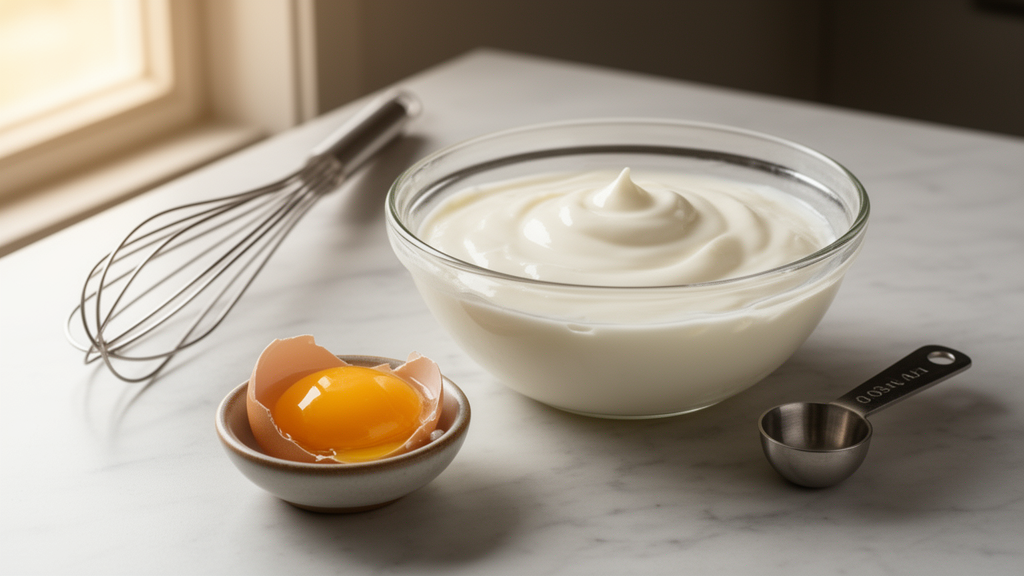
Adding a carefully measured amount of liquid egg yolk to milk before fermentation can make set-style yogurt noticeably firmer, better at holding water, and more elastic — but push the dose too high and the gel falls apart. That is the central finding of a new open-access study published on 23 March 2026 in the Springer journal covering agricultural products processing and storage, in which researchers co-fermented egg yolk liquid (EYL) with cow’s milk and systematically tracked how the addition level reshaped the yogurt’s texture, rheology, microstructure, chemistry, and sensory profile. The work offers a clean-label route to nutrient-dense yogurt that avoids conventional stabilizers, while also mapping out the narrow formulation window within which it actually works.
The motivation behind the study stems from a growing consumer pull toward composite dairy products that boost nutrition without additives. Eggs are an attractive partner ingredient because they supply high-biological-value proteins and essential micronutrients, and previous research has shown that egg white and whole egg can both modify yogurt texture and fermentation behavior. But egg white carries liabilities: it contains lysozyme, an antimicrobial protein reported to restrict fermentation efficiency by reducing bacterial vitality, and its proteins form strong heat-induced gels that can turn brittle or coarse under certain conditions. Egg yolk, by contrast, brings phospholipids, unsaturated fatty acids, and fat-soluble vitamins along with lipoprotein assemblies that confer strong emulsifying capacity — properties that could, in principle, stabilize a fat-containing fermented gel and improve mouthfeel.
To test this, the team prepared yogurts in which fresh milk — kept at a constant protein content of roughly 3.2 g/100 g and fat content of 3.8 g/100 g across all formulations — was supplemented with EYL at 0.5%, 1%, 2%, 4%, and 6% (m/V), alongside 8% sucrose. A control yogurt received an equivalent volume of distilled water instead, ensuring that any differences could be attributed to the egg yolk itself rather than to variations in the milk base. The mixtures were homogenized at 12,000 r/min, pasteurized at 65 °C for 30 minutes, inoculated with a 1:1 mixture of Lactobacillus delbrueckii subsp. bulgaricus and Streptococcus thermophilus, and fermented at 38 °C for a fixed seven hours. For structural and physicochemical measurements, samples were then adjusted to a unified endpoint of pH 4.5 to eliminate the confounding influence of differing final acidity, and all yogurts were matured at 4 °C for 24 hours before analysis.
The textural results traced a clear increase-then-decrease curve. At 0.5% to 1.0% EYL, hardness and chewiness rose significantly above the control (P < 0.05), but as the dose climbed further these attributes progressively declined, and yogurts containing 4% to 6% EYL ended up with firmness comparable to the control. The authors interpret this non-monotonic pattern as a competition between two effects: at low levels, egg yolk components participate in protein–protein and protein–lipid interactions that favor acid-induced network development and increase the solid load, producing a denser, more deformation-resistant structure. At higher levels, however, the lipid fraction becomes dominant, acting as an inactive filler that disrupts the continuity of the protein network and interferes with the formation of an effective load-bearing gel skeleton.
Water-holding capacity told the same story. Low EYL supplementation of 0.5% to 1.0% raised WHC by approximately 10 percentage points relative to the control (P < 0.05), meaning the gel retained serum more effectively and resisted syneresis. Beyond that range, WHC declined, and at the highest level tested — 6% — water retention fell below that of the control. The researchers attribute the improvement at low doses to a stronger, more continuous gel matrix that binds water better, and the decline at high doses to lipids competing with milk proteins for interfacial adsorption and disrupting casein micelle aggregation, thereby weakening network integrity.
Rheological measurements reinforced the picture. All samples showed shear-thinning, pseudoplastic flow, with apparent viscosity falling as shear rate increased, and all fitted the power-law model with flow behavior indices below 1, confirming their non-Newtonian character. Consistency coefficients rose at EYL levels below 2% and fell at 2% and above. In oscillatory tests, the storage modulus G′ exceeded the loss modulus G″ across the entire frequency range for every sample, and loss tangent values below 1 confirmed gel-like behavior in all EYL-containing yogurts. At 0.5% and 1% EYL, G′ was approximately 1.5-fold and twofold higher than the control, respectively, indicating enhanced network elasticity, while G″ also increased with EYL content, particularly below 50 rad/s.
Microscopy provided direct visual confirmation of this structural transition. Confocal laser scanning microscopy revealed that the control yogurt had irregular pores and extensive dark void regions, consistent with a loose, discontinuous network. At 0.5% to 2% EYL, the fluorescence signal became more continuous and homogeneous, and the 1% sample showed the most interconnected structure, with fewer large voids and more uniform spatial organization. At 4% to 6%, however, the protein domains enlarged unevenly and local fluorescence weakened, signaling structural heterogeneity and phase-separation-like features. Scanning electron microscopy of freeze-dried samples mirrored these findings: at 0.5% to 2.0% EYL the network backbone thickened, pores shrank, and inter-fiber connections became more apparent, with the 1% sample again the densest and most continuous, while at 4% to 6% the microstructure coarsened, with filamentous aggregates, enlarged pores, and reduced surface integrity.
Spectroscopy pointed to the molecular mechanisms at work. Fourier transform infrared spectra of EYL, milk, an egg yolk–milk mixture, plain yogurt, and the composite egg yolk–milk yogurt showed broadly similar peak positions with no new absorption bands, indicating that no new covalent bonds formed and that composite assembly was dominated by non-covalent interactions such as hydrogen bonding, hydrophobic association, and electrostatic interactions. The O–H/N–H stretching band of the composite yogurt shifted to a lower wavenumber than in either EYL or milk, consistent with reorganized hydrogen-bonding environments, and small shifts in the amide I region suggested rearrangements in protein secondary structure during fermentation. X-ray diffraction showed that relative crystallinity dropped from about 80% in EYL and roughly 79% in milk and the mixture to 75.8% and 76.1% in plain and composite yogurt respectively, indicating an increase in disordered or amorphous regions after acidification — though the authors caution that WHC depends on multiple factors and this relationship should be interpreted carefully.
The physicochemical and sensory data rounded out the dose-response picture. Increasing EYL intensified the yogurt’s yellowness, quantitatively reflected in decreasing lightness (L*) and rising b* values, an effect consistent with the natural pigments in egg yolk and one that makes EYL level a controllable dial for appearance. Titratable acidity decreased progressively with EYL level, which the authors attribute to increased buffering capacity from egg yolk components and to reduced available lactose limiting acid production, while final pH stayed within 4.0–4.4 across the tested range. In sensory evaluation by 20 semi-trained panelists, yogurts with 2% EYL scored higher on texture, aroma acceptance, and color perception than the control, whereas the 6% formulation risked aroma imbalance. Electronic nose analysis with ten metal oxide sensors differentiated the samples, with a distinct W1W response — sensitive to inorganic sulfides — appearing only in EYL-fortified yogurts, and principal component analysis separating the 2% and 6% samples from the control along two axes accounting for a cumulative 71.3% of variance.
Taken together, the study establishes egg yolk liquid co-fermentation as a feasible clean-label strategy for enriching yogurt nutrition while optimizing gel structure — but only within a limited formulation window of roughly 1% to 2% EYL. Below that threshold the yolk reinforces the network; above roughly 4% it loosens it, coarsening the microstructure, cutting water retention and flow resistance, and threatening flavor balance. The authors note that future work should quantify key volatile compounds and validate storage stability before the approach can be optimized for industrial application, and the findings so far rest on laboratory-scale fermentations with a fixed seven-hour protocol and a single milk base. Still, for a field searching for natural alternatives to added stabilizers, the message is unusually crisp: in yogurt structure, as in so much else, the dose makes the difference.
Subject of Research: Dose-dependent effects of egg yolk liquid co-fermentation on the structure, rheology, and sensory quality of set-style yogurt
Article Title: Dose-dependent structuring of set-style yogurt by egg yolk liquid: gel network remodeling, rheology, and sensory
Article References: Meng, D., Ju, X., Li, Y., Zhang, H., Li, H., Xu, L., Si, P., Rayan, A. M., & Ghamry, M. (2026). Dose-dependent structuring of set-style yogurt by egg yolk liquid: gel network remodeling, rheology, and sensory. Agricultural Products Processing and Storage, 2(1), Article 36. https://doi.org/10.1007/s44462-026-00070-8
Image Credits: AI Generated
DOI: 10.1007/s44462-026-00070-8
Keywords: egg yolk liquid, set-style yogurt, gel network, rheology, water-holding capacity, microstructure, clean-label, co-fermentation, texture, FTIR, XRD, sensory evaluation
News Source: Alan Morgan. (October 29, 2026). Egg Yolk Liquid Strengthens Yogurt Gel — But Only at the Right Dose. Scienmag.