


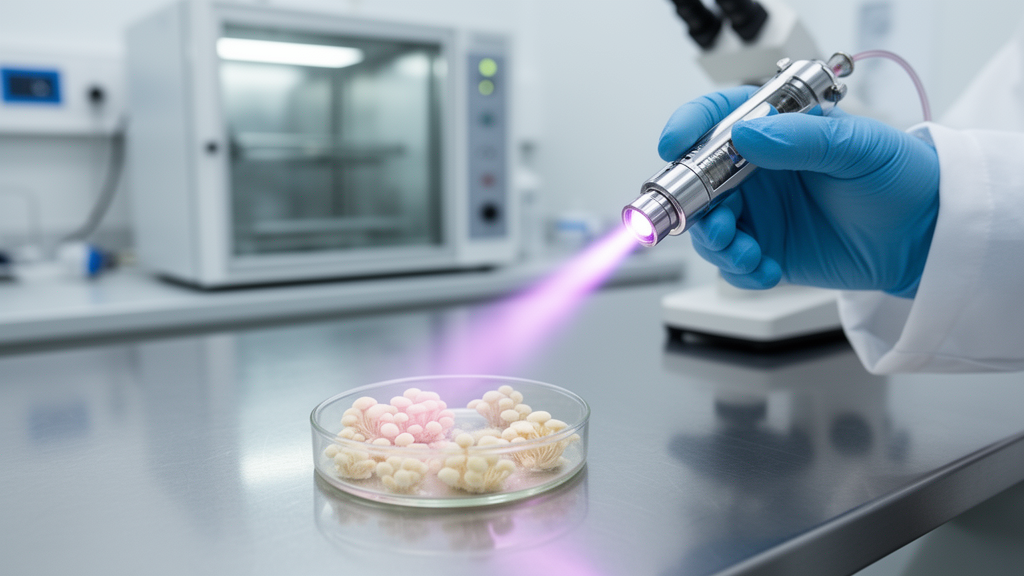
Cold atmospheric plasma has shown potent antifungal activity against fluconazole-resistant Candida strains isolated from patients with oropharyngeal candidiasis, according to a peer-reviewed study published in AMB Express on 28 October 2026. The research, led by Melika Kashi, Sima-Sadat Seyedjavadi and Zahra Jahanshiri, examined fifteen clinical Candida strains recovered from oropharyngeal candidiasis in patients with head and neck cancer, a population in which this opportunistic fungal infection is especially common.
The strains included fluconazole-resistant isolates of Candida albicans and Candida tropicalis, together with Candida glabrata isolates classified as susceptible dose-dependent. Oropharyngeal candidiasis remains the most common opportunistic fungal infection affecting patients with head and neck cancer, and the growing challenge of antifungal resistance has become a critical concern in recent years, the authors note in their abstract.
The experimental setup used a cold atmospheric plasma jet system operating with a helium–oxygen gas mixture in a ratio of 98:2 by volume. The researchers evaluated fungal growth, biofilm formation and ergosterol content after treatment with the plasma, both alone and in combination with fluconazole, across all three Candida species.
Plasma treatment induced time-dependent reductions in fungal viability across all species, with a reported statistical significance of P < 0.0001. Susceptibility varied by species: Candida glabrata showed the highest susceptibility to the plasma, while Candida tropicalis proved the least susceptible. The abstract reports species-specific susceptibility patterns in the response to plasma treatment.
Ergosterol content fell most sharply at the 120-second exposure time, with inhibition rates of 72.13 percent for Candida albicans, 59.94 percent for Candida tropicalis and 68.07 percent for Candida glabrata. The abstract reports that a partial recovery followed at 150 seconds, an observation the researchers document without offering a definitive mechanistic explanation in the summarized findings.
Cold atmospheric plasma monotherapy significantly reduced planktonic growth and biofilm formation.
A key negative result emerged from the combination experiments. When plasma was paired with fluconazole, the combination yielded no synergistic or additive effects, with all comparisons reported as not statistically significant.
The authors conclude that cold atmospheric plasma exerts potent antifungal activity against fluconazole-resistant Candida clinical isolates and downregulates virulence and resistance genes, with species-specific susceptibility patterns. They emphasize that further in vivo research is required before the approach could be harnessed as a therapeutic strategy, and the published findings come from laboratory experiments on clinical isolates rather than from treatment of patients.
For patients with head and neck cancer, in whom oropharyngeal candidiasis is a frequent and increasingly drug-resistant complication, the study adds to the evidence base on non-thermal plasma as a candidate antifungal modality. The work is published as open access in AMB Express, with the article carrying a permanent DOI and the version shared ahead of the final Version of Record, subject to further edits.
Subject of Research: Antifungal activity of cold atmospheric plasma against resistant Candida species from oropharyngeal candidiasis patients
Article Title: Efficacy of cold atmospheric plasma and fluconazole against resistant Candida species in oropharyngeal candidiasis patients
Article References: Kashi, M., Seyedjavadi, S.-S., & Jahanshiri, Z. (2026). Efficacy of cold atmospheric plasma and fluconazole against resistant Candida species in oropharyngeal candidiasis patients. AMB Express. https://doi.org/10.1186/s13568-026-02134-1
Image Credits: AI Generated
DOI: 10.1186/s13568-026-02134-1
Keywords: cold atmospheric plasma, Candida albicans, Candida tropicalis, Candida glabrata, fluconazole resistance, oropharyngeal candidiasis, biofilm, ergosterol, gene expression, head and neck cancer, antifungal therapy, AMB Express
News Source: Russell Cooper. (October 29, 2026). Cold atmospheric plasma kills drug-resistant Candida strains in lab study. Scienmag.



