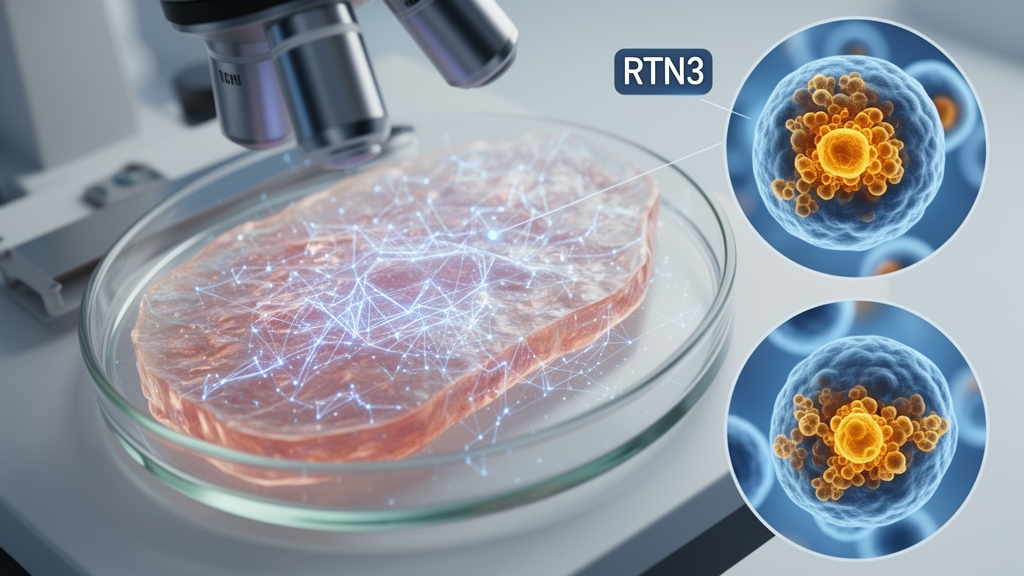
Bladder cancer is one of the most common urological malignancies worldwide, and although gemcitabine remains a cornerstone chemotherapy for muscle-invasive and metastatic disease, drug resistance frequently undermines treatment and drives poor outcomes. A new study published in Experimental Hematology & Oncology reports an integrated strategy that connects genomic chaos inside individual tumor cells to the appearance of tissue under the microscope, and in doing so identifies a molecular switch—RTN3—that appears to fuel both malignant behavior and gemcitabine resistance.
The research team, led by investigators including Shunli Yu, Yingjian Wang, Dapeng Feng and senior author Chaohui Gu, began with a puzzle that has long limited precision oncology in bladder cancer: somatic copy number variations, or CNVs, are among the most frequent genetic alterations in this tumor type and serve as direct indicators of chromosomal instability, yet bulk sequencing averages these signals across millions of cells and cannot resolve how CNV states differ from one malignant cell to the next. To overcome this, the researchers turned to single-cell RNA sequencing, which profiles gene expression cell by cell, combined with an algorithm called inferCNV that infers large-scale chromosomal gains and losses from transcriptional data.
Using six public single-cell datasets as discovery cohorts—four from the Gene Expression Omnibus (GSE135337, GSE222315, GSE130001 and GSE211388) plus the Horowitz and PRJNA662018 datasets—the team profiled the full cellular landscape of bladder cancer, identifying fourteen cell subpopulations spanning epithelial cells, T and NK cells, myeloid cells, fibroblasts, endothelial cells, B cells, mast cells, plasma cells and proliferating cells. Focusing on epithelial cells, the origin of bladder cancer, they used non-malignant reference cells from the same samples as a background and scored each malignant cell for total CNV burden. Cells were then objectively divided into three groups by tertiles: low CNV (LCNV), medium CNV (MCNV) and high CNV (HCNV).
The HCNV population stood out immediately. Pseudotemporal ordering with Monocle2 showed that HCNV cells traversed a broader transcriptional continuum than their lower-CNV counterparts, and enrichment analyses placed them at the center of tumor-promoting biology. HCNV cells displayed significantly elevated activity of oncogenic signaling pathways including TGF-β, JAK–STAT, PI3K and VEGF, along with programs driving DNA replication, cell cycle progression and ether lipid metabolism. By contrast, LCNV cells were enriched in tumor suppressor pathways such as p53, FoxO, Hippo signaling, efferocytosis and cellular senescence. Ro/e and odds-ratio analyses confirmed that HCNV cells were significantly enriched in tumor tissue rather than normal bladder tissue, and patients whose tumors carried high HCNV activity had significantly shorter overall survival in The Cancer Genome Atlas bladder cancer (TCGA-BLCA) cohort.
Cell–cell communication analysis with the CellChat package added a microenvironmental dimension. HCNV cells engaged in both more numerous and stronger interactions with surrounding cell types than LCNV cells, acting as enhanced signal senders toward cancer-associated fibroblasts, M2-polarized macrophages and endothelial cells, while simultaneously receiving more input from immunosuppressive populations including regulatory T cells and myeloid-derived suppressor cells. Metabolically, HCNV cells showed greater enrichment in anabolic and energy-production pathways for amino acids, nucleotides and fatty acids, a profile consistent with rapid proliferation and adaptation.
To translate these single-cell findings into something a pathologist could see, the team built a 54-gene HCNV activity signature. They first used high-dimensional weighted gene coexpression network analysis to identify nine gene modules enriched in HCNV cells, took the top hub genes from each module, intersected them with genes differentially expressed between HCNV and LCNV cells to yield 220 candidates, and then filtered for prognosis-associated genes by univariate Cox regression. Applying this signature to bulk RNA-seq data from TCGA-BLCA via single-sample gene set enrichment analysis produced a continuous HCNV activity score for each patient. Supporting the genomic basis of the score, patients with high HCNV activity showed significantly elevated fractions of genome altered, gained and lost in bulk DNA copy-number profiles—an orthogonal confirmation that the transcriptional signal mirrors real chromosomal instability.
The centerpiece of the translational effort was a multimodal artificial intelligence model trained on routine H&E-stained whole-slide images from TCGA. The pipeline combined two feature streams: a ResNet-50 deep learning network pretrained on ImageNet, which converted 224-by-224-pixel tissue patches into 2,048-dimensional feature vectors capturing high-level morphological patterns, and traditional quantitative image analysis with CellProfiler, which measured hundreds of nuclear morphology, intensity, texture and spatial features after color deconvolution and nuclear segmentation. Of 730 imaging features significantly correlated with the HCNV activity score, univariate Cox regression selected 20 associated with overall survival. The team then compared 101 machine learning algorithm combinations within the MIME framework—including random survival forest, elastic net, stepwise Cox regression, CoxBoost, gradient boosting and survival support vector machines—and chose the model with the best concordance index under five-fold cross-validation.
The resulting risk score stratified patients convincingly. In the TCGA training set, high- and low-risk groups showed clearly separated survival curves (log-rank p < 0.0001) with time-dependent AUCs of 0.67 to 0.78 for one-to-five-year survival prediction. An independent TCGA validation split confirmed the effect (log-rank p = 0.032), and an in-house external cohort of 58 patients who underwent radical cystectomy between 2021 and 2023 validated it again (log-rank p = 0.00076). Multivariate analysis showed the imaging-derived score remained an independent prognostic factor beyond conventional clinicopathological variables (multivariate hazard ratio 2.18, 95% confidence interval 1.58–3.03, p < 0.001), and a nomogram combining the score with TNM stage showed good discrimination and calibration. Notably, the image-derived risk score correlated with transcriptomic HCNV activity only modestly (Spearman R = 0.308, p = 0.0359), a link the authors describe as significant but not absolute. Interpretability analyses with SHAP and Grad-CAM showed that high-risk predictions concentrated on regions with dense, pleomorphic nuclei and disorganized architecture, while low-risk cases activated on organized urothelial tissue.
Downstream analyses tied the risk score to treatment biology. Computational drug sensitivity prediction using oncoPredict trained on the GDSC2 database found that tumors with high risk scores had significantly higher predicted IC50 values for gemcitabine (p = 0.0005) and mitoxantrone (p = 0.0162), and screens of the CTRP and PRISM databases flagged candidate compounds including PI-103, teniposide, atorvastatin and anguidine. Immune profiling showed the high-risk group was enriched for immunosuppressive components—regulatory T cells, M2 macrophages, myofibroblastic cancer-associated fibroblasts and myeloid-derived suppressor cells—with relative depletion of cytotoxic CD8-positive T cells, and SubMap analysis suggested low-risk patients might be more likely to respond to anti-PD-1 therapy. The authors stress these are hypothesis-generating computational predictions requiring prospective validation.
To find the molecular driver behind the HCNV phenotype, the researchers intersected six independent feature-selection algorithms—ABESS, LASSO, GBM, RandomForest, XGBoost and positive correlation with the risk score—yielding two candidates, RTN3 and DPM3. Clinicopathological comparison favored RTN3: its expression was elevated in bladder cancer tissues in both unpaired and paired TCGA comparisons, high expression predicted shorter overall, disease-specific and progression-free survival, and it correlated positively with advanced T, N and M stages and overall clinical stage, whereas DPM3 behaved as a passenger gene. In an external single-cell validation cohort (GSE277524), RTN3 was significantly enriched in HCNV cells with an AUC of 0.893 for distinguishing HCNV from LCNV cells, and the finding replicated across all six discovery datasets (AUC 0.878 in the integrated cohort).
Functional experiments in T24 and UMUC3 bladder cancer cell lines then established RTN3 as an active driver rather than a passive marker. Conditioned medium from RTN3-overexpressing cells suppressed IFN-γ and IL-2 secretion by co-cultured T cells, promoted M2 macrophage polarization markers (CD206, CD163, Arg1) and increased fibroblast activation markers (α-SMA, FAP), while RTN3 knockdown produced the opposite effects. Knockdown also inhibited proliferation, colony formation, migration and invasion, and rescue experiments re-expressing an shRNA-resistant RTN3 reversed these inhibitions, ruling out off-target artifacts.
The chemoresistance story centered on metabolism. The team generated gemcitabine-resistant T24-R and UMUC3-R lines whose IC50 values exceeded parental cells by more than ten-fold, and found RTN3 protein progressively increased in resistant cells under drug pressure. Knocking down RTN3 in resistant cells significantly lowered gemcitabine IC50 and synergized with the drug to reduce viability and clonogenic ability, while overexpressing RTN3 in parental cells raised IC50. In nude mouse xenografts bearing T24-R tumors, RTN3 knockdown plus gemcitabine most strongly inhibited tumor growth, increased caspase-3 apoptosis staining and reduced Ki67 proliferation staining, with stable body weights suggesting no significant toxicity.
Mechanistically, gene set enrichment analysis linked high RTN3 expression to glycolytic pathway activation. RTN3 knockdown reduced the key glycolytic proteins PKM2, GLUT1 and LDHA along with lactate production and glucose uptake, and the glycolysis inhibitor oligomycin partially reversed the sensitization caused by RTN3 loss, both in cell culture and in xenografts. Upstream, RTN3 overexpression increased phosphorylation of JAK2 and STAT3 without changing total protein levels, the STAT3 inhibitor Stattic abolished RTN3-driven upregulation of the glycolytic enzymes and reversed the proliferation and colony-formation gains, and a constitutively active STAT3 mutant rescued enzyme expression in RTN3-knockdown resistant cells. Together these experiments delineate an RTN3–JAK2/STAT3–glycolysis axis as a driver of gemcitabine resistance.
The authors are candid about limitations: the conclusions rest on retrospective data and preclinical models, the immunotherapy and drug-sensitivity findings are computational, the external imaging validation cohort comprised only 58 patients from a single institution, single-cell data cannot resolve spatial relationships, and the immunosuppressive microenvironment effects were shown in vitro rather than in immunocompetent animals. Even so, the work delivers a coherent chain from chromosomal instability at the single-cell level, through morphology readable by artificial intelligence on ordinary stained slides, to a specific, druggable metabolic mechanism—offering bladder cancer specialists both a prognostic tool and a candidate target for overcoming chemotherapy resistance.
Subject of Research: Single-cell CNV analysis and multimodal AI pathology modeling identify RTN3-driven glycolytic reprogramming as a mechanism of gemcitabine resistance in bladder cancer
Article Title: Multimodal AI and single-cell transcriptomics integrate to construct a histopathological prognostic model for bladder cancer, revealing the RTN3-glycolysis axis in chemoresistance
Article References: Yu, S., Wang, Y., Feng, D., Dai, X., Luo, Y., Wang, J., Wang, Z., Chen, F., Wang, H., Tian, F., Zhai, X., & Gu, C. (2026). Multimodal AI and single-cell transcriptomics integrate to construct a histopathological prognostic model for bladder cancer, revealing the RTN3-glycolysis axis in chemoresistance. Experimental Hematology & Oncology, 15(1), Article 93. https://doi.org/10.1186/s40164-026-00825-w
Image Credits: AI Generated
DOI: 10.1186/s40164-026-00825-w
Keywords: bladder cancer, single-cell RNA sequencing, copy number variations, multimodal AI, digital pathology, RTN3, gemcitabine resistance, JAK2/STAT3, glycolysis, tumor microenvironment, prognostic model, TCGA
News Source: Nathaniel Bowman. (October 29, 2026). AI Reads Bladder Cancer Slides and Pinpoints RTN3 Behind Chemotherapy Resistance. Scienmag.